
 paulius.mikoliunas1
| Common Name | Japanese Skimmia |
| Family | Rutaceae |
| USDA hardiness | 6-7 |
| Known Hazards |  A poisonous alkaloid called ‘skimmianin’ is found in all parts of the plant. A poisonous alkaloid called ‘skimmianin’ is found in all parts of the plant. |
| Habitats | Woods, sometimes as an epiphyte on old Cryptomeria spp trees, in C. and S. Japan. |
| Range | E. Asia – Japan. |
| Edibility Rating |  (0 of 5) (0 of 5) |
| Other Uses |   (2 of 5) (2 of 5) |
| Weed Potential | No |
| Medicinal Rating |   (1 of 5) (1 of 5) |
| Care (info) |      |




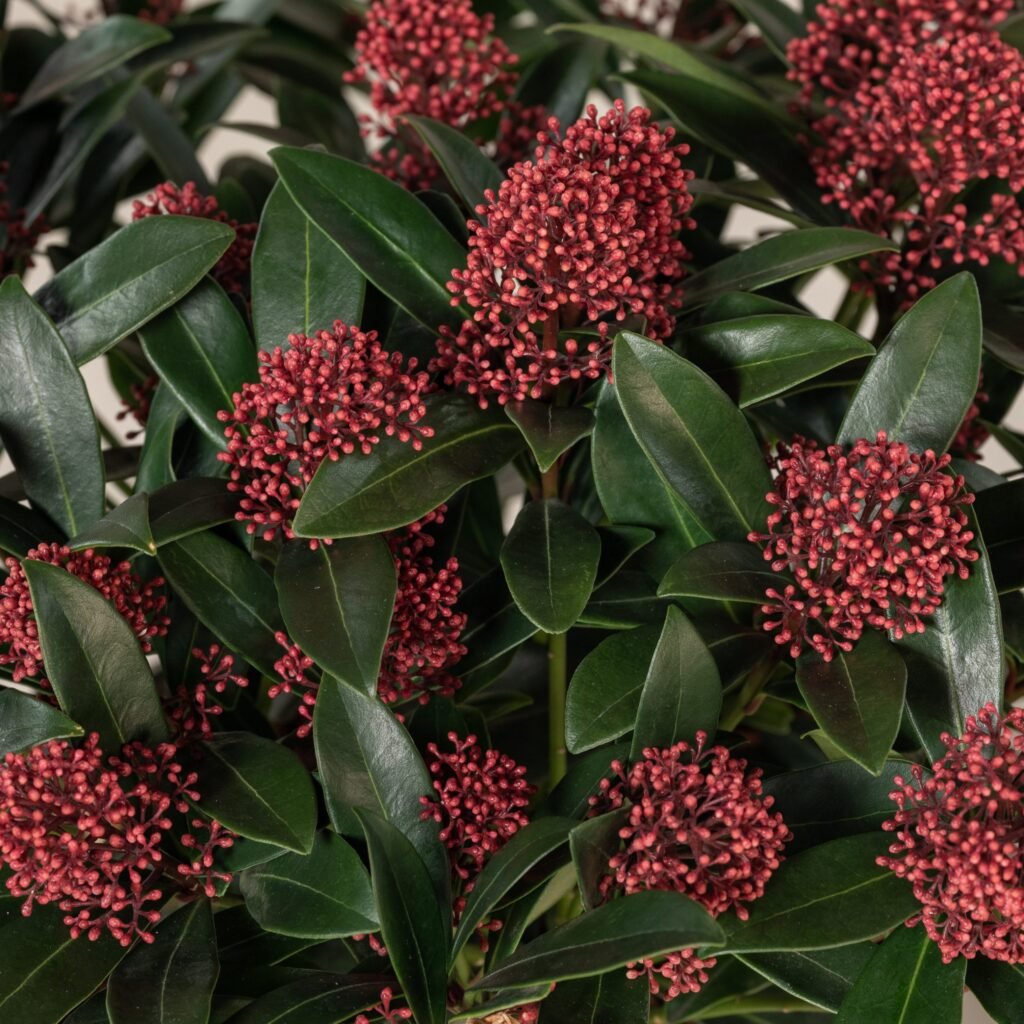
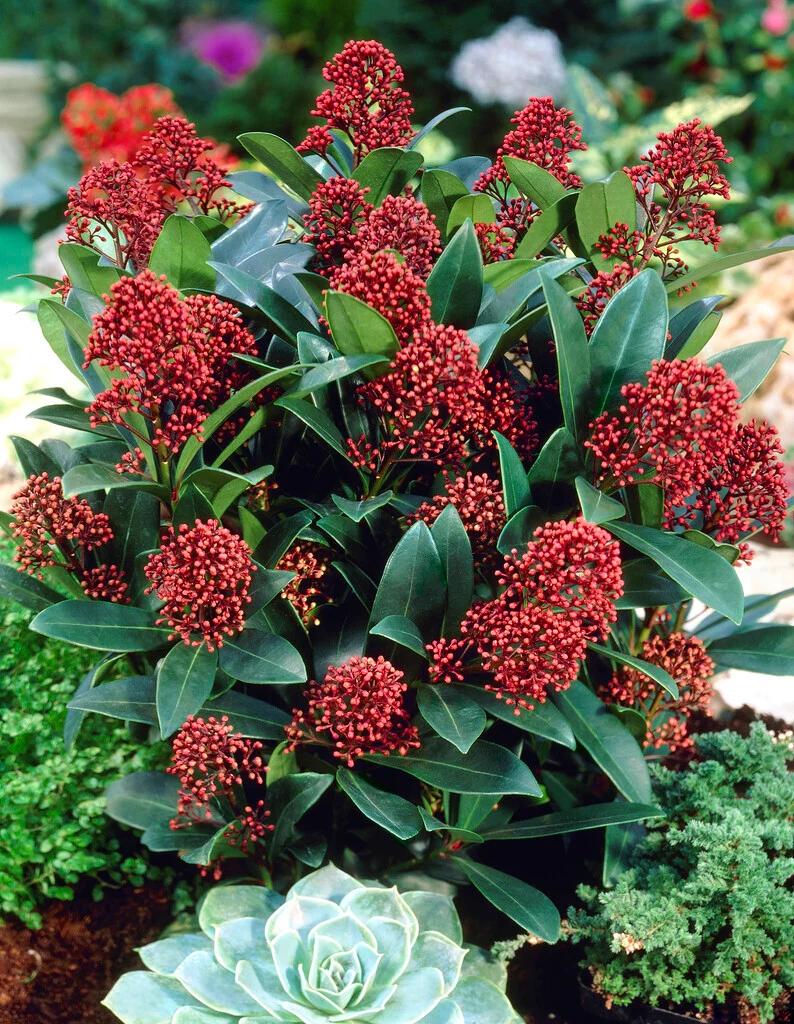
How to Grow & Use Japanese Skimmia (Skimmia japonica): Complete Guide to Propagation, Varieties, Culinary Uses & Harvesting
Japanese Skimmia (Skimmia japonica) is a four-season garden gem prized for its glossy evergreen foliage, fragrant spring blooms, vibrant red berries, and versatility in both landscapes and containers. Beyond its ornamental value, Skimmia has historical culinary and medicinal associations, making it a fascinating plant for gardeners and food enthusiasts alike.
Whether you’re new to shade gardening or expanding a Japanese-style landscape, here’s everything you need to know.
What Is Japanese Skimmia?
Skimmia japonica is a compact, evergreen shrub native to eastern Asia. It thrives in woodland environments and balances ornamental beauty with low maintenance.
Key characteristics:
- Evergreen leaves (leathery, fragrant when crushed)
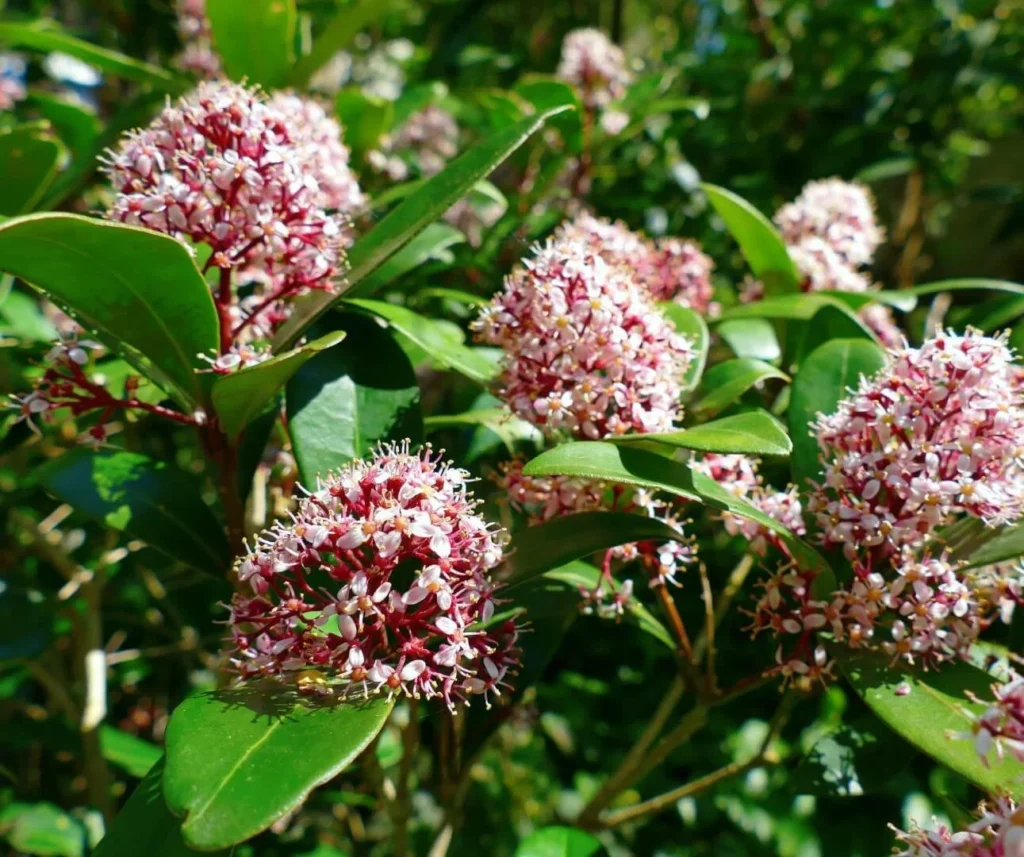
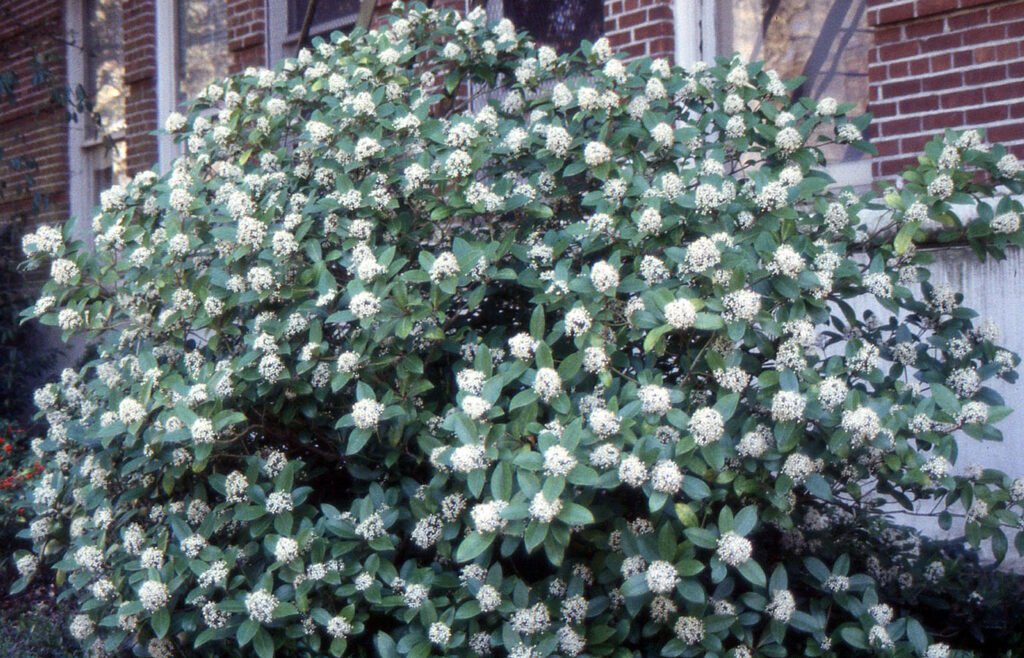
- White to creamy-pink flowers in spring
- Female plants produce ornamental berries (red or orange)
- Shade-tolerant and adaptable
- Works well in cool to mild climates
Growing Japanese Skimmia
Ideal Climate and Hardiness
- USDA Hardiness Zones: 6–8
- Prefers mild temperatures, cool summers, and protected winters
- Suited for woodland, courtyard, and Japanese-inspired gardens
Light Requirements
Skimmia thrives in partial to full shade. Too much sun causes:
- Leaf scorch
- Chlorosis
- Reduced berry and flower production
Soil Preferences
For best performance, provide:
- Acidic soil (pH 5.0–6.0)
- Moist but well-draining texture
- Organic matter–rich compost
Pro Tip: Avoid chalky or alkaline soils — they often lead to nutrient imbalances and yellow foliage.
Watering & Moisture
Consistent moisture is ideal, especially during establishment. Mature shrubs tolerate brief droughts but prefer cool, damp root zones.
Fertilization
Feed annually with an acid-loving plant fertilizer in early spring. Overfeeding leads to lush foliage at the expense of blooms and berries.
Propagating Japanese Skimmia
There are three common propagation methods:
1. Cuttings (Most Reliable Method)
- Take semi-hardwood cuttings in summer
- Root in acidic peat-sand substrate
- Provide humidity and shade
- Patience required: rooting may take 3–6 months
2. Seeds
- Collect berries when ripe (autumn/winter)
- Remove pulp and stratify seeds
- Germination can be slow and erratic
- Seedlings may vary from parent plants
3. Layering
- Bend low branch to soil in spring
- Pin in place and cover with soil
- Sever after rooting (8–12 months)
Male vs. Female Plants: Why It Matters
Japanese Skimmia is dioecious, meaning male and female flowers are on separate plants.
To get fruit, gardeners must plant:
- 1 male for every 5–6 females
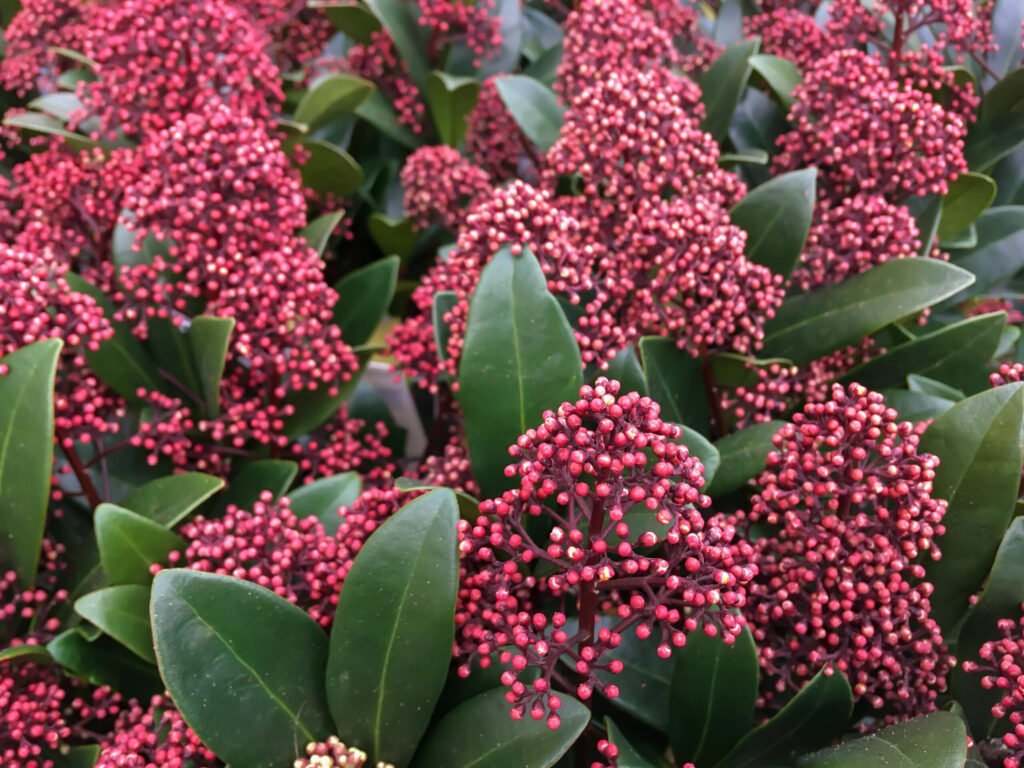
Popular males include ‘Rubella,’ known for deep red flower buds.
Japanese Skimmia Varieties
While the classic species is widely available, hybrids and cultivars offer distinct looks.
Notable Varieties
- ‘Rubella’ (Male): deep red buds, popular pollinator
- ‘Nymans’: compact habit, good berrying
- ‘Veitchii’: heavy-fruiting female with bright berries
- ‘Fragrant Cloud’: exceptional floral fragrance
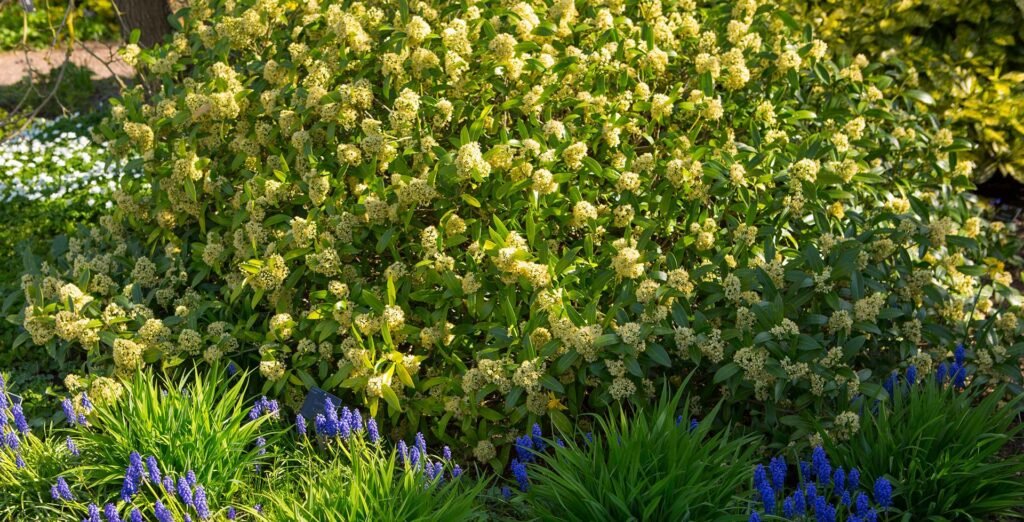
- ‘Kew Green’ (Male): pale green buds, shade tolerant
For container gardening, dwarf cultivars provide refined structure year-round.
Uses and Benefits of Japanese Skimmia
1. Ornamental Landscaping
Skimmia excels in:
- Winter gardens
- Woodland borders
- Asian-inspired landscapes
- Shaded patios & courtyards
2. Cut Floral & Berry Arrangements
Berries and evergreen stems hold well in holiday decorations and floral art.
3. Ecological Value
Skimmia blooms attract:
- Early-season bees
- Pollinating insects during cooler months
Berries are ornamental and not typically consumed by wildlife due to bitterness.
Culinary & Food-Related Associations
While not common in modern cuisine, parts of Skimmia have been historically referenced for:
- Aromatic leaves in fragrant teas (rare today)
- Traditional herbal or aromatic uses
- Flavor-infused seasonal decorations (non-edible)
Important: berries and leaves are considered mildly toxic if ingested in quantity. Skimmia is not a contemporary edible crop — food-related use today is mostly aesthetic or aromatic, not culinary consumption.
Harvesting Japanese Skimmia
When to Harvest
- Cut flowers: spring (bud or open)
- Berries: late autumn through winter (decorative use)
Cuttings for propagation or floral art should be taken during cool hours to preserve moisture.
Pests & Problems
Common issues include:
- Chlorosis (alkaline soil)
- Winter scorch (wind exposure)
- Spider mites (dry conditions)
- Scale insects (containers or stressed plants)
Correct site selection solves most challenges.
Container Growing
Skimmia is a container standout when paired with:
- Camellia
- Dwarf conifers
- Heuchera
- Hellebore
Use ericaceous compost and ensure consistent moisture.
Design Context & Aesthetic Pairings
Skimmia aligns beautifully with:
- Japanese gardens
- Winter borders
- Shade courtyards
- Bonsai-adjacent plantings (non-bonsai form)
Its year-round foliage and winter berries offer structure where seasonal herbaceous plants die back.

&media=https://food-foresting.com/wp-content/uploads/2026/01/Skimija-Skimmia.jpg)