
 paulius.mikoliunas1
| Common Name | Smoke Tree, European smoketree, Venetian Sumac, Wig Tree, Smoke Tree |
| Family | Anacardiaceae |
| USDA hardiness | 5-8 |
| Known Hazards |  Skin contact with this plant can cause dermatitis in sensitive people. Though related to several poisonous species, this species is definitely not poisonous. Skin contact with this plant can cause dermatitis in sensitive people. Though related to several poisonous species, this species is definitely not poisonous. |
| Habitats | Dry hillsides, rocky places and open woods, usually on limestone, to 1300 metres. |
| Range | S. Europe to W. Asia. |
| Edibility Rating |   (1 of 5) (1 of 5) |
| Other Uses |   (3 of 5) (3 of 5) |
| Weed Potential | No |
| Medicinal Rating |   (1 of 5) (1 of 5) |
| Care (info) |      |
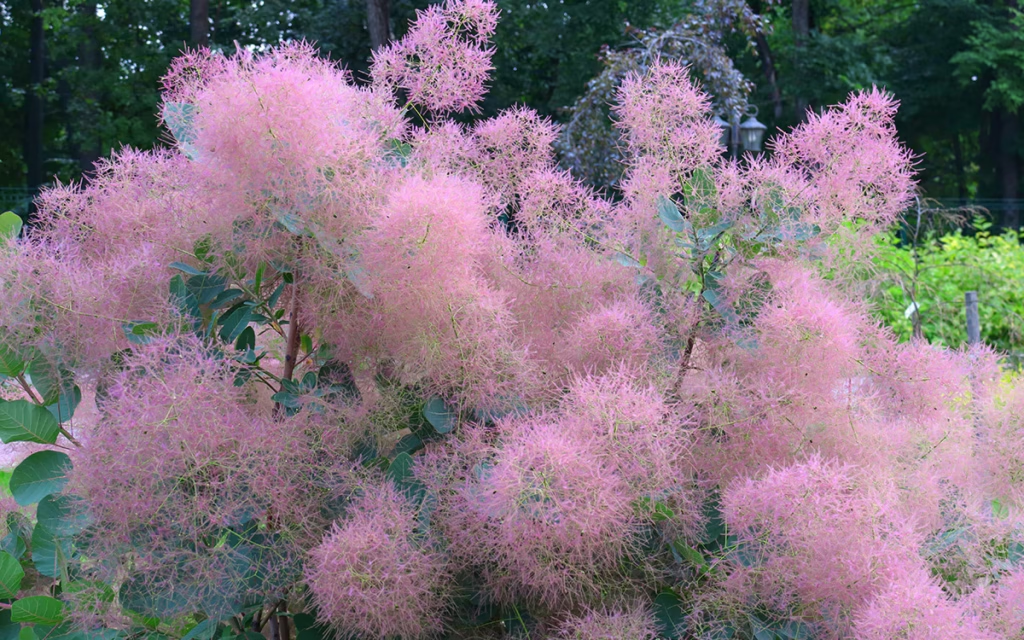
How to Grow, Propagate, Use, and Harvest the Smoke Tree (Cotinus coggygria): Complete Guide
The Smoke Tree (Cotinus coggygria)—also known as Smoke Bush or Venetian Sumac—is an ornamental shrub beloved for its billowing, smoke-like blooms and vibrant fall colors. Drought-tolerant, deer-resistant, and adaptable across many climates, it’s an excellent landscaping choice for gardeners seeking color and drama without high maintenance.
Below is a comprehensive guide covering how to grow, propagate, varieties, uses, food and medicinal properties, and harvesting techniques for this striking plant.
What Makes the Smoke Tree Special?
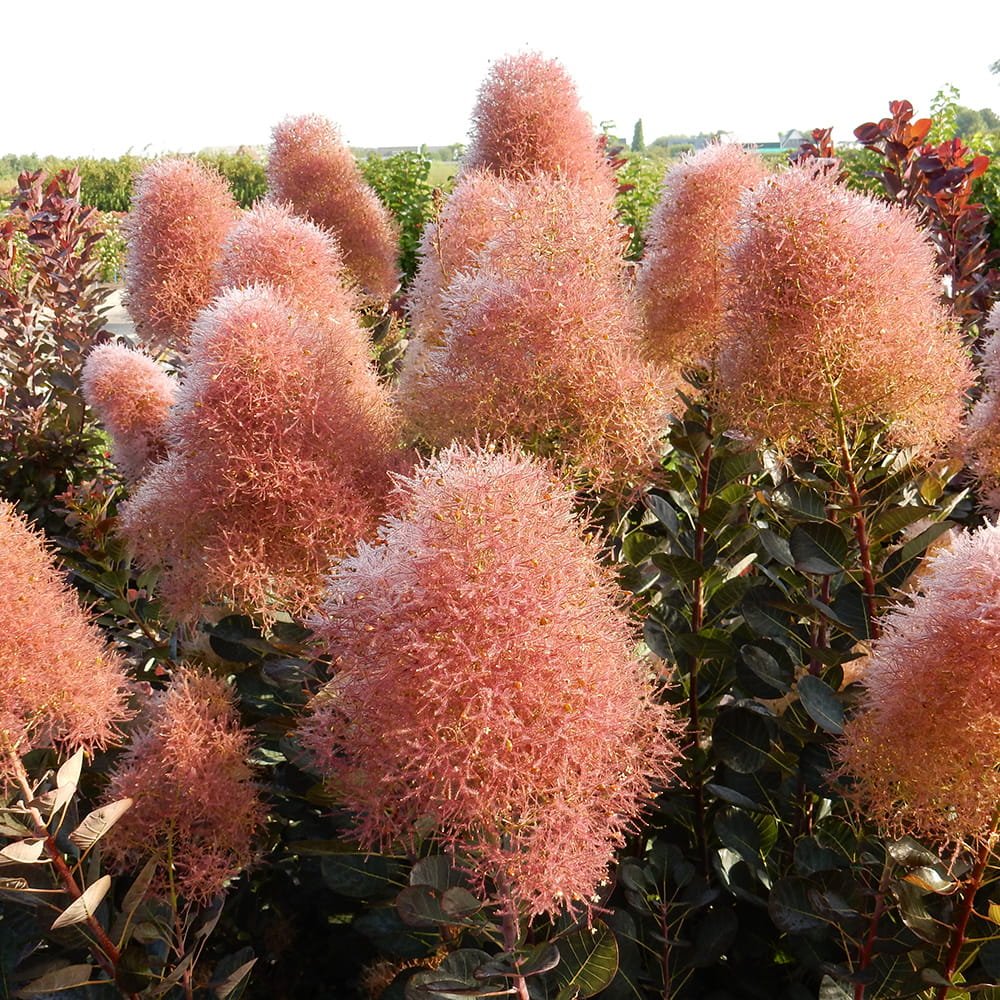
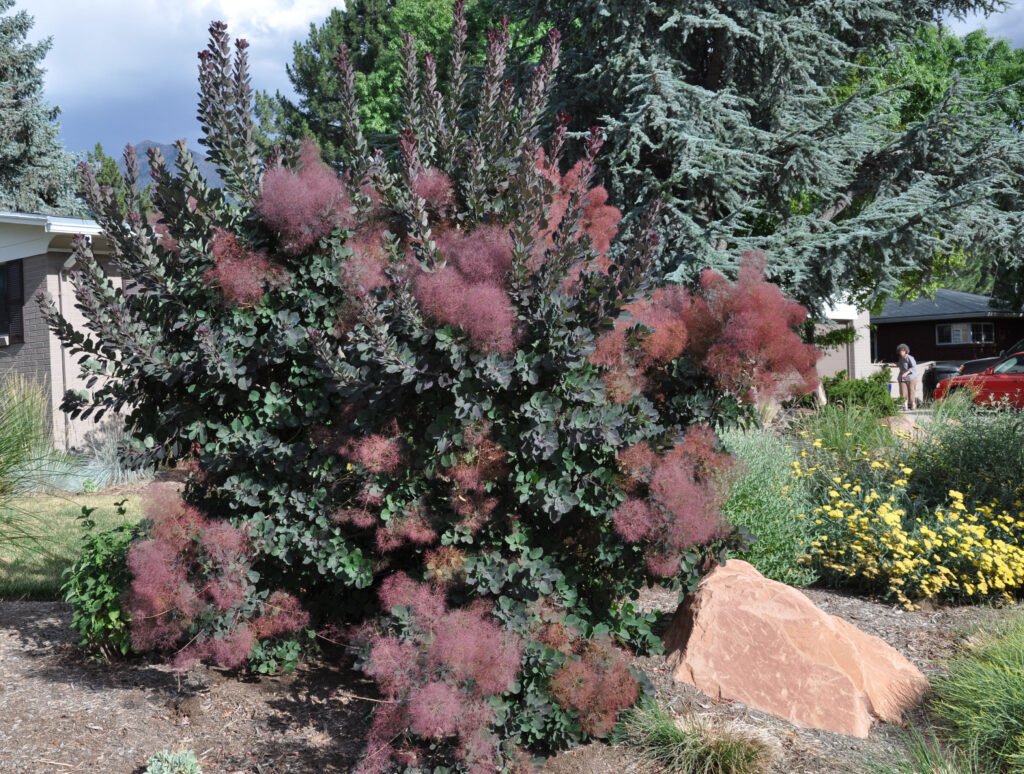
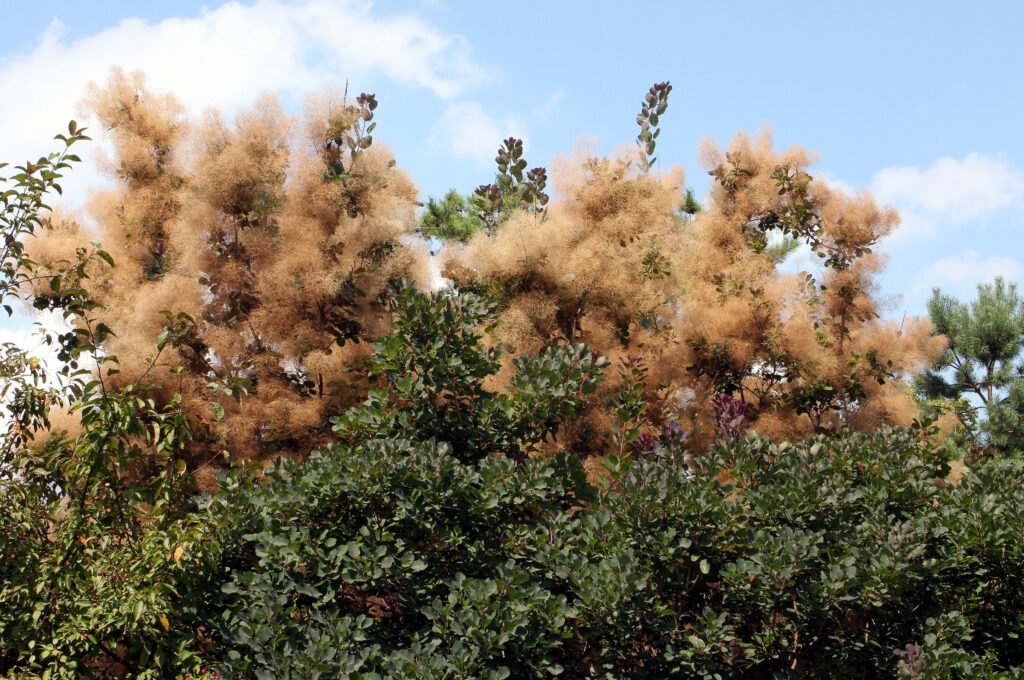
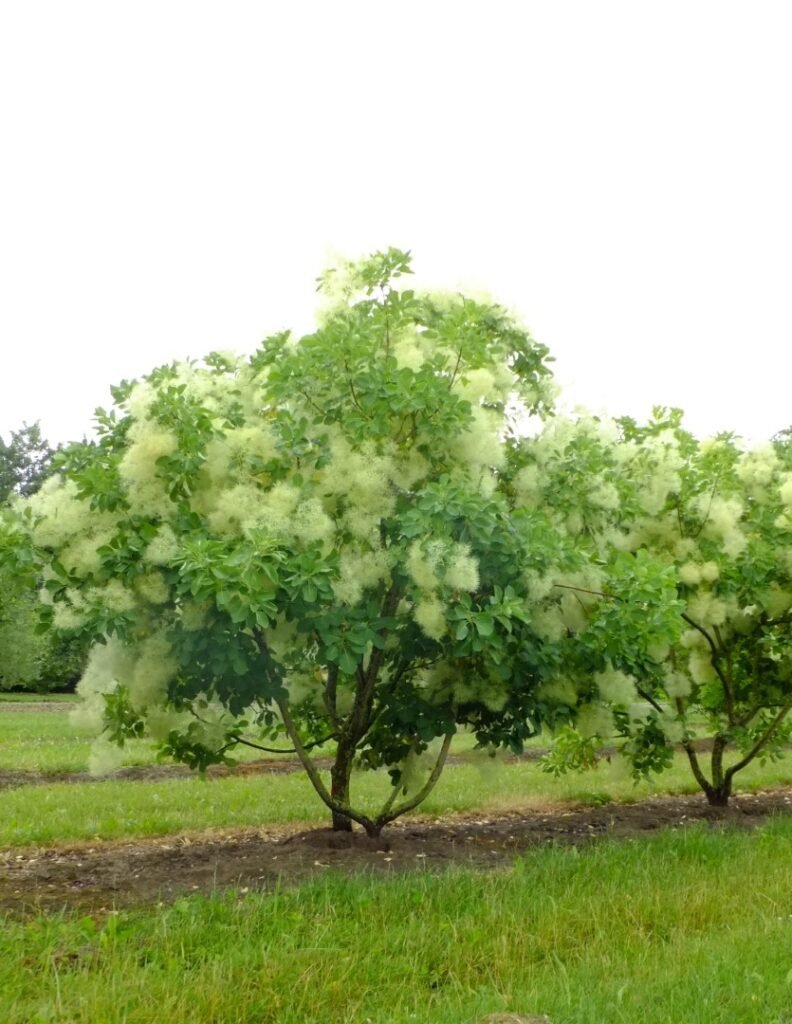
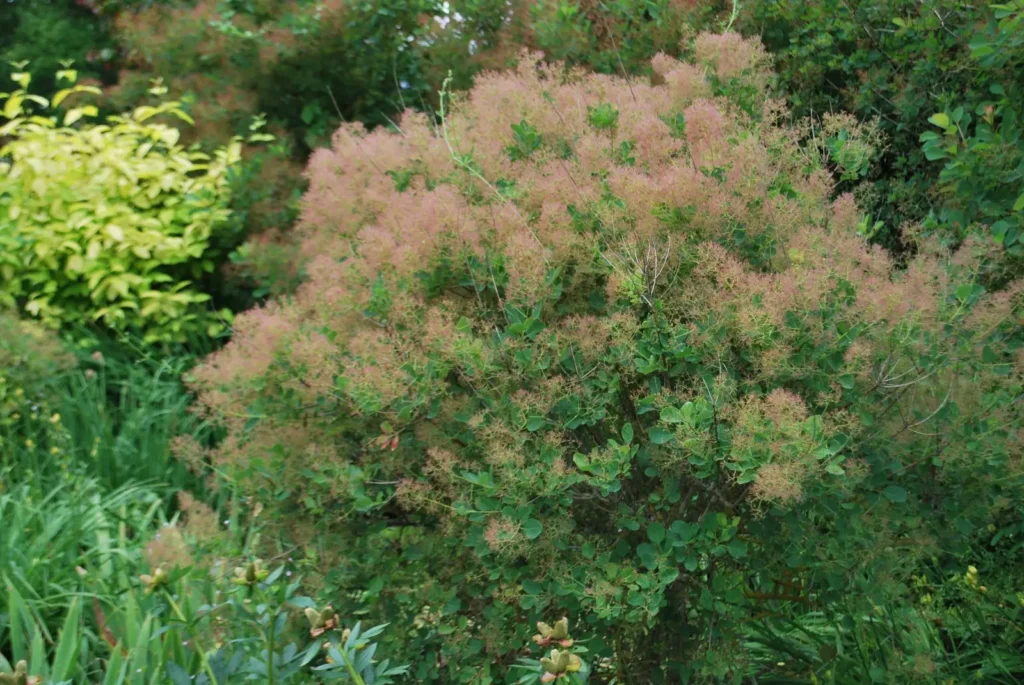
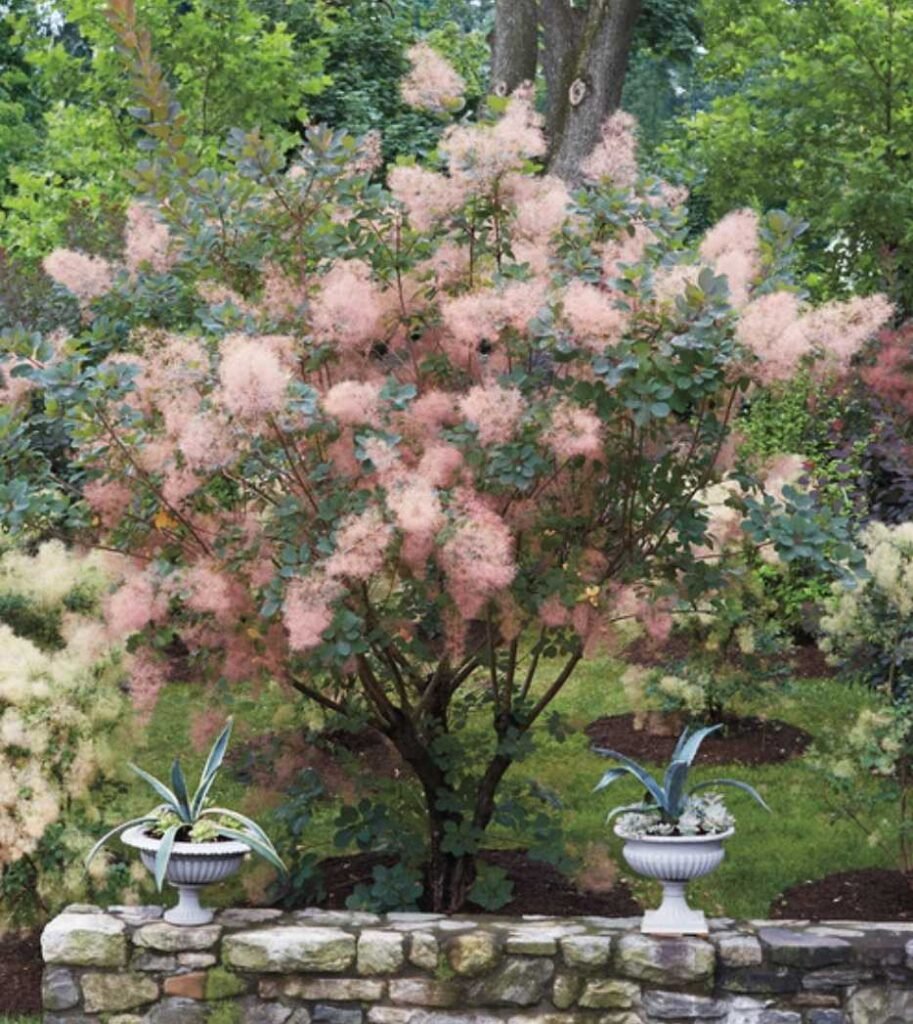
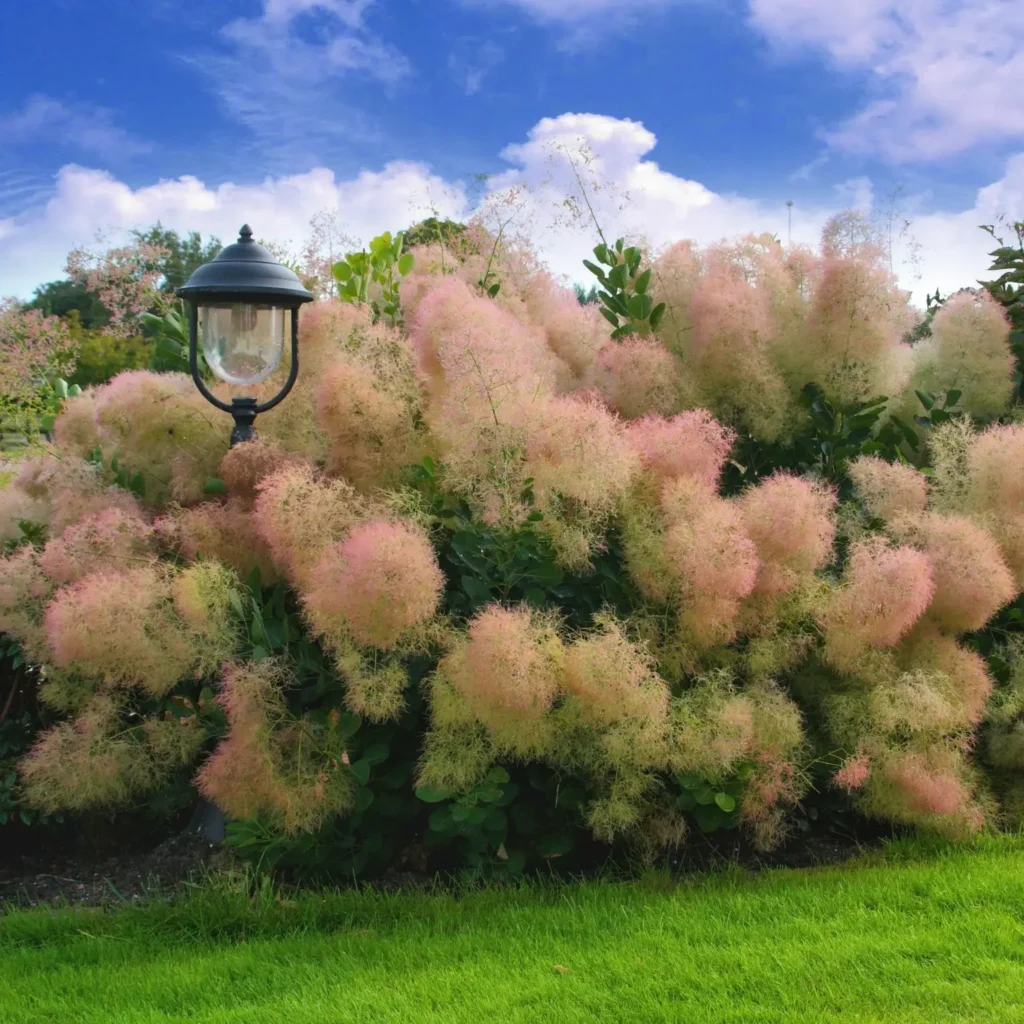
Visually, the smoke tree gets its name from the wispy plumes formed after flowering. These smoky inflorescences can linger through summer, giving landscapes a surreal or ethereal look. In fall, the foliage turns orange, scarlet, amber, and purple, making it a four-season standout.
Key characteristics:
- Botanical name: Cotinus coggygria
- USDA zones: 4–9 (varies by cultivar)
- Mature size: 10–15 ft tall, 10–12 ft wide
- Growth habit: Shrub or small tree
- Exposure: Full sun ideal
How to Grow Smoke Tree
Climate & Hardiness
Smoke trees thrive in temperate climates with defined seasons, tolerating both cold winters and hot summers.
Soil Requirements
They handle a wide range of soil, including:
- Rocky
- Sandy
- Clay (if well-drained)
- Alkaline conditions
Drainage is critical. Overly wet soil can lead to root rot.
Sunlight Needs
For best color and flowering:
Full sun (6+ hours daily) is recommended.
Watering
Once established, smoke bushes are drought-tolerant. Water regularly during their first year to encourage root development; afterward, supplemental watering is rarely needed except in extreme drought.
Feeding & Fertilization
Fertilization is usually unnecessary. Too much nitrogen promotes leafy growth at the expense of blooms.
Propagation Methods for Smoke Tree
Propagating Cotinus coggygria is possible by seed, softwood cuttings, or hardwood cuttings, though success rates vary.
1. Seed Propagation
- Collect ripe seeds in late summer.
- Seeds require stratification (cold period) for improved germination.
- Germination can take multiple months.
2. Softwood Cuttings
Best taken in late spring to early summer.
Steps:
- Cut 4–6 inch tips from new growth.
- Dip in rooting hormone.
- Plant in sterile substrate such as perlite + peat.
- Maintain humidity until rooted.
3. Hardwood Cuttings
Cut in late fall to winter and root slowly in cool conditions.
Softwood cutting typically yields higher success for gardeners.
Popular Smoke Tree Varieties
There are several standout cultivars with differing colors and sizes:
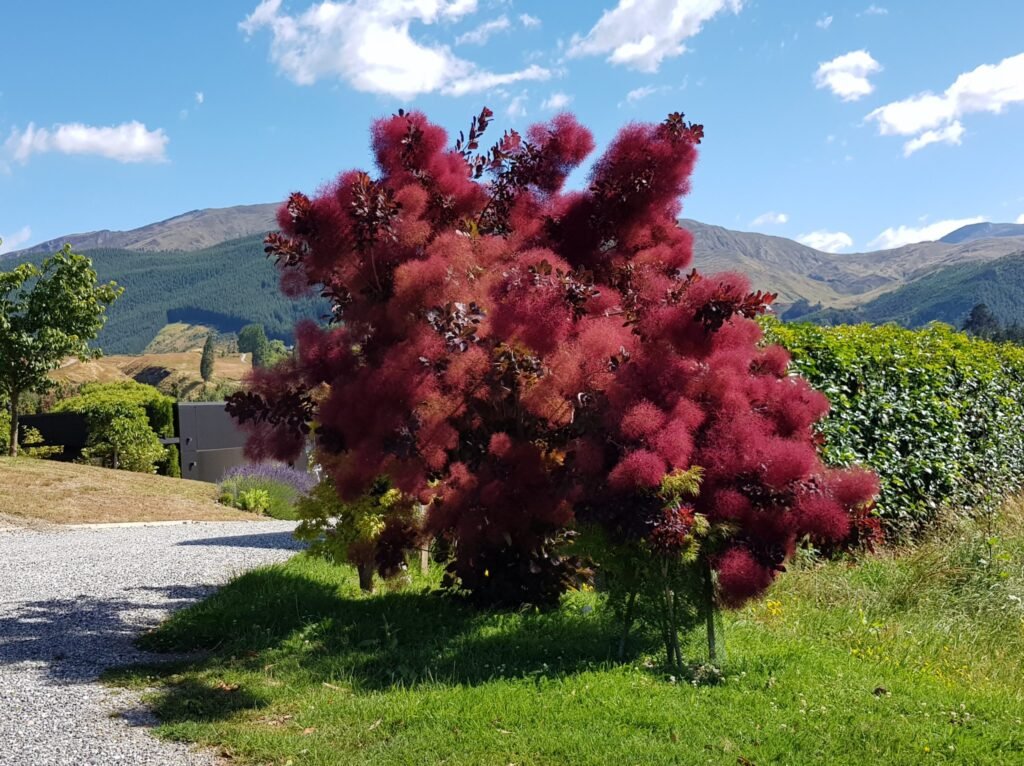
‘Royal Purple’
- Deep purple foliage
- Pinkish smoke plumes
- Strong fall color
‘Golden Spirit’
- Chartreuse to golden leaves
- Light, airy smoke
‘Grace’
- Hybrid with larger leaves and intense fall coloration
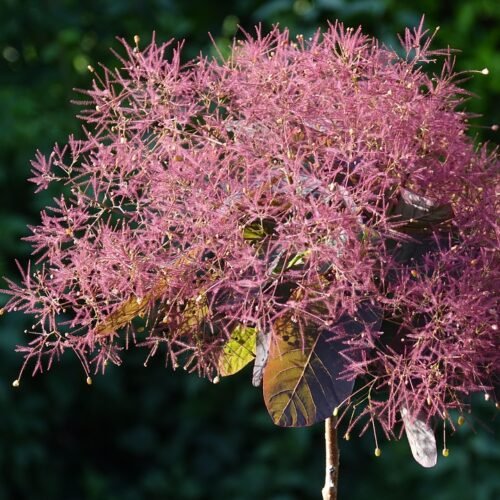
‘Young Lady’
- Compact habit, ideal for small gardens
‘Purpureus’
- Traditional purple-leafed European type
Landscape and Decorative Uses
Smoke tree is primarily ornamental and widely used for:
- Foundation plantings
- Backyard borders
- Mixed shrub plantings
- Accent trees
- Xeriscaping and drought gardens
Its unusual texture pairs beautifully with conifers and grasses.
Food, Herbal, and Practical Uses: Is Smoke Tree Edible?
Unlike fruit-bearing shrubs, Smoke Tree is not a typical edible plant, and it is not consumed as a food crop. Some parts have been recorded historically for traditional medicinal extracts or tannin use, especially among Mediterranean cultures. The plant contains compounds such as tannins and flavonoids, but modern herbal use is limited, and ingestion is not widely recommended without expert verification.
Culinary Note
Smoke Tree is not used as a food ingredient. It offers visual beauty rather than culinary yield.
Medicinal & Craft Uses
Traditional uses include:
- Natural dye or tannin source for leather
- Folk astringent remedies (leaves and bark)
- Decorative stems for arrangements
Always research safety or consult a professional before using plants medicinally.
Pruning & Seasonal Maintenance
Smoke trees respond well to pruning depending on the desired look:
For Height & Structure
Minimal pruning allows the shrub to form a small tree.
For Bushy Growth
Cut back aggressively in late winter to early spring. This stimulates new growth and enhances leaf color, but reduces smoke plumes.
How to Harvest Smoke Tree Material
Gardeners and florists often harvest smoke plumes, leaves, and stems:
Best Harvesting Times
- Blooms & plumes: early to midsummer
- Foliage: late summer to fall for high color impact
Harvesting for Drying
Smoke plumes dry well for floral arrangements when cut just after peak development.
Common Problems & Pests
Generally low-maintenance, smoke tree may occasionally encounter:
- Verticillium wilt (avoid poorly drained soil)
- Leaf spot fungi in wet climates
- Aphids (minor concern)
Good airflow and full sun help reduce issues.
Final Thoughts: Why Grow Smoke Tree?
For gardeners craving a low-maintenance ornamental shrub with unique appeal, the Smoke Tree delivers:
✔ Year-round interest
✔ Minimal watering
✔ Stunning fall color
✔ Striking texture
✔ Versatile pruning options
While not a food-producing shrub, it remains one of the most visually captivating additions to temperate gardens and landscaping projects.


&media=https://food-foresting.com/wp-content/uploads/2026/01/cotinus-young-lady-2592x2592-64a528dae170e_l.webp)