
 paulius.mikoliunas1
| Common Name | Kiwi Fruit |
| Family | Actinidiaceae |
| USDA hardiness | 6-9 |
| Known Hazards | None known |
| Habitats | Derived in cultivation from A. chinensis, it is not known in a truly wild situation. |
| Range | E. Asia – China |
| Edibility Rating |  (5 of 5) (5 of 5) |
| Other Uses |   (2 of 5) (2 of 5) |
| Weed Potential | No |
| Medicinal Rating |   (1 of 5) (1 of 5) |
| Care (info) |      |
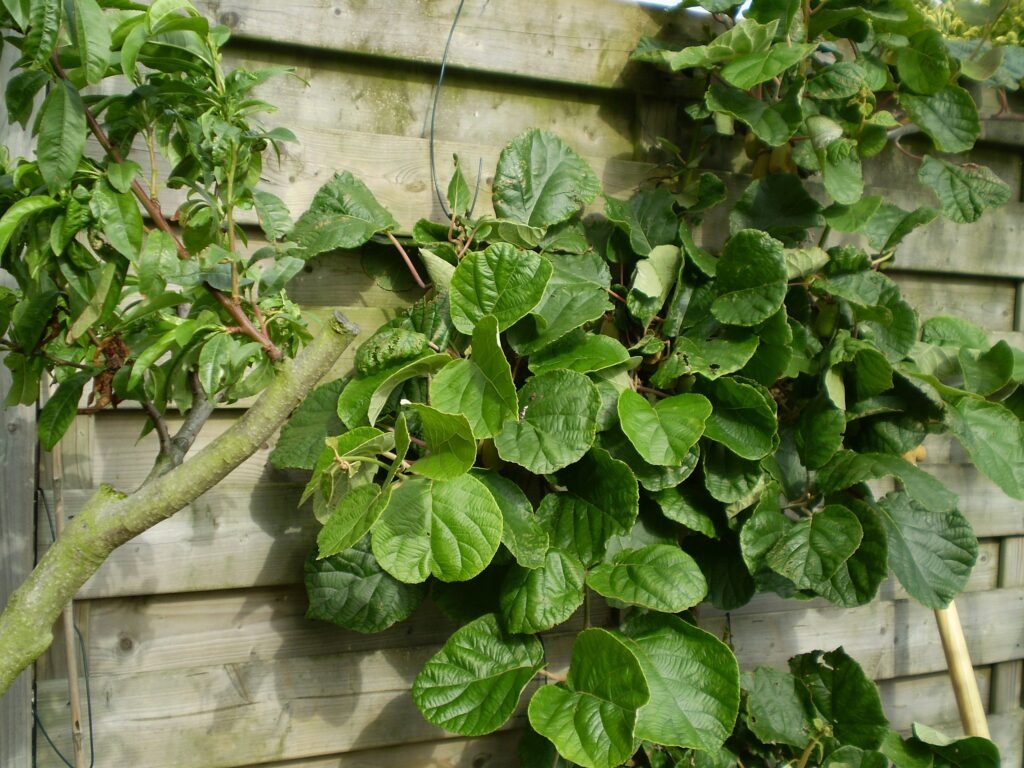
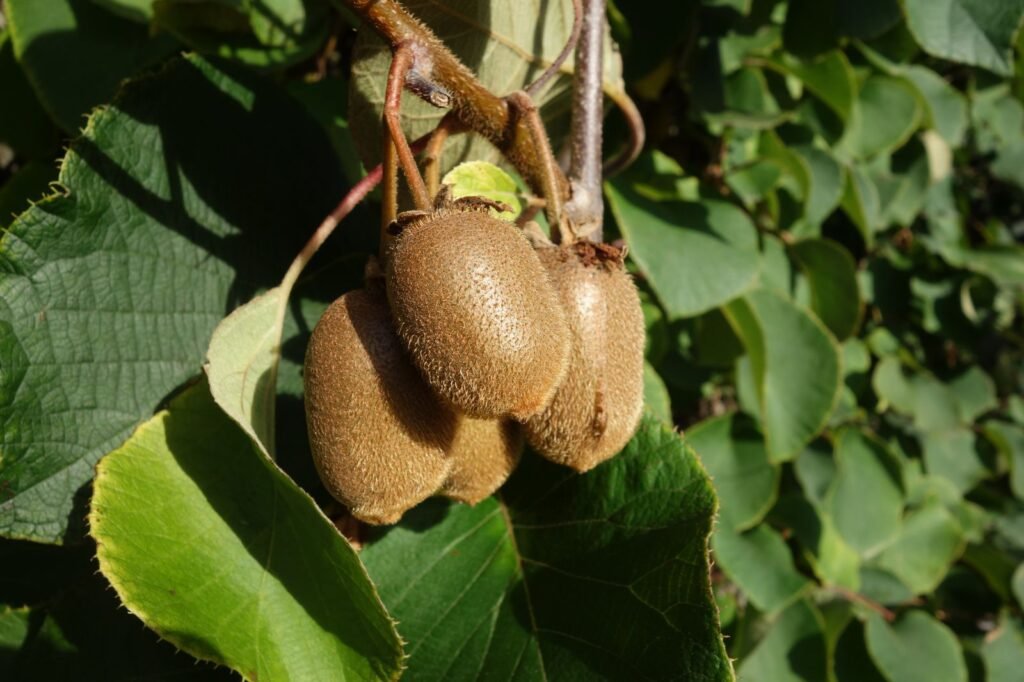
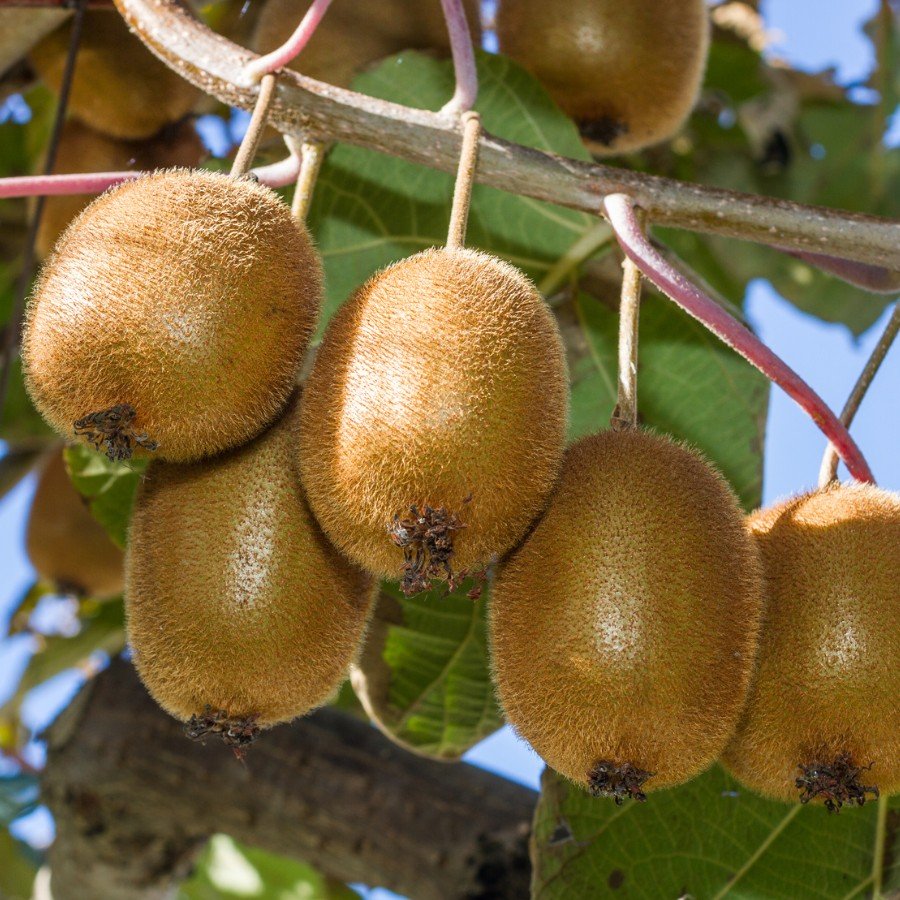
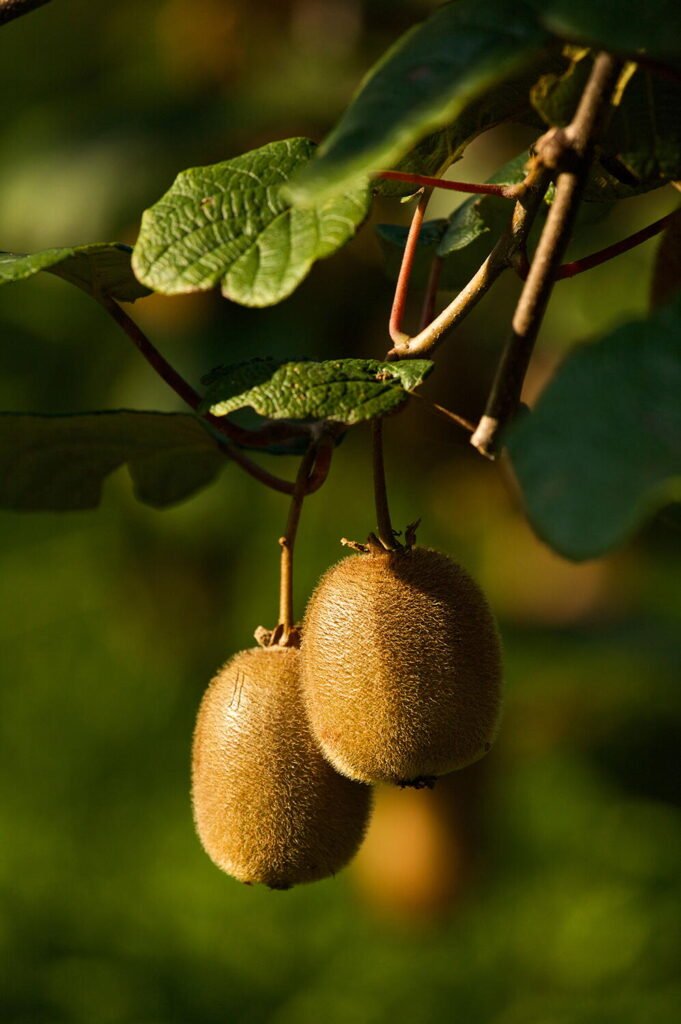
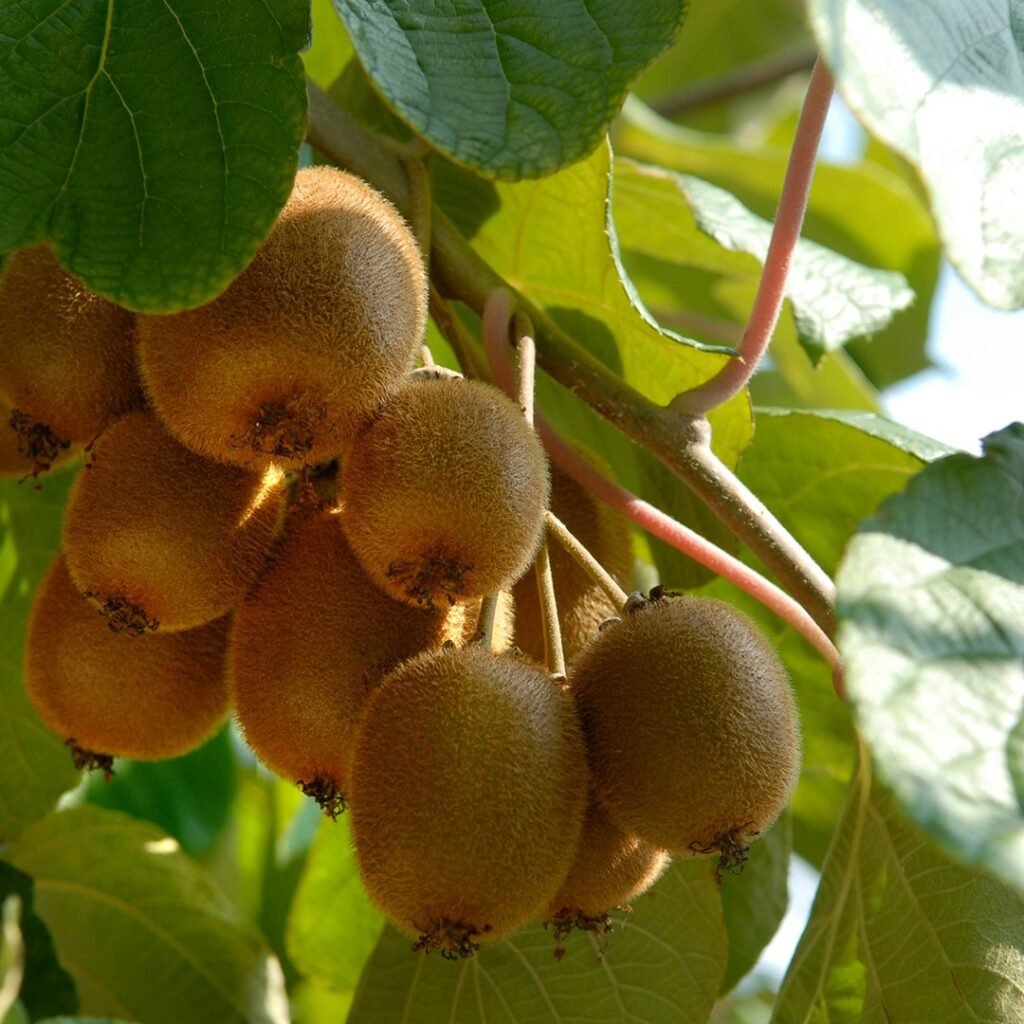
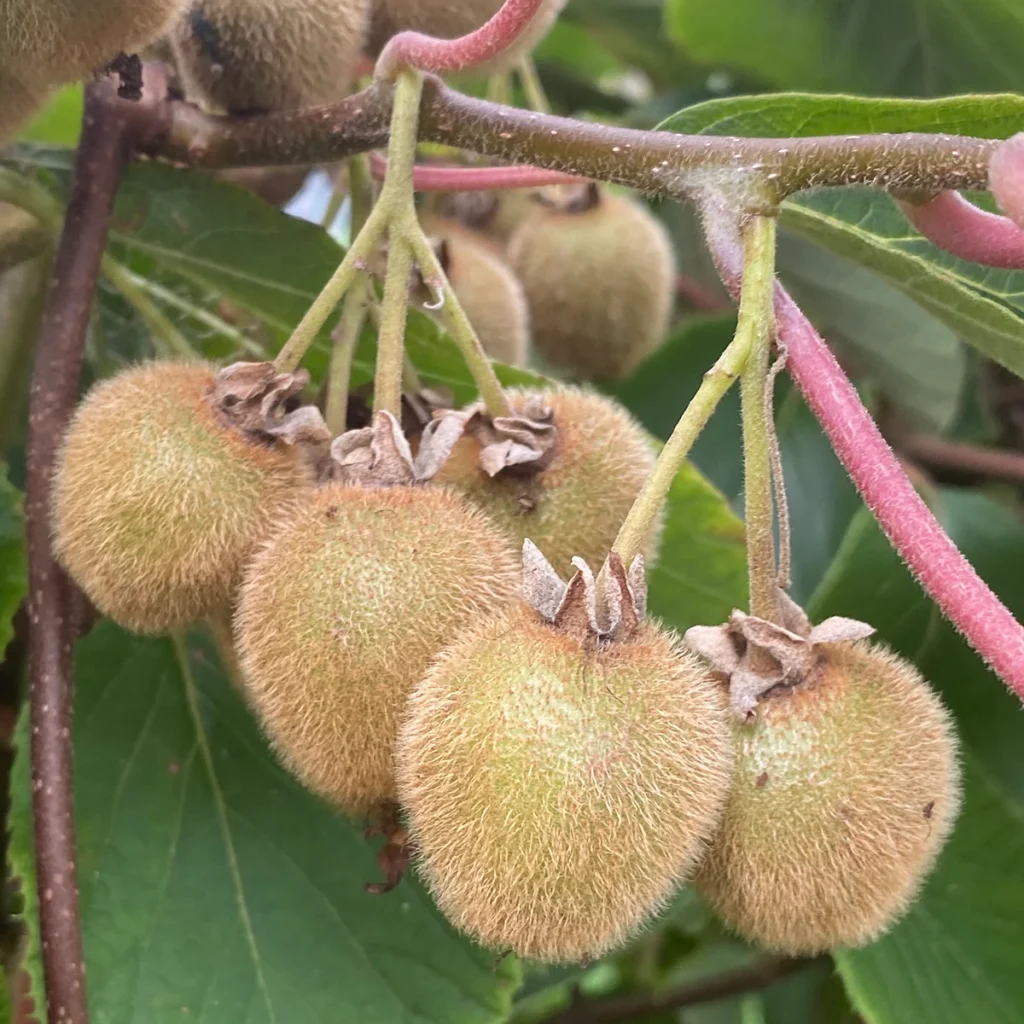
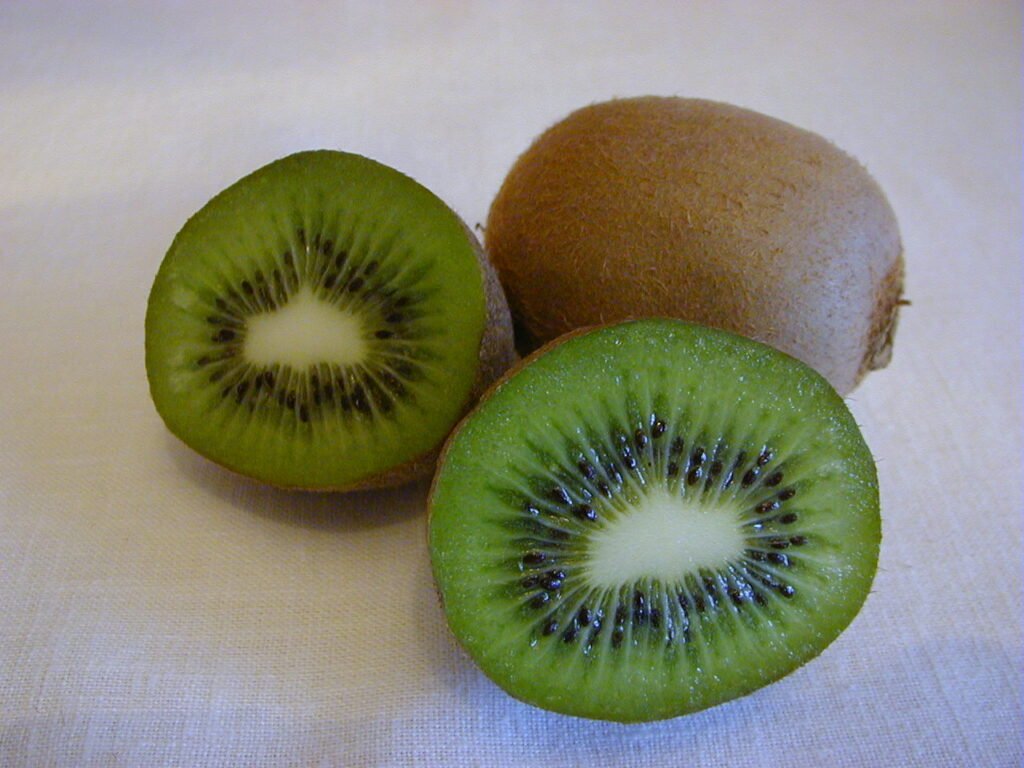
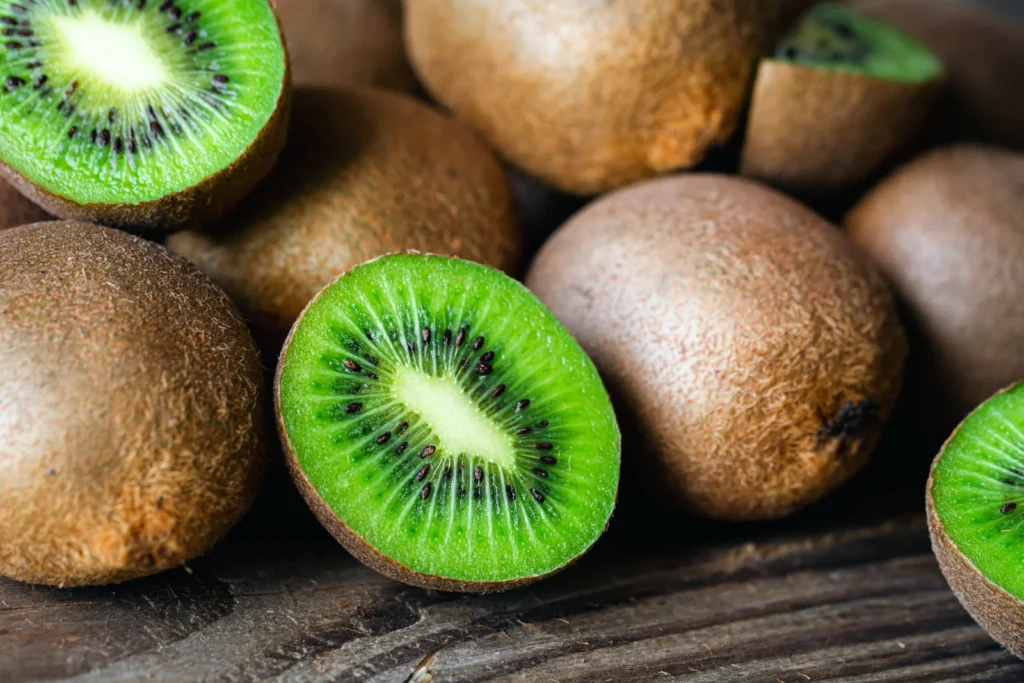
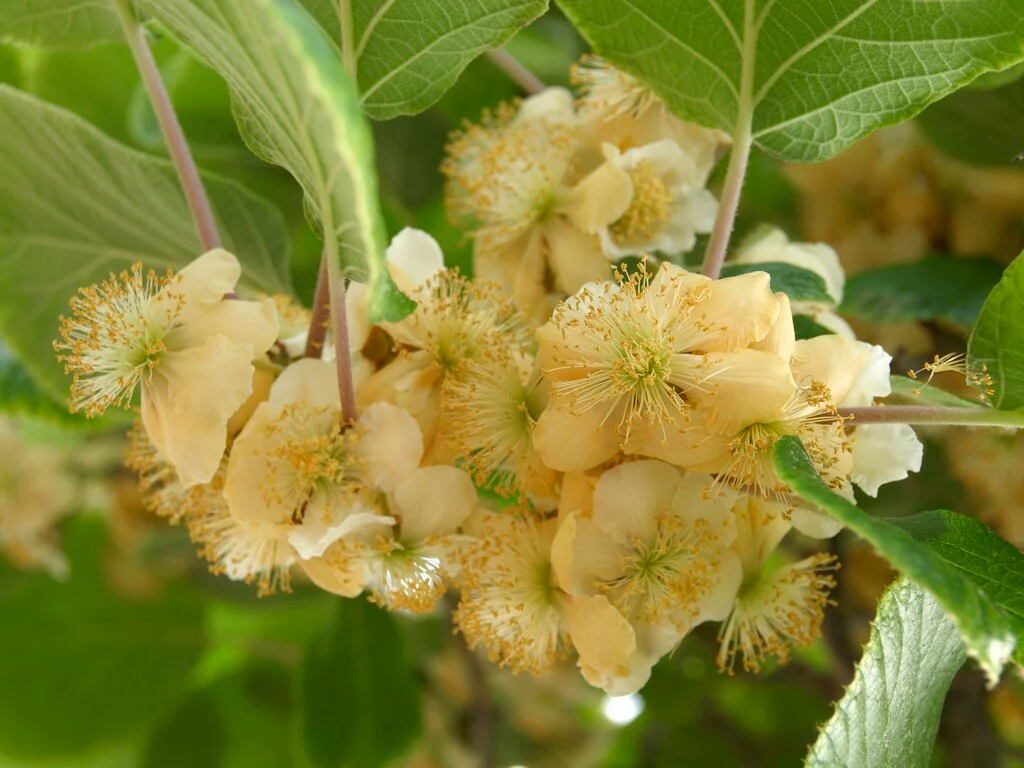
Growing Kiwi Fruit (Actinidia deliciosa): Cultivation, Varieties, Uses & Harvest Tips
Kiwi fruit (Actinidia deliciosa) has evolved from an exotic market specialty to a home-grower favorite across temperate climates. Known for its tangy sweetness, emerald-green flesh, and high vitamin C content, kiwi vines offer gardeners both ornamental beauty and delicious rewards. With careful training, correct pollination, and proper climate matching, kiwi vines can become highly productive in home gardens, orchards, and even containers.
Climate Requirements & Ideal Growing Conditions
Kiwi plants are vigorous perennial vines that thrive best in:
- Temperate climates
- Full sun for most of the day
- Well-drained loamy soil
- pH between 5.5 and 7.0
While the hardy kiwi (Actinidia arguta) tolerates colder winters, Actinidia deliciosa typically prefers frost-free zones and protection during early spring growth.
Temperature Tolerances
- Spring frost can damage new shoots and affect fruiting.
- Summer warmth (21–29°C / 70–85°F) promotes optimal fruit development.
- Winter chill aids dormancy, essential for reliable flowering.
Planting & Establishment
- Site selection: Choose a sunny, sheltered area with strong trellising potential.
- Soil preparation: Work compost, aged manure, and organic matter into the planting zone.
- Spacing: Vines need 3–5 meters (10–15 feet) between plants to accommodate their vigorous growth.
Pollination Requirements
Most kiwi varieties are dioecious, meaning separate male and female plants exist. Typically:
- 1 male pollinates up to 6–8 females
- Pollination is insect-driven, mostly by bees
Self-fertile cultivars exist, but yield may be lower compared to matched male-female combinations.
Propagation Methods
Kiwi can be propagated through multiple techniques, each with different success rates:
1. Seed Propagation
Although seeds germinate readily, seedlings produce highly variable fruit quality and long juvenile periods (up to 7 years). Best used for breeding or experimentation.
2. Hardwood & Semi-hardwood Cuttings
Cuttings are the preferred home gardener method:
- Taken during dormant winter or midsummer
- Root in high-humidity, warm conditions
- Produce true-to-type female or male vines
3. Grafting & Budding
Commercial growers often graft kiwi for:
- Improved vigor
- Earlier fruiting
- Pest and disease tolerance
Rootstocks help standardize orchard performance.
Training, Pruning & Trellising
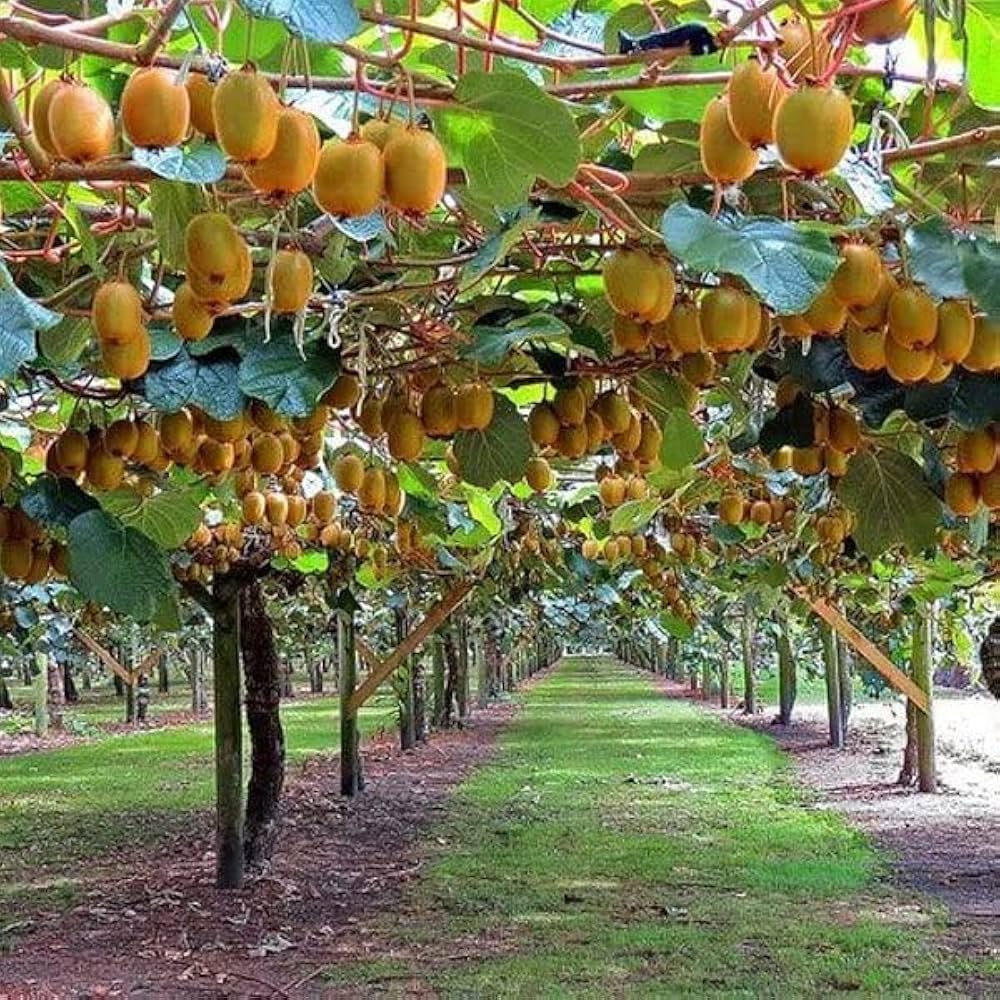
A robust support system is essential. Common structures include:
- Pergolas
- T-bar trellises
- Wire cordons
Training Approach
During establishment:
- Train a single leader upward
- Develop lateral fruiting arms along wire supports
Annual Pruning
Kiwi fruit forms on 1-year-old wood, making pruning critical for productivity. Winter pruning removes excess growth; summer pruning refines canopy density and improves light penetration.
Popular Kiwi Varieties
Several cultivars cater to different climates and tastes:
Actinidia deliciosa (Fuzzy Kiwi)
- ‘Hayward’ – classic store variety, large, green flesh
- ‘Bruno’ – heavy producer, elongated fruit
- ‘Monty’ – reliable and productive in mild climates
Actinidia arguta (Hardy Kiwi)
- Smooth, grape-sized, edible skins
- Suitable for colder regions
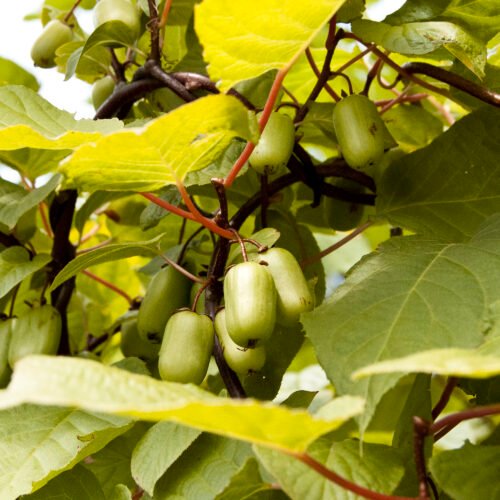
Actinidia chinensis (Golden Kiwi)
- Sweeter, less acidic
- Gold to yellow flesh
- Thinner, smoother skin
Nutritional Benefits & Food Uses
Kiwi is a nutrient powerhouse rich in:
- Vitamin C
- Vitamin K
- Dietary fiber
- Antioxidants
- Folate & potassium
Culinary Applications
Kiwi adapts to many recipes, such as:
- Fruit salads & smoothie bowls
- Sorbets & desserts
- Cocktails & infused beverages
- Fresh salsas & ceviche
- Salad dressings & marinades
Its natural enzymes (notably actinidin) act as a meat tenderizer, making kiwi useful in marinades—but may curdle dairy if left too long.
Harvesting & Ripening
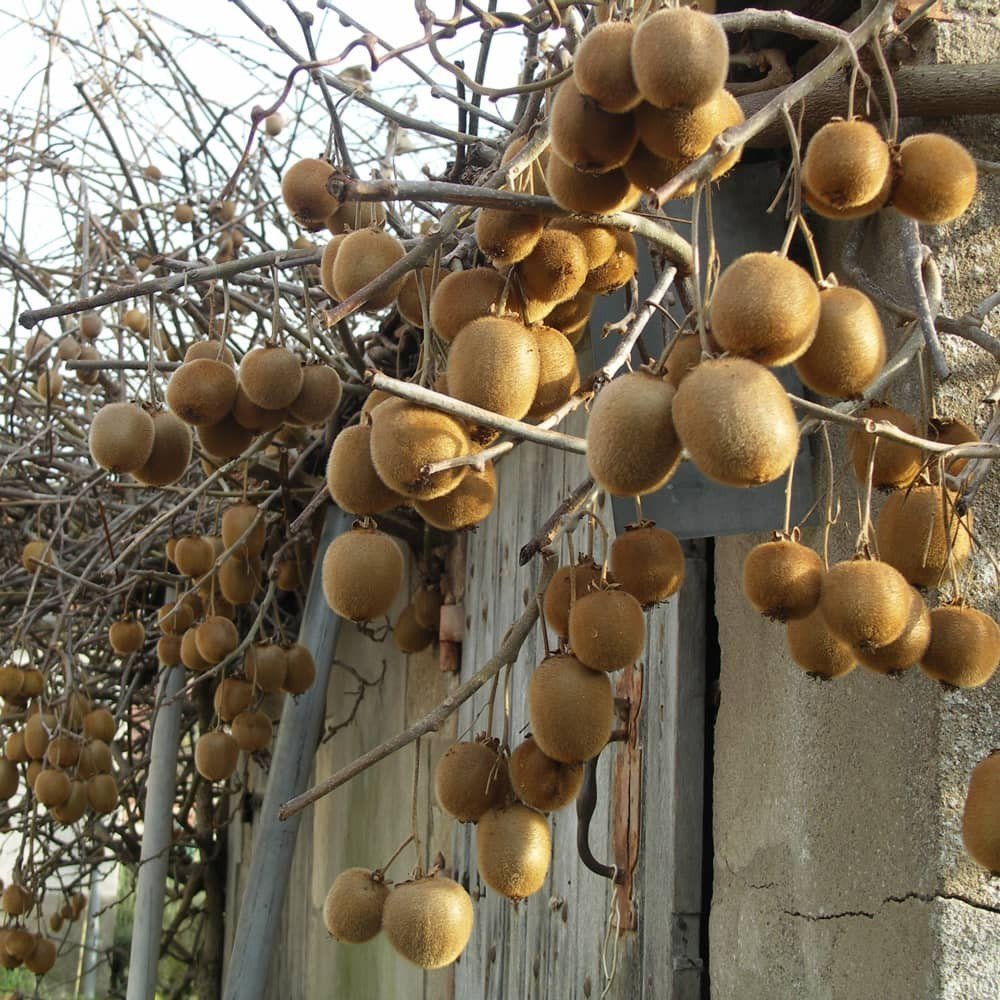
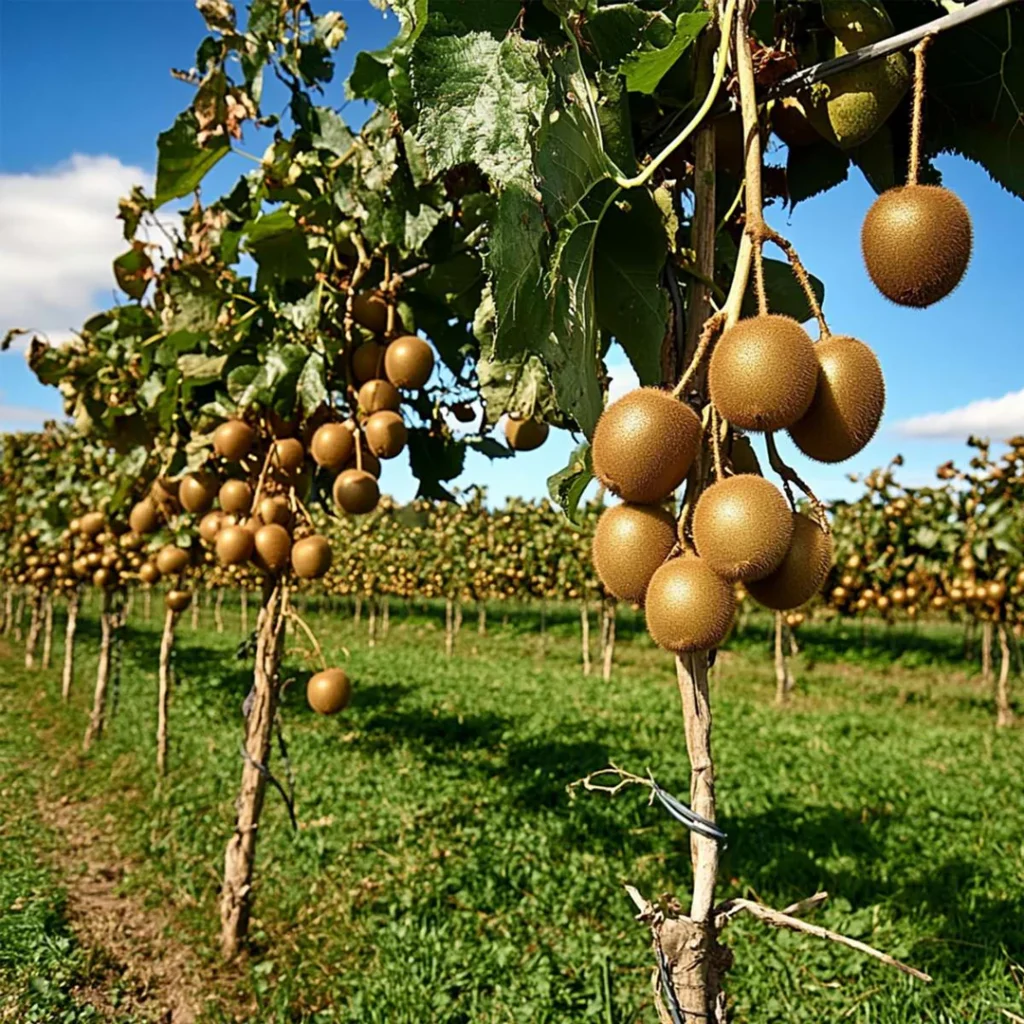
Kiwi fruit typically matures in late autumn, but the fruit is often harvested firm and ripened post-picked for flavor. Indicators of harvest readiness include:
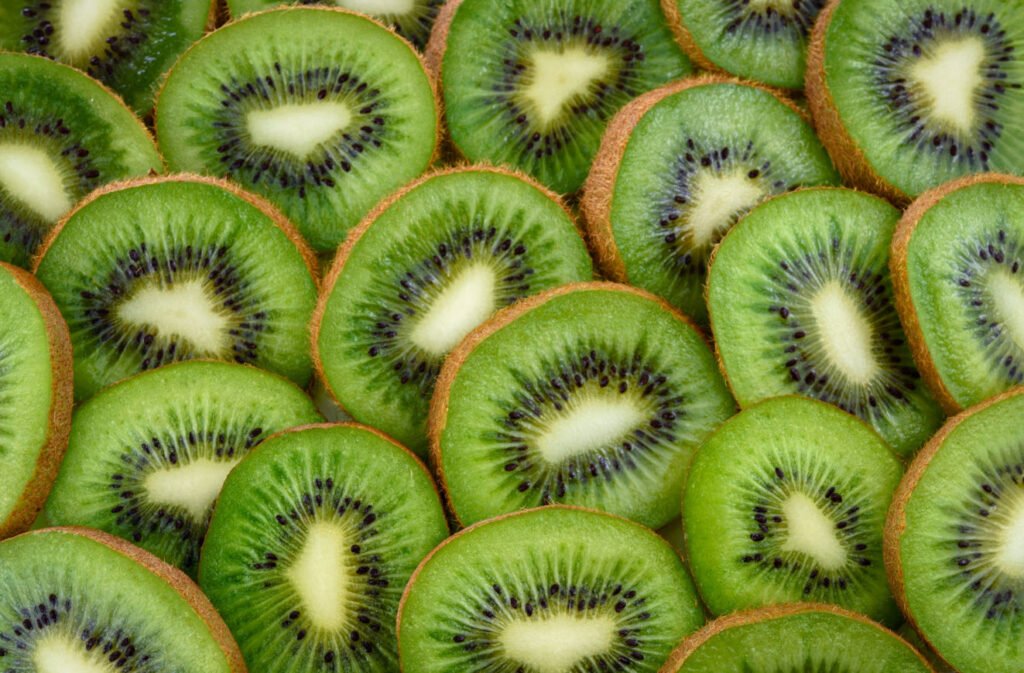
- Seed color turning black
- Surface firmness with slight give
- Brix (sugar level) checks in commercial settings
Storage & Ripening Tips
- Store firm fruits in cool, dry conditions
- Ripen at room temperature
- Ripening hastens when stored with ethylene-producing fruits like apples or bananas
Properly stored mature fruit can keep for 2–6 months, depending on variety.
Plant Health, Pests & Diseases
Common issues include:
- Leaf spots
- Root rots (from poor drainage)
- Insect pests such as leafrollers and scale
Preventative strategies:
- Maintain airflow through pruning
- Avoid overwatering
- Monitor for early symptoms and intervene organically when possible
Container Growing
Dwarf varieties and hardy kiwi adapt well to large containers. Tips include:
- Minimum 15–20 gallon capacity
- Aggressive pruning to manage vigor
- Regular feedings with balanced fertilizer
Commercial & Home-Garden Market Value
Demand for kiwi continues to rise due to:
- Novel culinary uses
- Functional nutrition
- Global export growth
- Breeding of cold-hardy and golden varieties
Even small-scale growers can explore niche markets with unique cultivars.
Conclusion
Kiwi fruit (Actinidia deliciosa) rewards gardeners with a striking combination of ornamental beauty and delicious, nutrient-rich food. With proper pollination, trellising, pruning, and variety selection, kiwi vines can thrive in many temperate regions and yield heavily for decades. Whether enjoyed fresh, cooked, blended, or preserved, kiwi stands out as one of the most versatile and health-promoting fruits for home growers and culinary enthusiasts alike.


&media=https://food-foresting.com/wp-content/uploads/2026/01/ripe-fruits-kiwi-cut-whole-close-up-scaled_9b496ee9-91cd-4aba-aa1c-c9b0fd6a2a81.webp)