
 paulius.mikoliunas1
| Common Name | Autumn Olive |
| Family | Elaeagnaceae |
| USDA hardiness | 3-9 |
| Known Hazards |  E. umbellata has the potential of becoming one of the most troublesome adventive shrubs in the central and eastern United States. E. umbellata has the potential of becoming one of the most troublesome adventive shrubs in the central and eastern United States. |
| Habitats | Thickets and thin woods in the lowland and hills. |
| Range | E. Asia – China, Japan, Himalayas. |
| Edibility Rating |   (4 of 5) (4 of 5) |
| Other Uses |   (3 of 5) (3 of 5) |
| Weed Potential | Yes |
| Medicinal Rating |   (2 of 5) (2 of 5) |
| Care (info) |     |
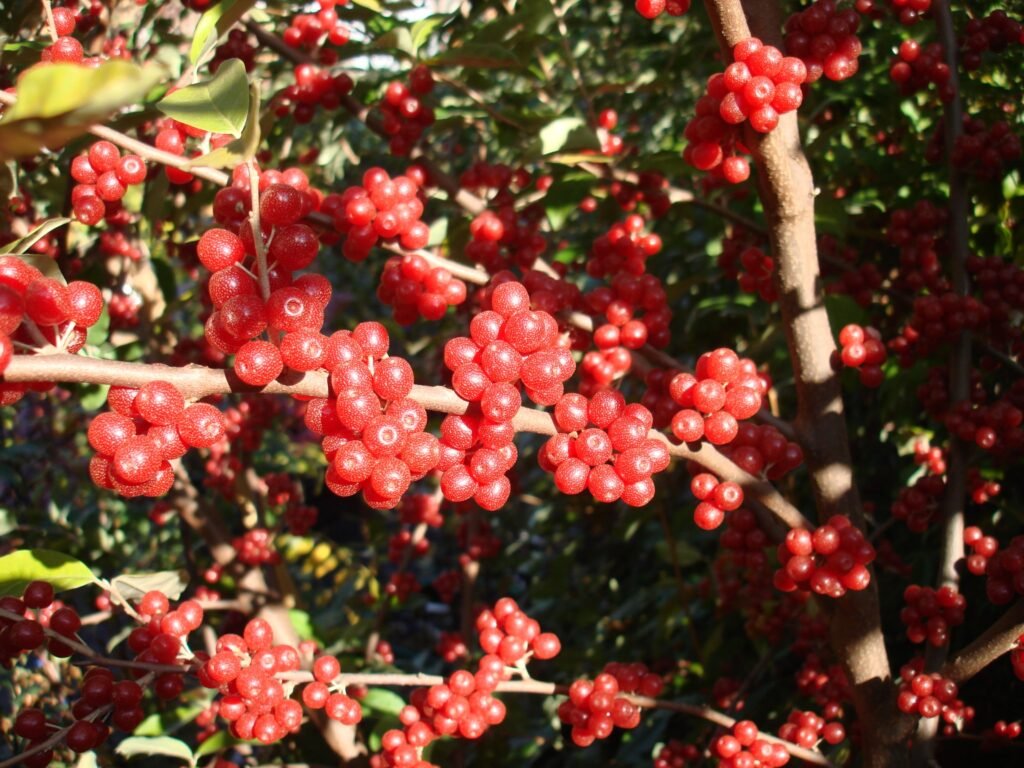
Autumn Olive (Elaeagnus umbellata): How to Grow, Propagate, Harvest, and Use This Underrated Superfruit
Autumn Olive (Elaeagnus umbellata) is one of the most misunderstood fruiting shrubs in the temperate world. Often dismissed or overlooked, this fast-growing, nitrogen-fixing plant produces incredibly nutritious berries with a flavor that transforms beautifully when cooked. Whether you’re a permaculture gardener, forager, homesteader, or curious fruit grower, Autumn Olive offers resilience, productivity, and culinary potential that few shrubs can match.
This comprehensive guide covers how to grow Autumn Olive, propagation methods, popular varieties, harvesting tips, and food uses, all in one place.
What Is Autumn Olive?
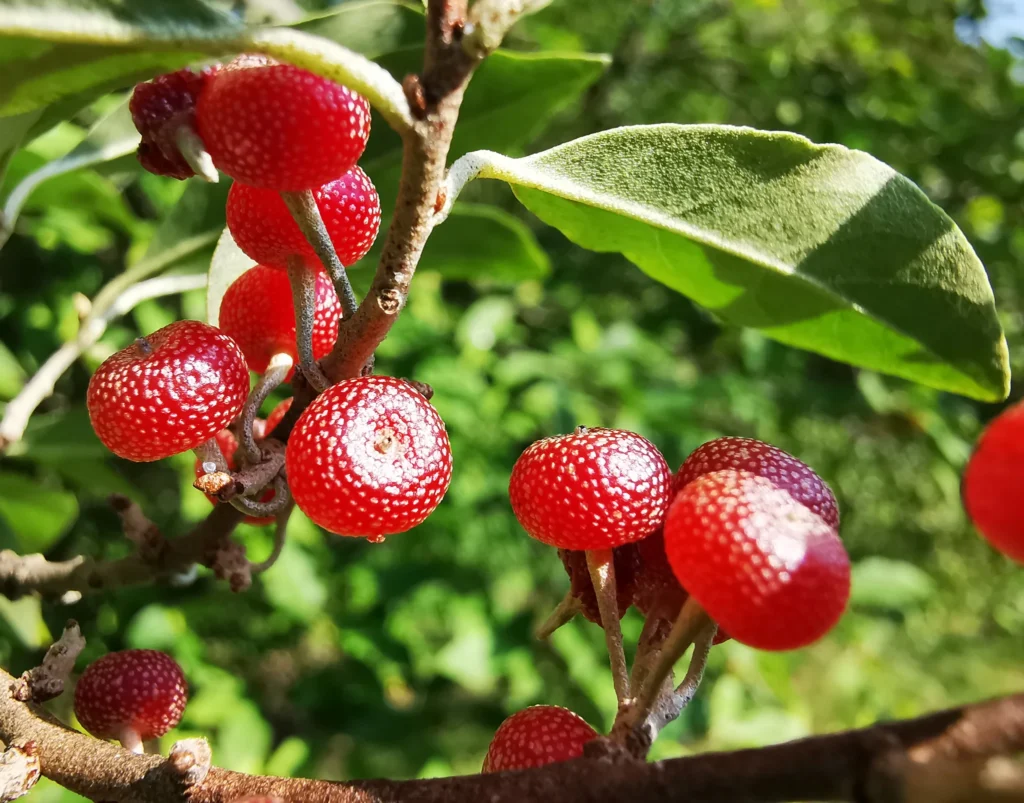
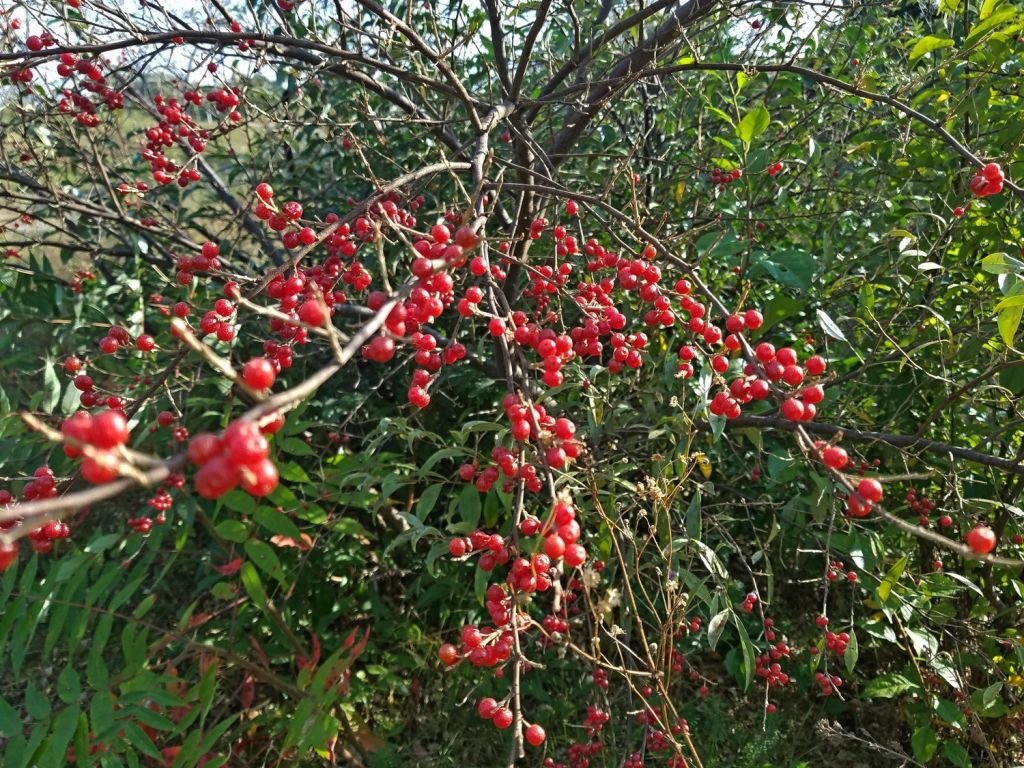
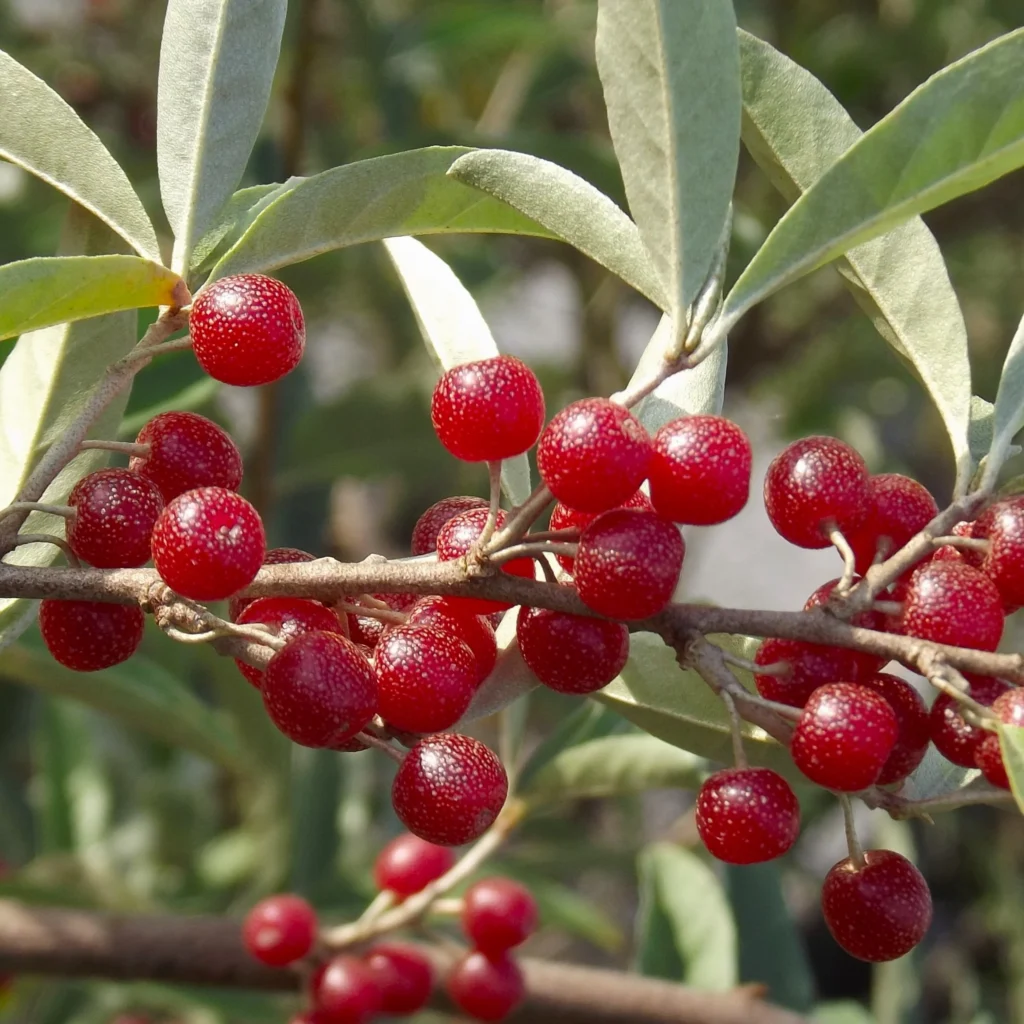
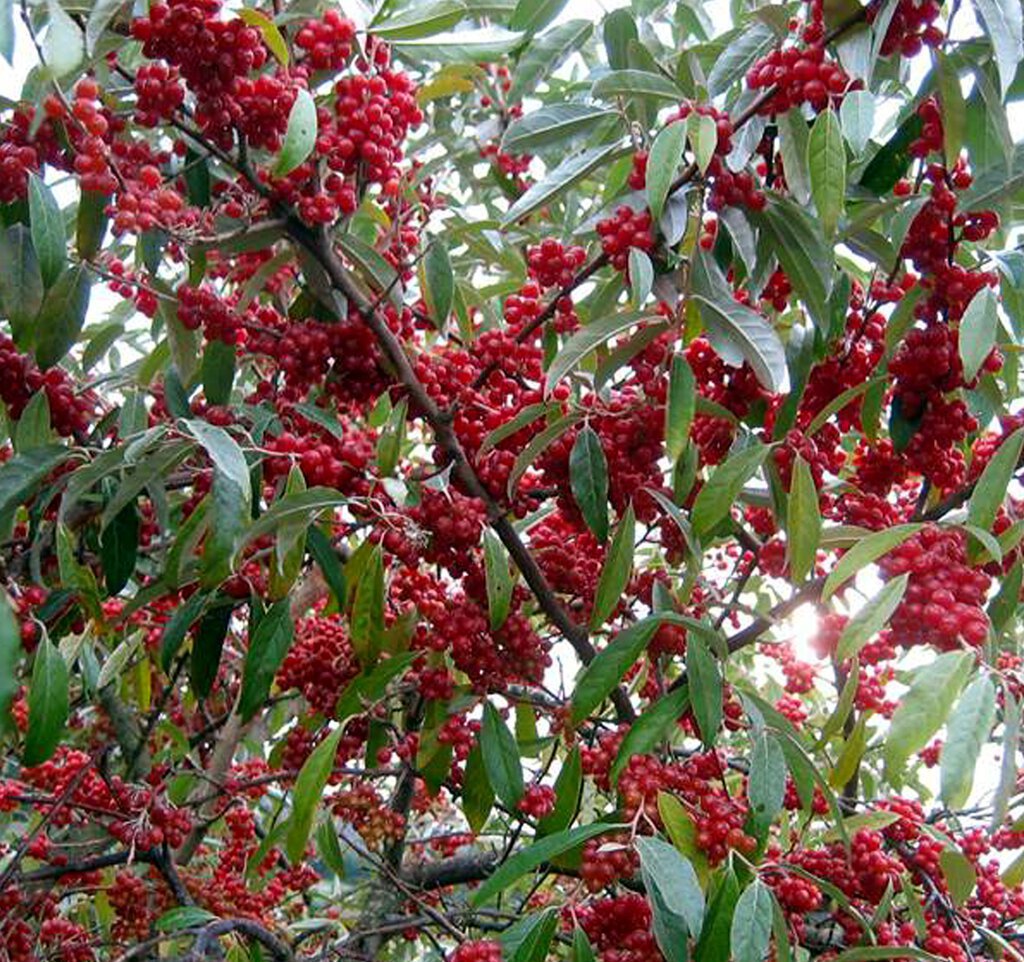
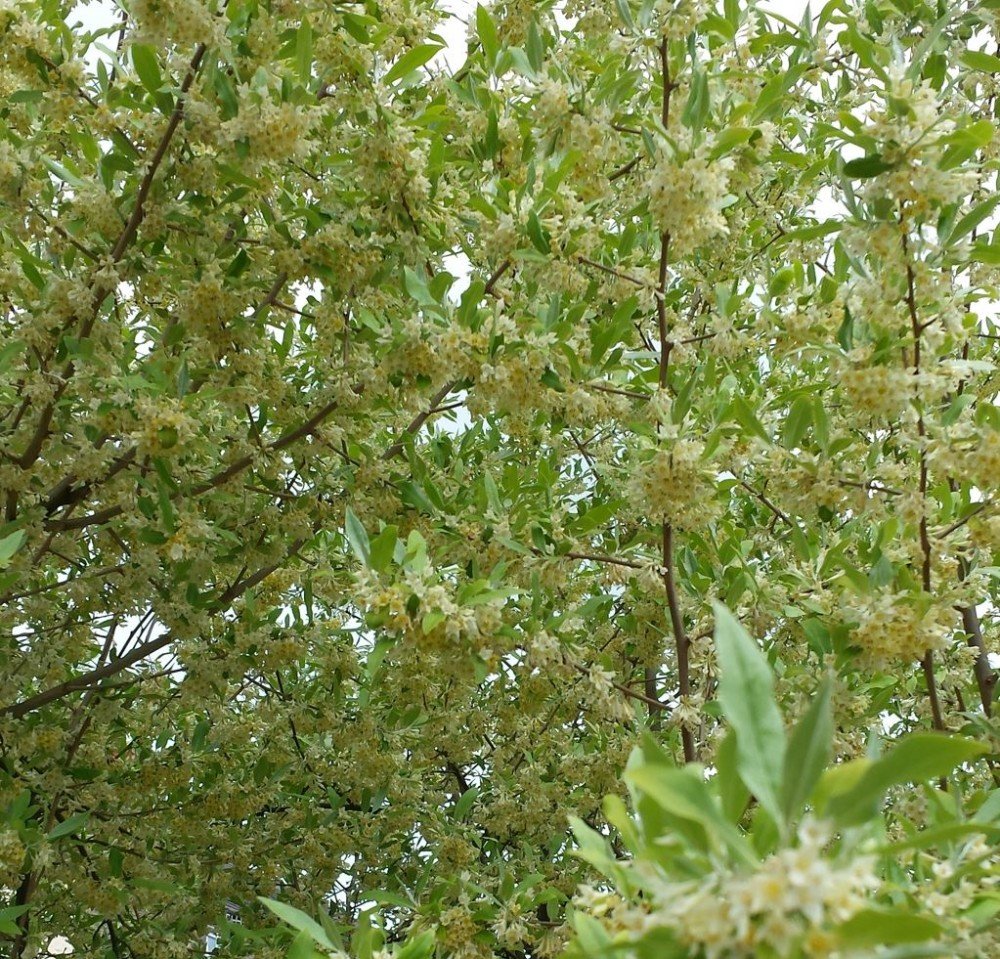
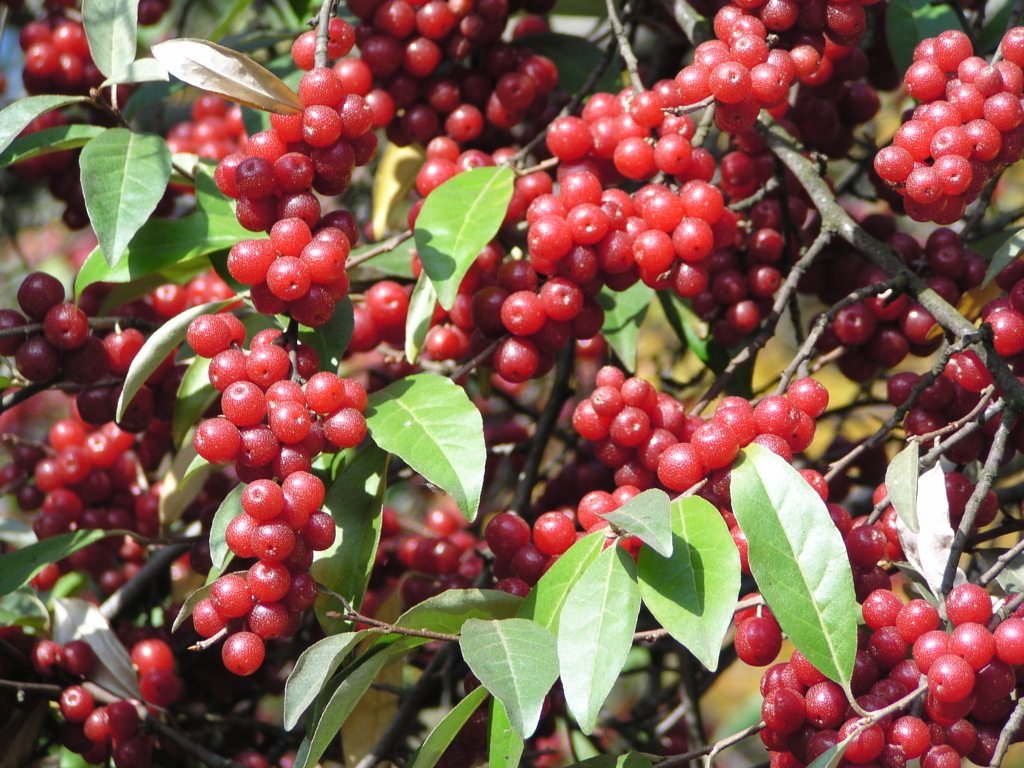
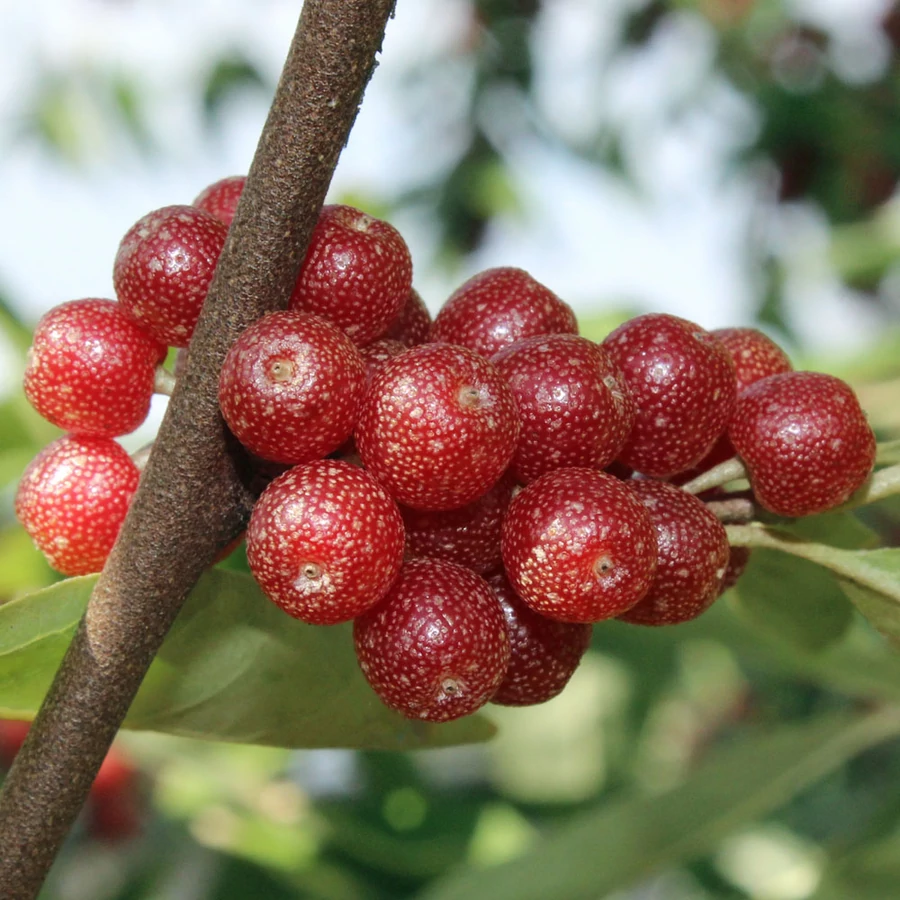
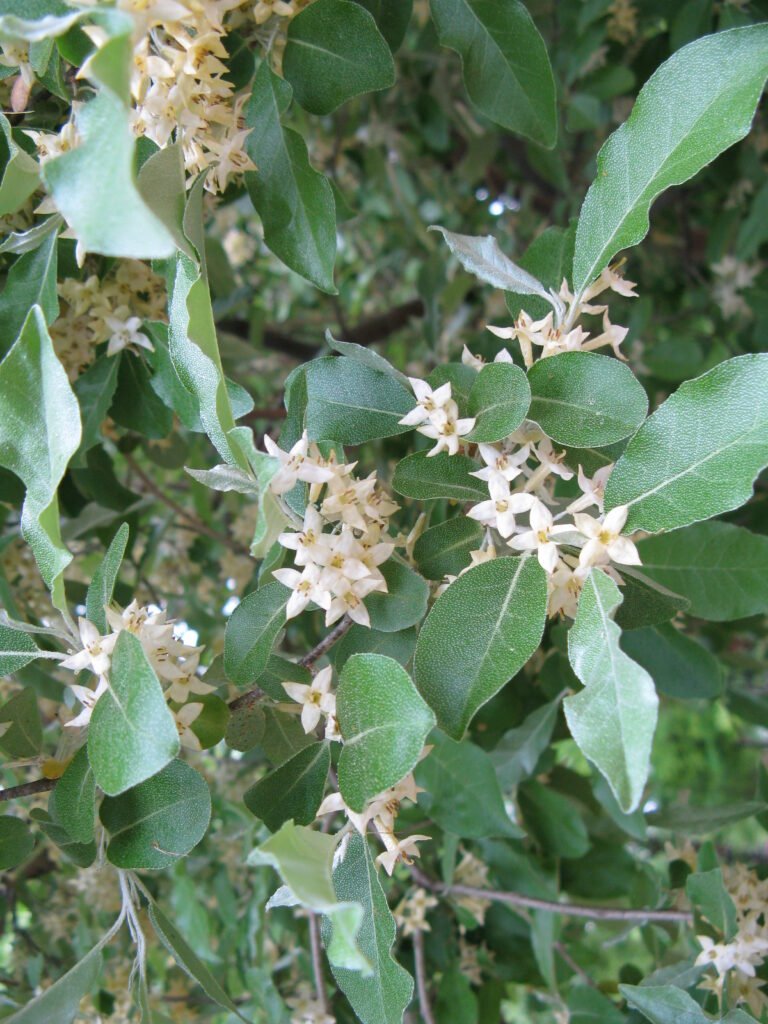
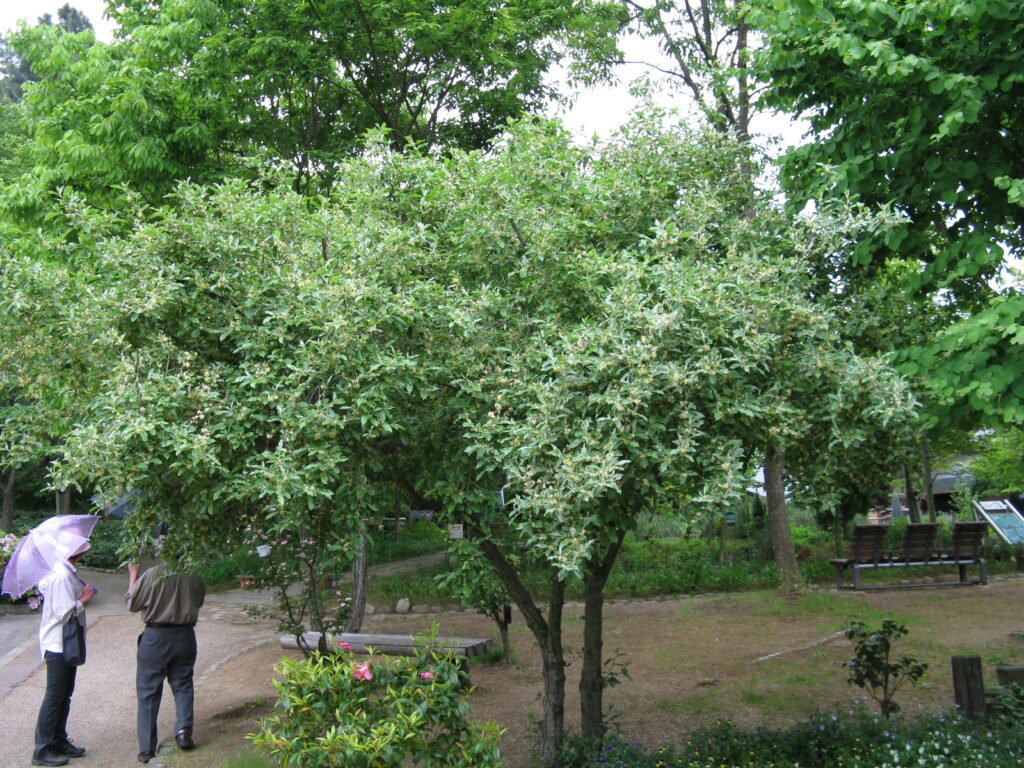
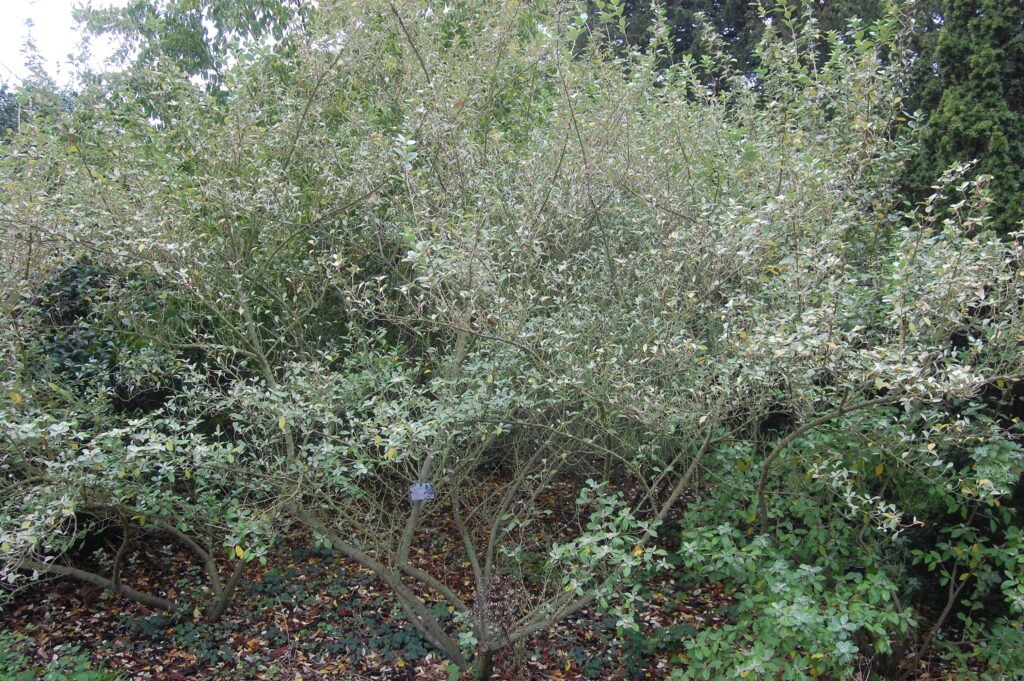
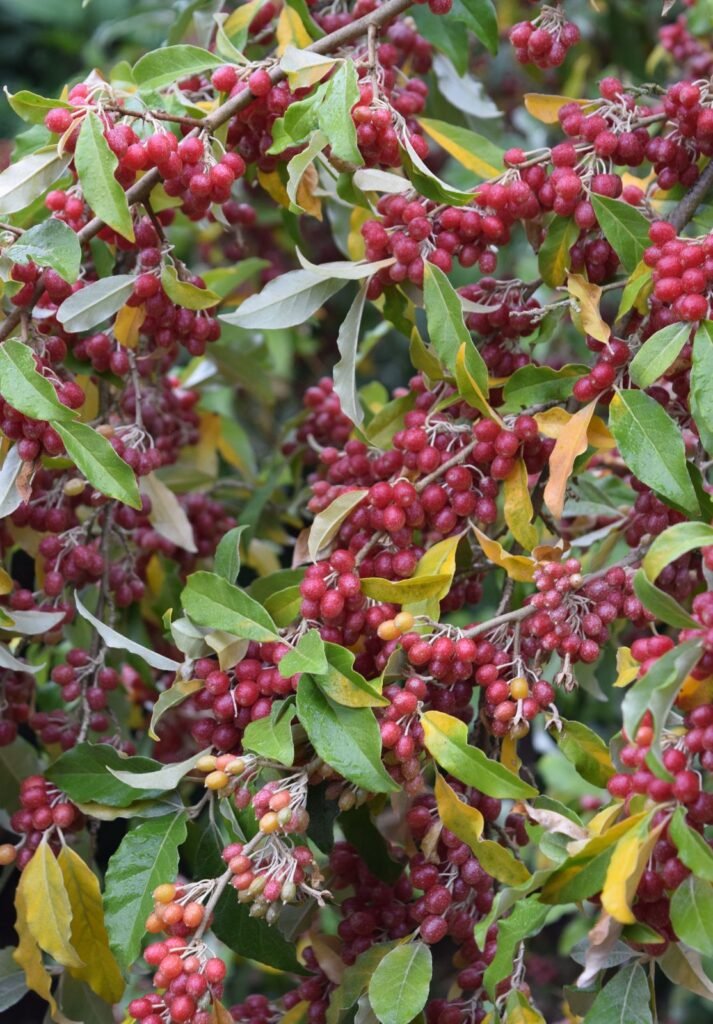
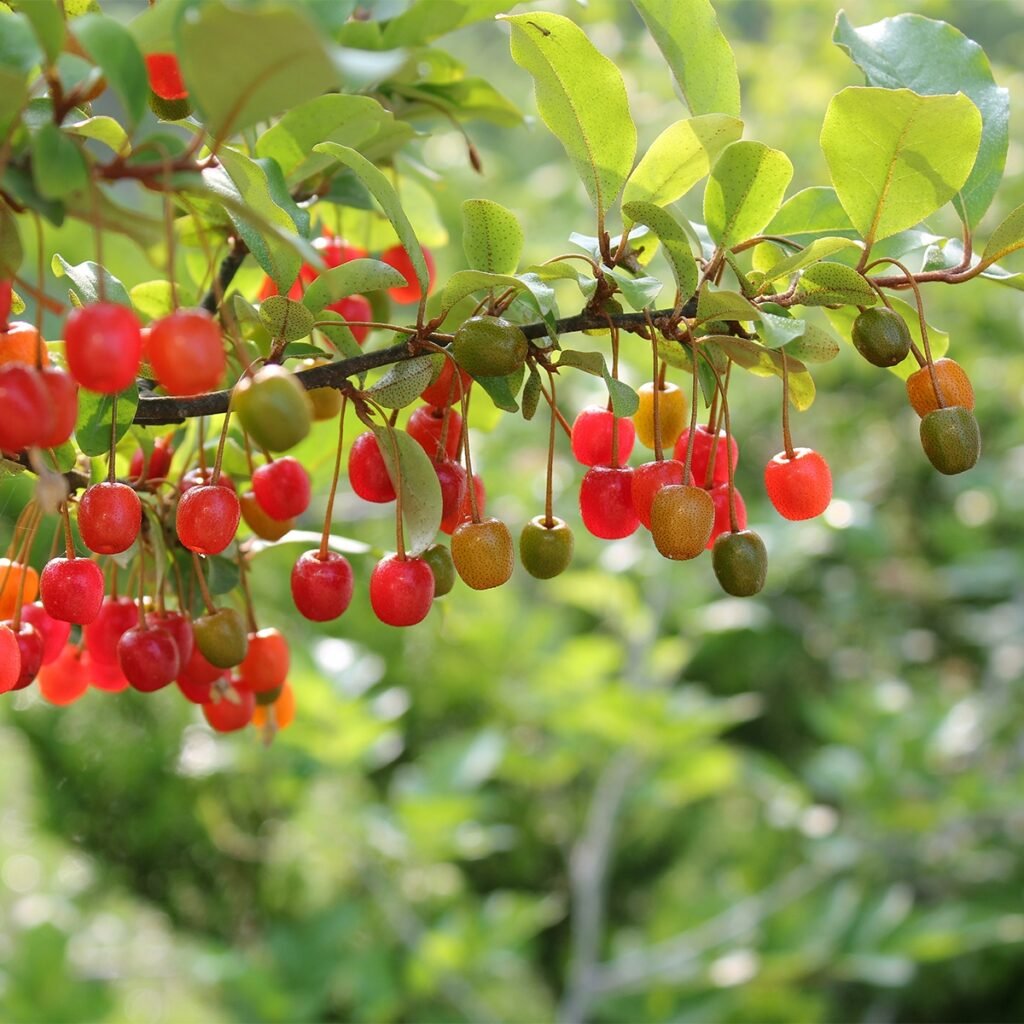
Autumn Olive is a deciduous shrub or small tree native to East Asia. It can grow 10–20 feet tall and wide, forming a dense, thorny structure with silvery-green leaves. In spring, it produces fragrant, creamy-white flowers, followed by clusters of small red berries speckled with silver in late summer to fall.
The berries are rich in lycopene, vitamin C, and antioxidants—often containing more lycopene than tomatoes.
How to Grow Autumn Olive Successfully
Climate and Hardiness
Autumn Olive is extremely adaptable and thrives in a wide range of climates.
- USDA Hardiness Zones: 3–8
- Cold tolerance: Survives harsh winters
- Heat tolerance: Handles summer heat well once established
This shrub is especially valuable in marginal soils where other fruit plants struggle.
Soil Requirements
One of Autumn Olive’s biggest strengths is its ability to grow in poor soil.
- Tolerates sandy, rocky, and clay soils
- Grows in acidic to slightly alkaline conditions
- Fixes nitrogen through root nodules, improving soil fertility
It does not require rich soil and actually performs better without excessive fertilization.
Sunlight Needs
- Best fruiting occurs in full sun
- Can tolerate partial shade, but berry production may decrease
For maximum yield and sweetness, plant in an open, sunny location.
Watering and Maintenance
- Drought-tolerant once established
- Water young plants during the first growing season
- Minimal pruning required; prune only to shape or remove dead wood
Autumn Olive is a low-maintenance plant that thrives on neglect.
How to Propagate Autumn Olive
Autumn Olive can be propagated in several effective ways, making it easy to expand your planting or share with others.
Propagation from Seed
Seed propagation is the most common method.
- Collect ripe berries in fall
- Remove pulp and clean seeds
- Cold stratify seeds for 2–3 months
- Sow in spring in well-drained soil
Seed-grown plants may vary slightly in fruit size and flavor.
Propagation from Cuttings
For more predictable results, cuttings are ideal.
- Take semi-hardwood cuttings in late summer
- Use rooting hormone for higher success
- Keep in a humid environment until rooted
This method produces clones of the parent plant.
Propagation by Suckers
Established plants often send up suckers from the roots.
- Dig up suckers in early spring
- Transplant immediately
- Water well until established
This is one of the easiest and fastest propagation methods.
Autumn Olive Varieties and Types
While many Autumn Olive plants are seed-grown, a few named selections are known for superior fruit quality.
Common Characteristics Across Varieties
- Red to deep crimson berries
- Silver-speckled skin
- Tart when raw, sweet when processed
Flavor improves dramatically after frost.
Improved Selections
Some cultivated types are selected for:
- Larger berries
- Reduced bitterness
- Higher sugar content
If fruit quality is your priority, seek out improved or named selections rather than wild seedlings.
When and How to Harvest Autumn Olive
Harvest Season
- Late summer through mid-autumn
- Best harvested after the first frost, which reduces astringency
Berries turn deep red and soften slightly when fully ripe.
Harvesting Tips
- Use gloves if harvesting from thorny plants
- Spread a tarp under the shrub and shake branches
- Hand-pick for small harvests
Ripe berries detach easily and stain easily—wear old clothes.
Taste Profile: Raw vs Cooked
Raw Autumn Olive berries are:
- Tart
- Slightly astringent
- Bright and acidic
Cooked berries become:
- Rich and fruity
- Naturally sweet
- Similar to cranberry, cherry, or pomegranate
Processing is where Autumn Olive truly shines.
Food Uses and Culinary Ideas
Autumn Olive is incredibly versatile in the kitchen.
Jams, Jellies, and Preserves
The most popular use.
- Naturally high in pectin
- Deep red color
- Bold, tangy flavor
Perfect for toast, pastries, and yogurt.
Sauces and Purees
- Cook berries and strain seeds
- Use as a base for savory sauces
- Excellent with game meats, poultry, and roasted vegetables
The puree resembles tomato sauce in texture and color.
Fruit Leather and Drying
- Blend cooked berries into puree
- Dehydrate into fruit leather
- Intensifies sweetness and flavor
Great for shelf-stable snacks.
Beverages and Fermentation
- Juice for syrups and cordials
- Ferment into wine or vinegar
- Blend into smoothies with sweeter fruits
Autumn Olive pairs well with apple, pear, and honey.
Baking and Desserts
- Use as pie filling
- Add to muffins or tarts
- Swirl into cheesecake or ice cream
Its acidity balances rich desserts beautifully.
Nutritional Benefits of Autumn Olive
Autumn Olive berries are a nutritional powerhouse.
- Extremely high in lycopene
- Rich in antioxidants
- Good source of vitamin A and C
- Supports immune and cardiovascular health
Cooking increases lycopene availability, making processed forms even healthier.
Is Autumn Olive Invasive?
In some regions, Autumn Olive spreads aggressively due to birds dispersing seeds. However, in managed settings such as home gardens, orchards, and permaculture systems, it can be responsibly controlled through:
- Regular pruning
- Harvesting fruit before seed spread
- Preventing unwanted seedlings
Many growers value it as a soil-restoring, productive plant when responsibly managed.
Why Grow Autumn Olive?
Autumn Olive is ideal for growers who want:
- A tough, resilient fruiting plant
- High nutrition with minimal care
- Soil improvement through nitrogen fixation
- Unique flavors not found in supermarkets
It’s a plant that rewards patience and creativity.
Final Thoughts
Autumn Olive (Elaeagnus umbellata) is far more than an overlooked shrub—it’s a hardy, productive, and nutrient-rich fruit plant with enormous potential for home growers and foragers. With proper growing practices, thoughtful harvesting, and creative cooking, this plant transforms from a wild curiosity into a valuable food source.
If you’re looking for a low-maintenance fruit that thrives where others fail, Autumn Olive might just become your new favorite harvest.




&media=https://food-foresting.com/wp-content/uploads/2026/02/elaeagnus-umbellata-owoce05067.jpg)