
 paulius.mikoliunas1
| Common Name | Pampas Grass |
| Family | Poaceae or Gramineae |
| USDA hardiness | 7-11 |
| Known Hazards | None known |
| Habitats | Moist sandy soils[187] on river banks and mountains in Chile. |
| Range | S. America – temperate areas. Sometimes persists in Britain as a garden throw-out. |
| Edibility Rating |  (0 of 5) (0 of 5) |
| Other Uses |   (2 of 5) (2 of 5) |
| Weed Potential | Yes |
| Medicinal Rating |  (0 of 5) (0 of 5) |
| Care (info) |     |

How to Grow, Propagate, Use, and Harvest Pampas Grass (Cortaderia selloana)
Pampas grass (Cortaderia selloana) has risen from ornamental obscurity to a major landscaping trend thanks to its dramatic plumes, drought tolerance, and versatility in both gardens and home décor. If you’re looking to cultivate this ornamental powerhouse—and even explore less-common culinary and crafting uses—this comprehensive guide will walk through everything from varieties and propagation to harvesting and usage.
What Makes Pampas Grass Special?
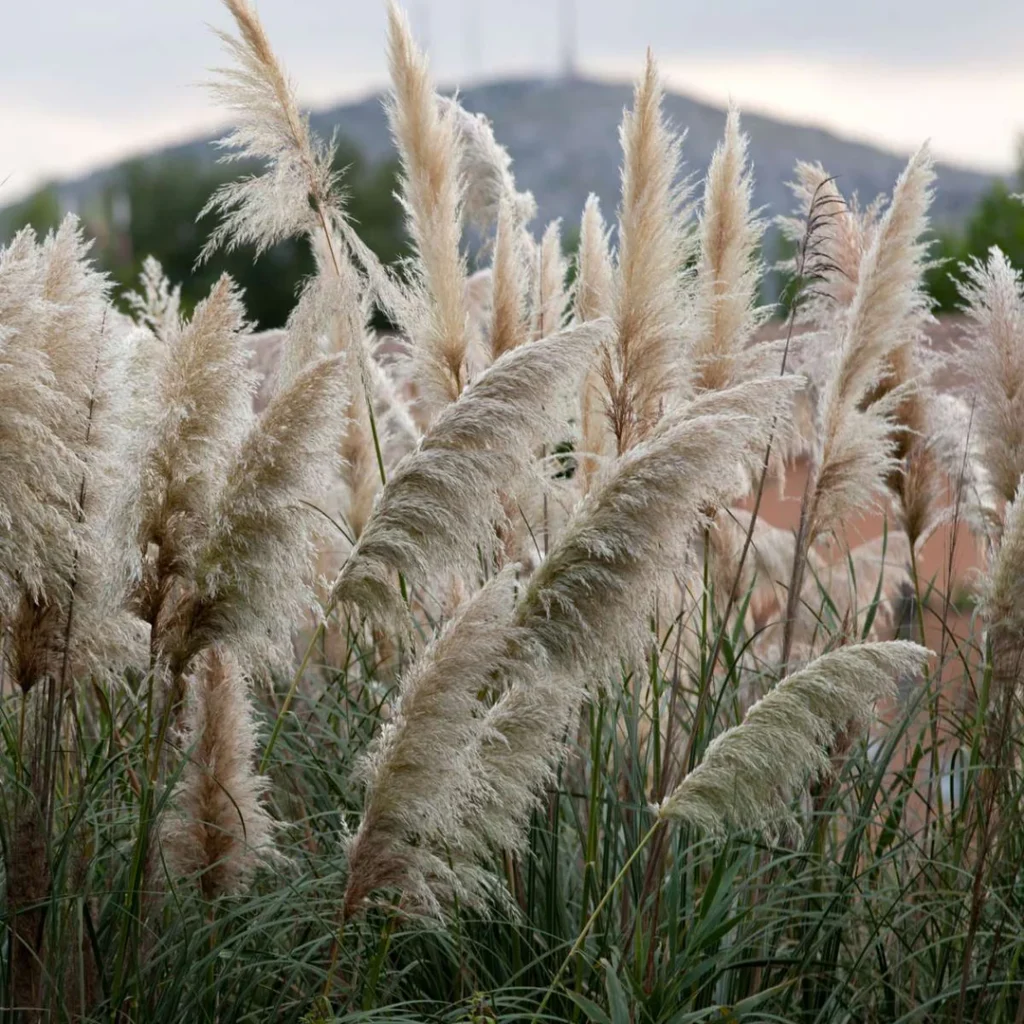
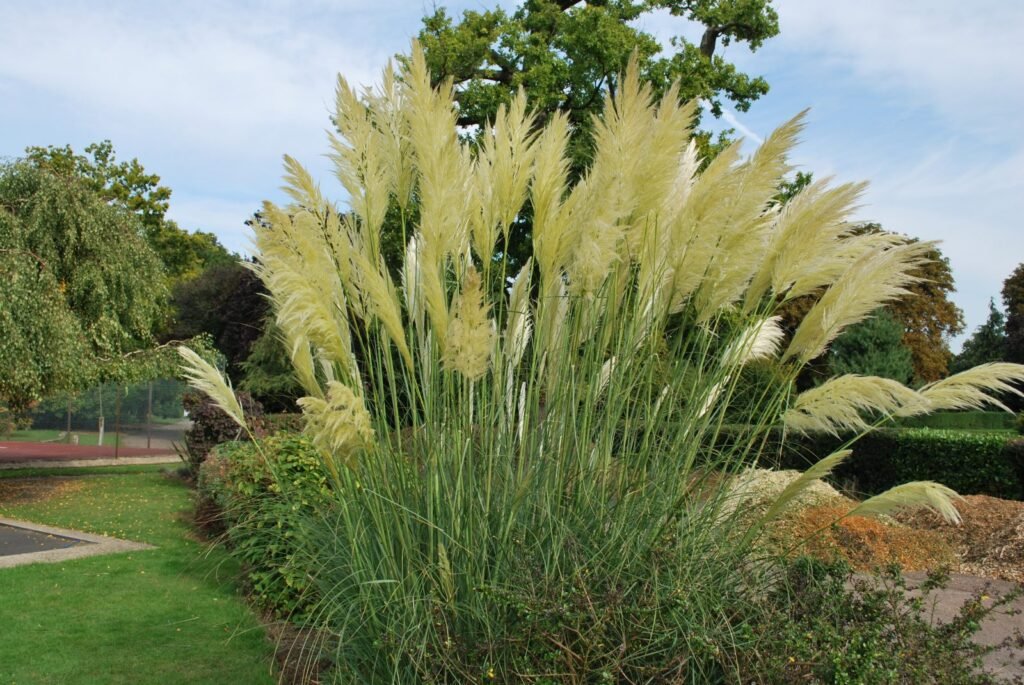
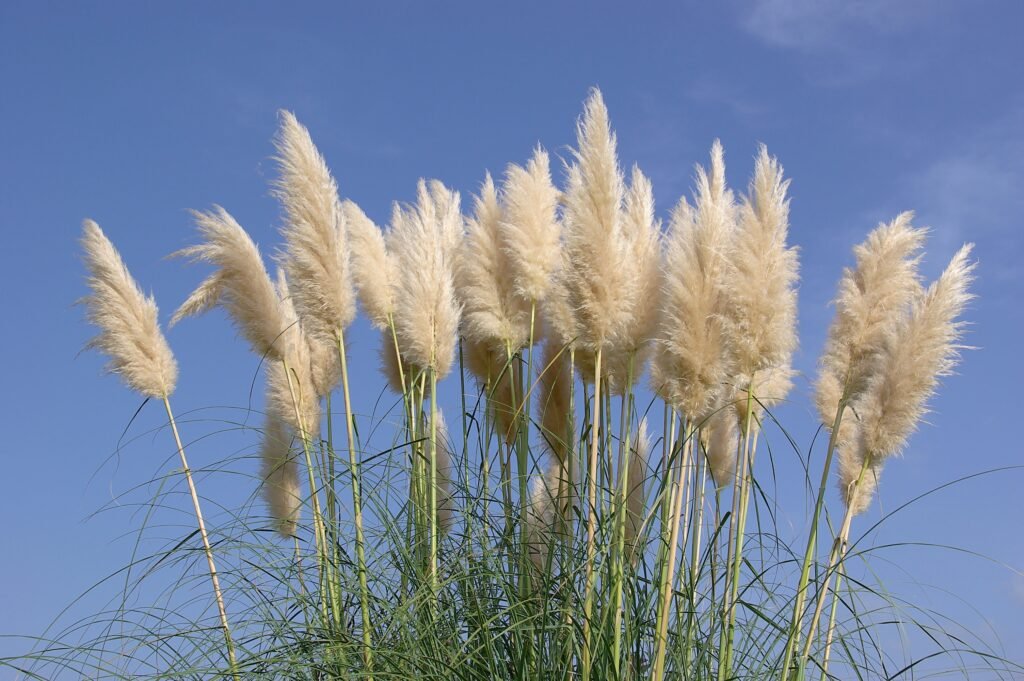
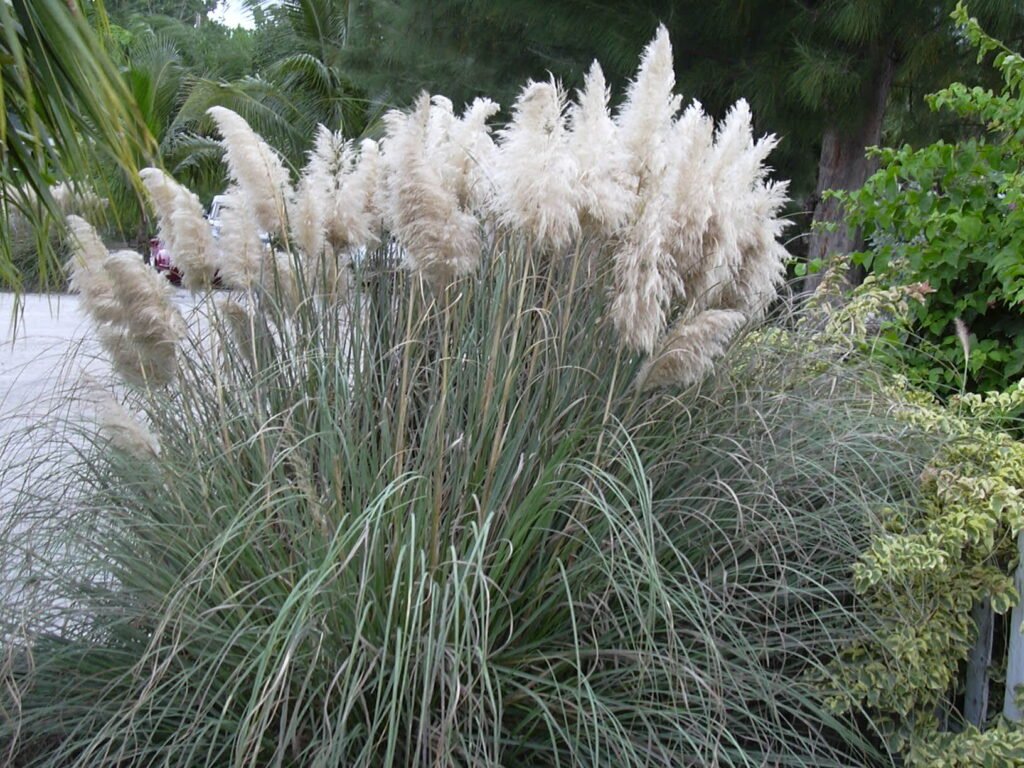
Pampas grass is a perennial ornamental grass native to South America. Its signature silky plumes can grow 2–10 feet high depending on climate and variety. Thanks to its drought resistance and rapid growth, it’s well-suited to:
- Coastal gardens
- Xeriscaping
- Pollinator-friendly landscapes
- Natural privacy screens
- Modern ornamental design
Although often elevated for aesthetics, this plant has history as a fiber, craft, and sometimes edible resource.
Growing Pampas Grass
Climate & Hardiness
Pampas grass thrives in USDA zones 7–11, but can survive cooler climates with protection. It prefers:
- Full sun (6+ hours daily)
- Moderate to low water
- Poor to medium soil fertility
- Well-draining conditions
Once established, it becomes highly drought-tolerant and resilient.
Soil Requirements
Although adaptable, pampas grass performs best in sandy or loamy soil. Heavy clay can cause water-logging and root issues. Amending with compost improves airflow and drainage, increasing plume production.
Watering Schedule
- Year 1: Water deeply 1–2 times weekly.
- Established Plants: Water only during prolonged drought.
Overwatering can reduce plume size and contribute to fungal problems.
Fertilization
A yearly spring application of balanced slow-release fertilizer encourages vigorous foliage and larger plumes, though overfeeding encourages floppy growth.
Propagation Methods
Pampas grass can be propagated three main ways:
1. Division (Recommended)
Division yields consistent results and preserves named varieties.
Steps:
- Divide clumps in spring before new growth appears.
- Use a sharp spade or saw—crowns are tough and fibrous.
- Replant divisions at equal depth, water well.
- Mulch lightly to reduce transplant shock.
Division ensures the new plant retains the parent’s plume color and size.
2. From Seed
Seeds offer more variability and slightly slower establishment.
Pros:
- Cost-effective
- Large quantity potential
Cons:
- Genetic variability
- Takes longer to plume
Sow seeds indoors 6–10 weeks before the last frost or direct sow once soil warms.
3. Tissue Culture (Commercial)
Used by horticultural producers, offering uniform landscaping plants.
Popular Pampas Grass Varieties
Pampas grass is not one variety but a spectrum. Popular choices include:
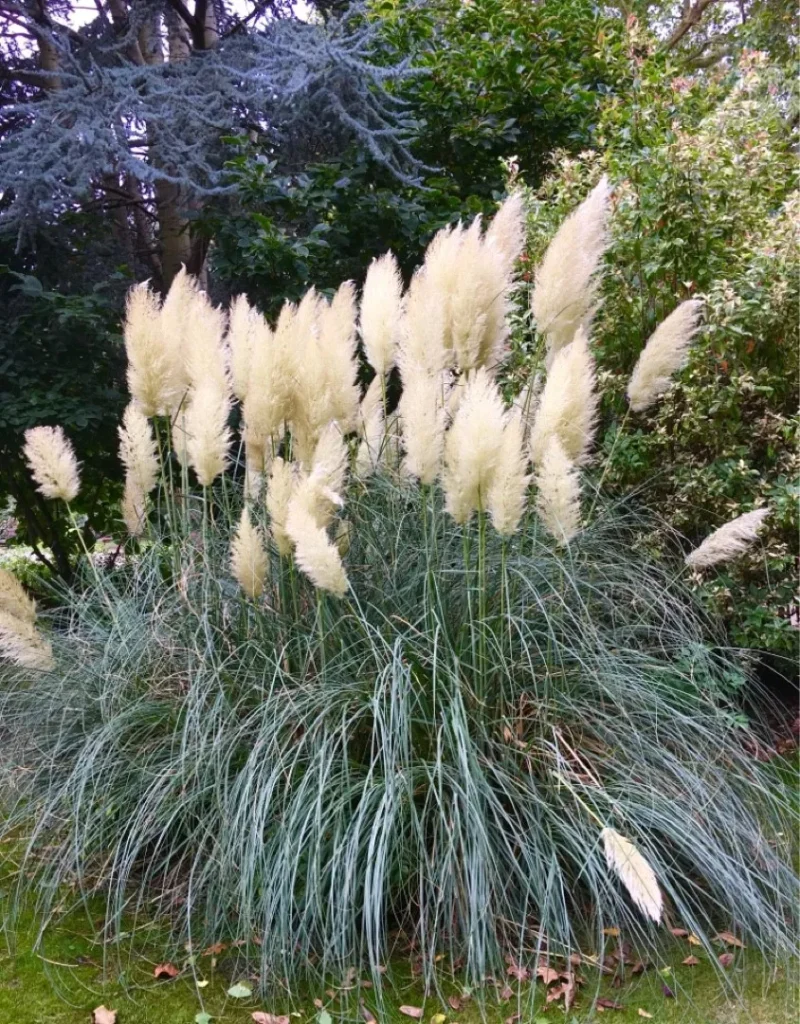
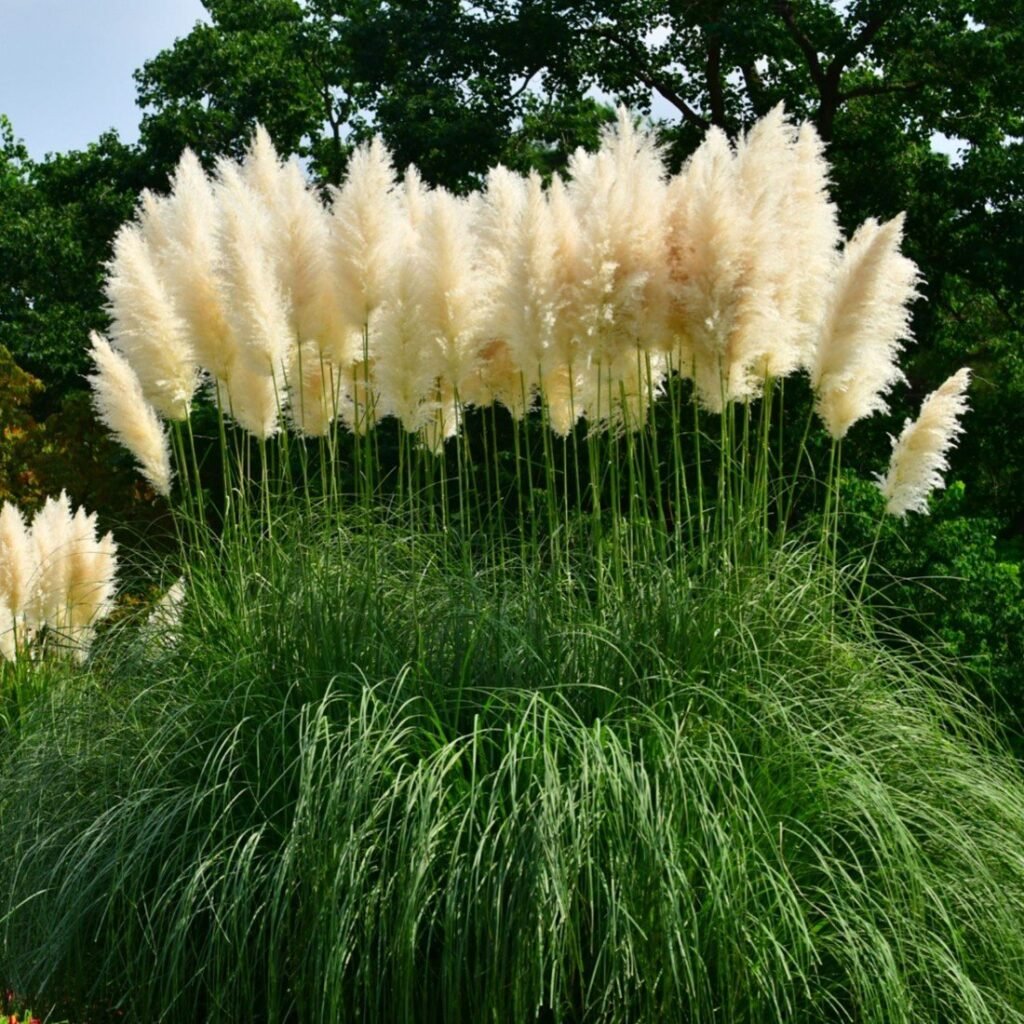
✔ ‘Pumila’ (Dwarf Pampas)
- Smaller, ideal for urban gardens
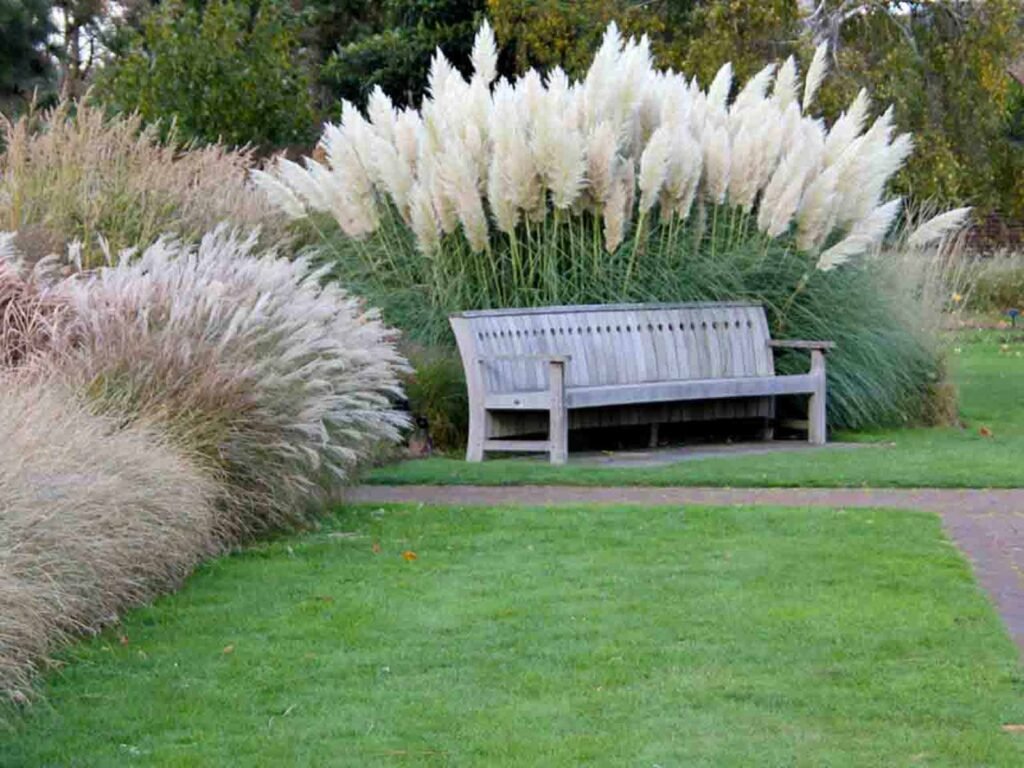
- Creamy-white plumes
- Less aggressive spread
✔ ‘Silver Comet’
- Variegated leaves with silver-white stripes
- Adds texture and brightness
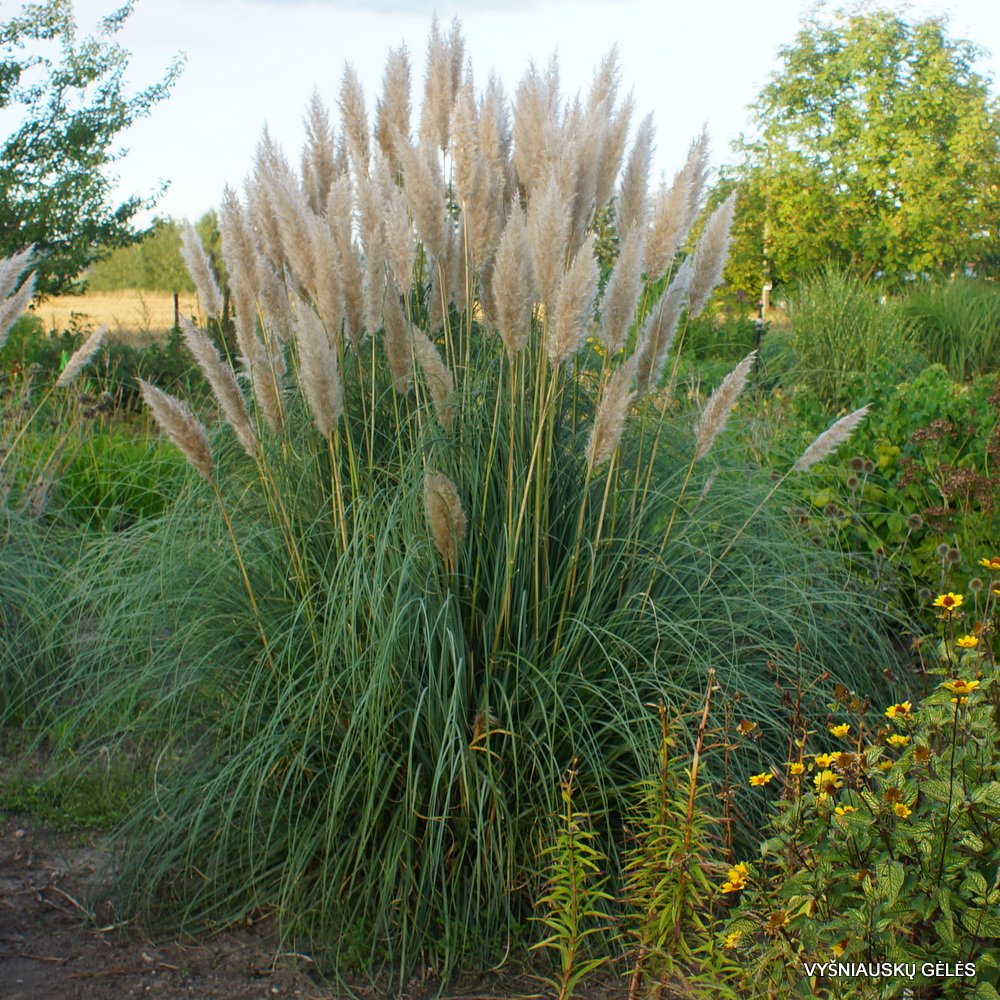
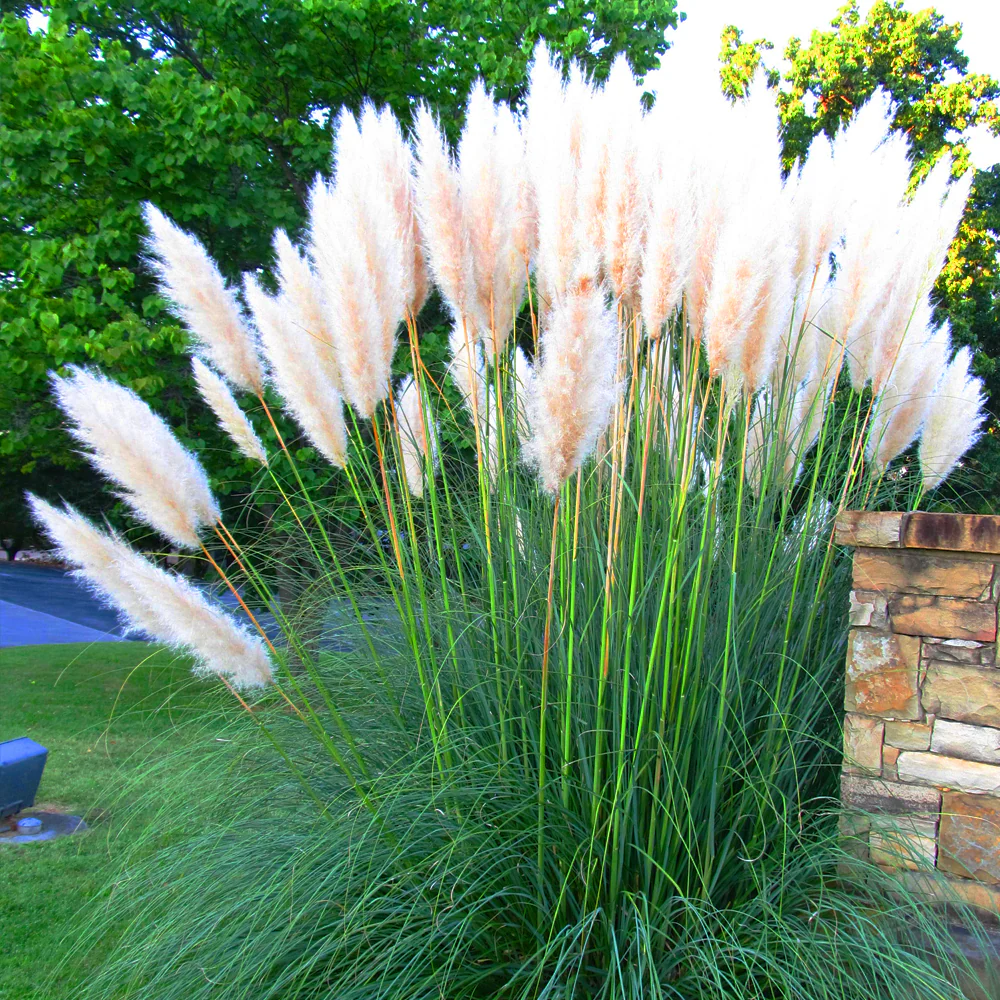
✔ Standard White Pampas
- Tall plumes up to 10 ft
- Coastal favorite
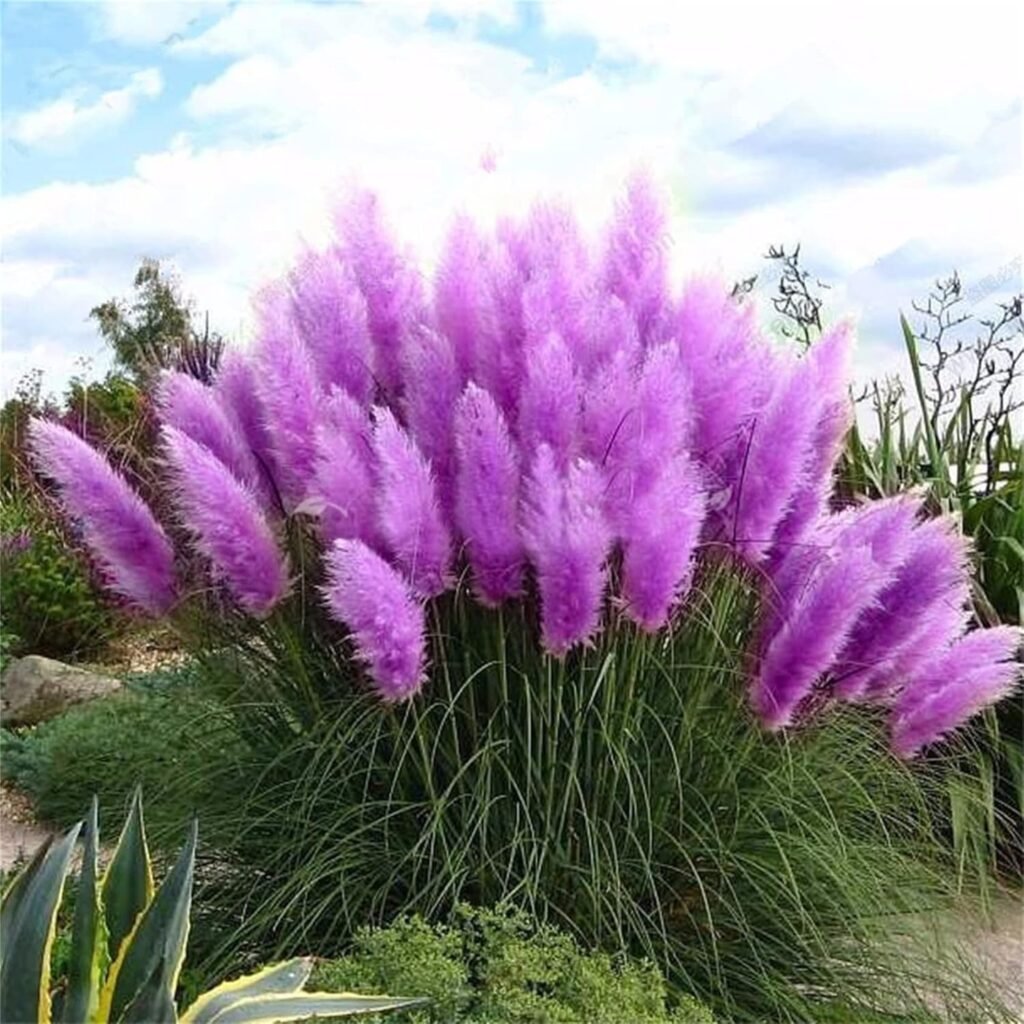
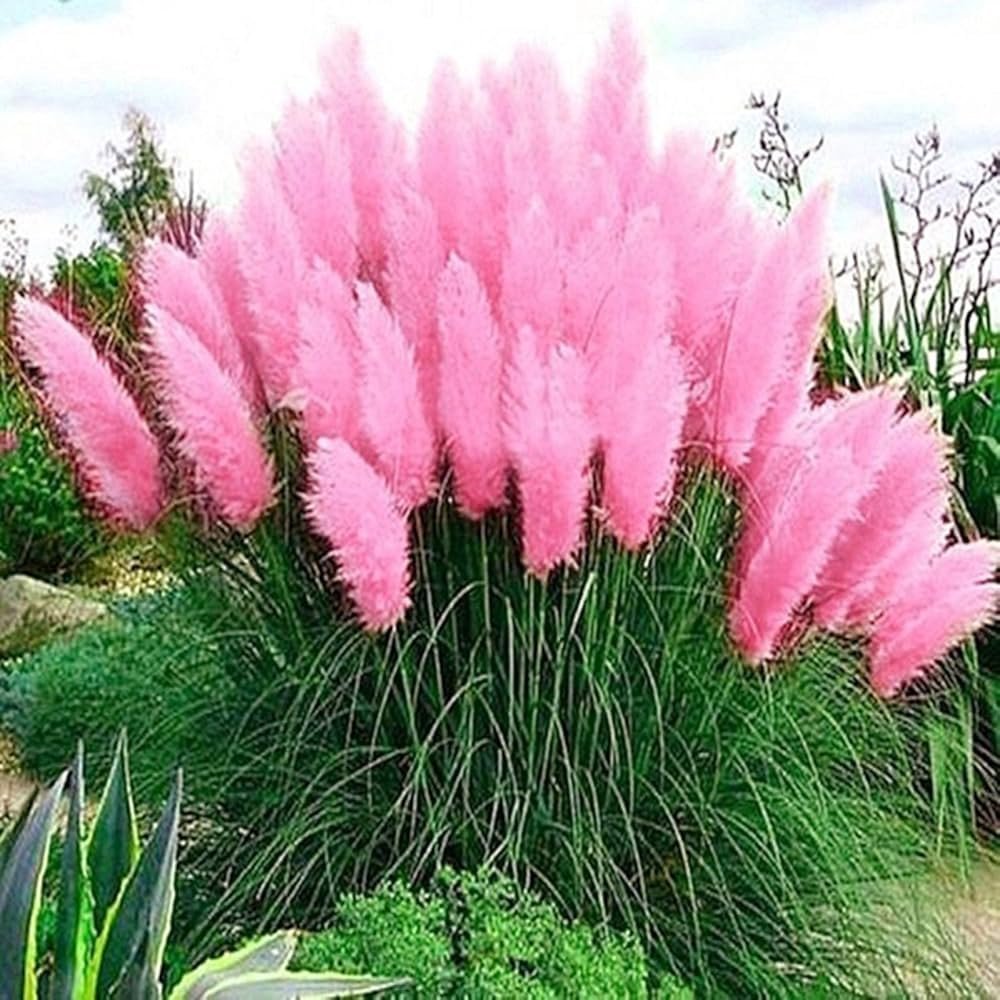
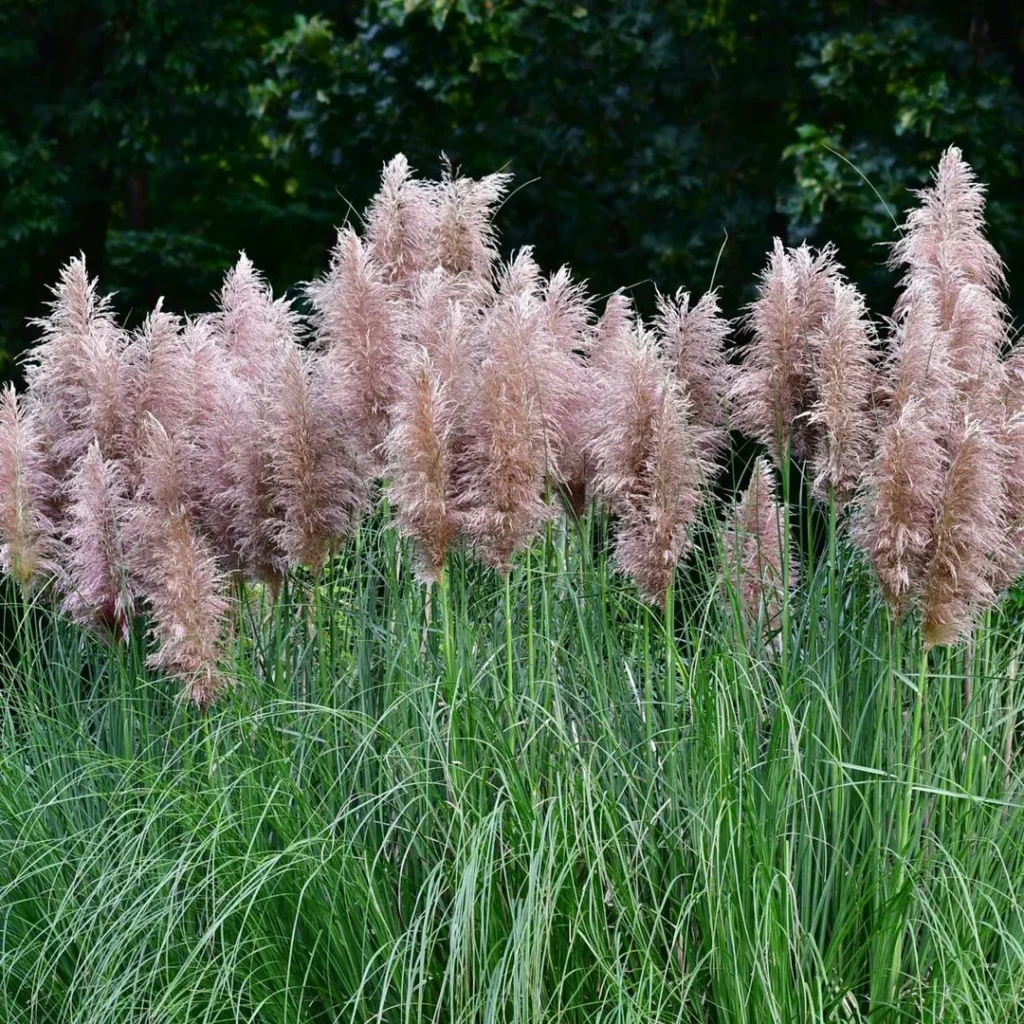
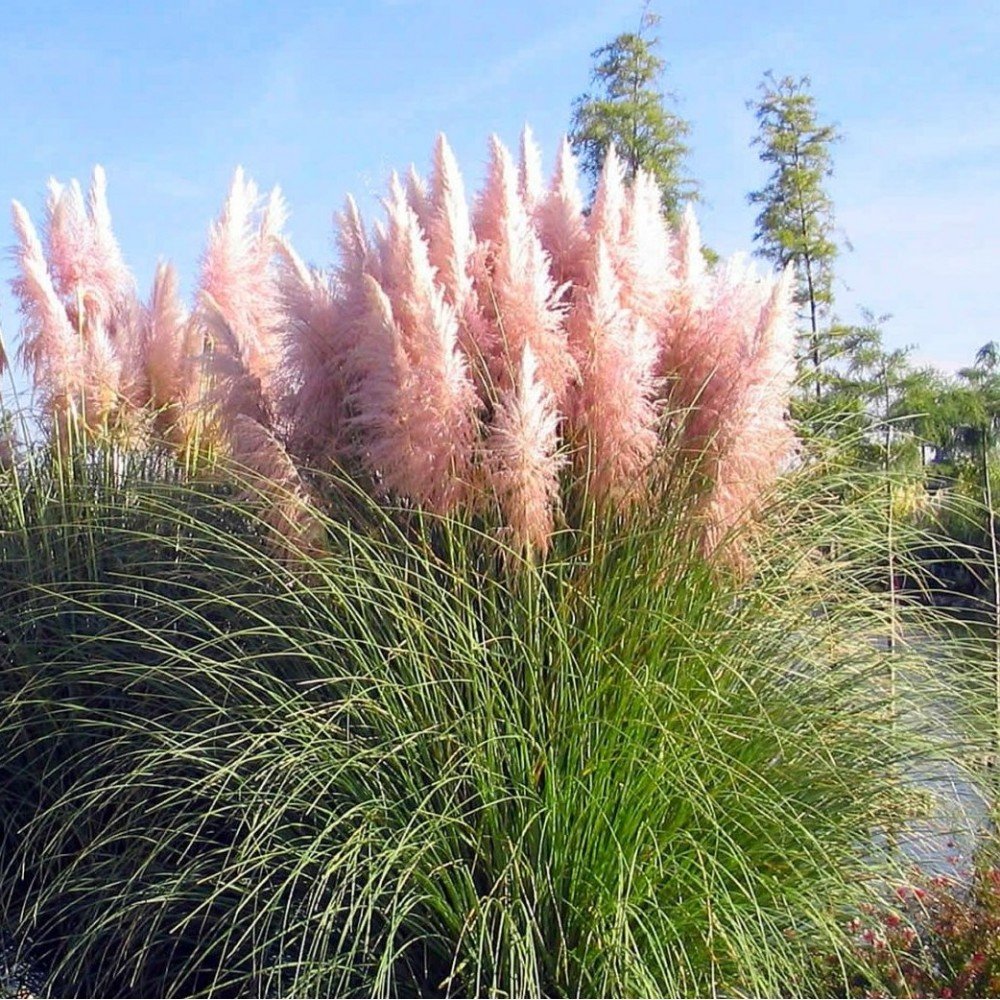
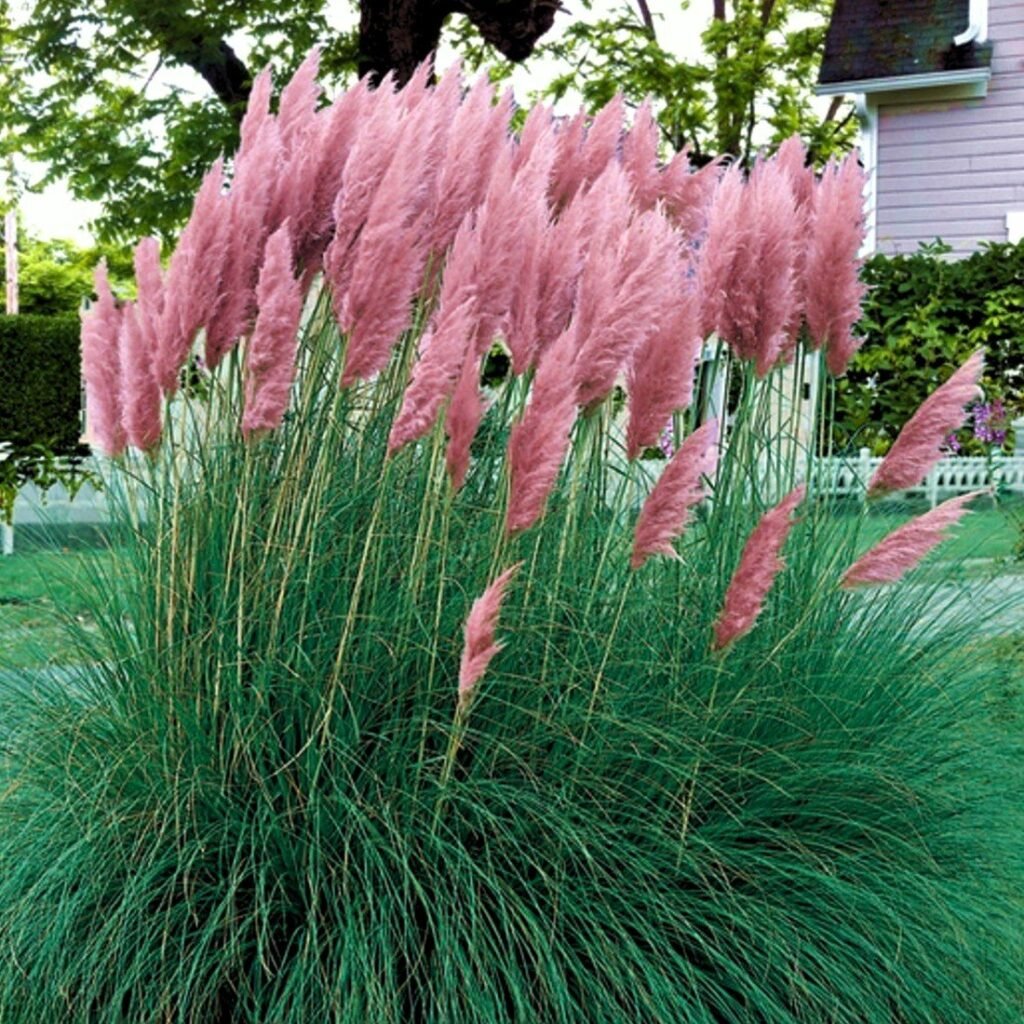
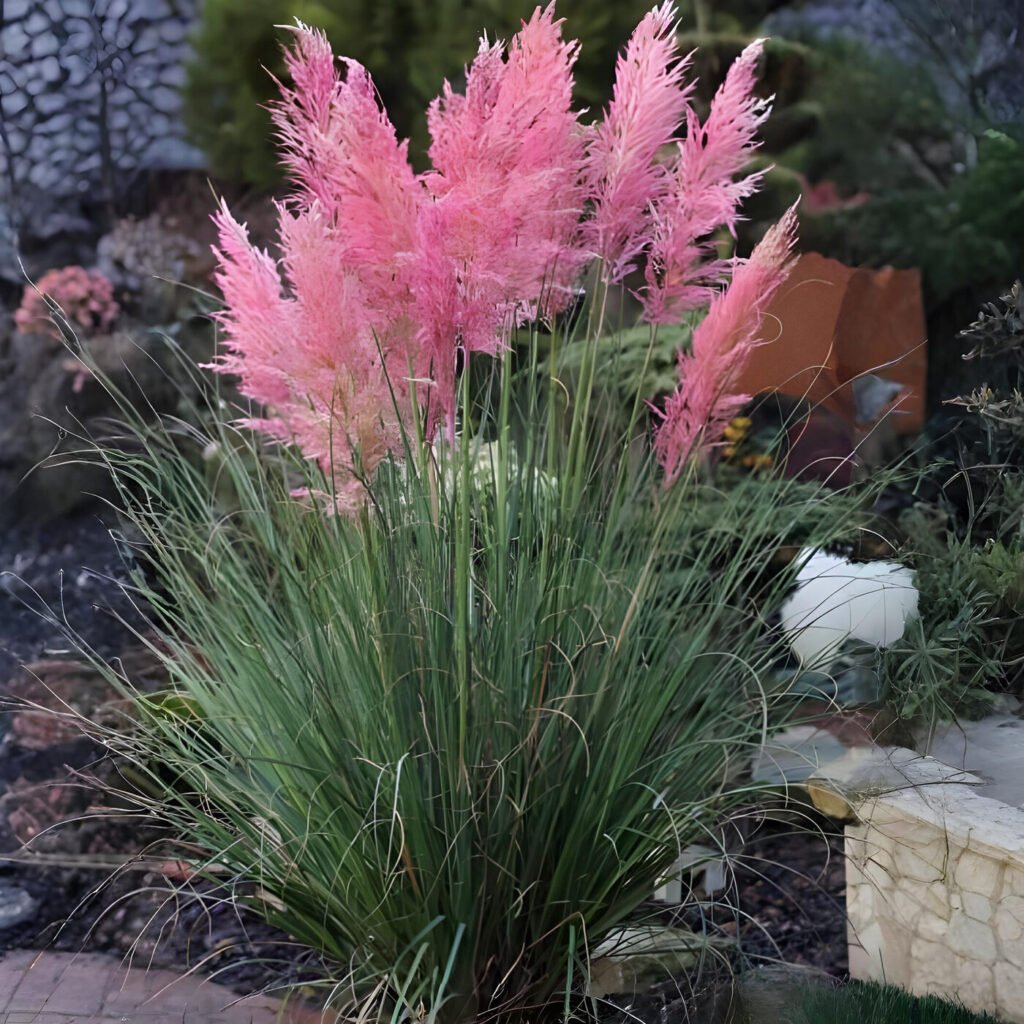
✔ Pink Pampas Grass
- Rosy pink to pastel blush plumes
- Highly popular for décor and floral arrangements
✔ Cortaderia jubata
- Often mistaken for selloana
- More cold-tolerant
- Purple-tinged plumes
Choosing the right cultivar depends on available space and intended usage.
Usage: Landscape, Design & Practical Applications
Pampas grass shines in multiple contexts:
1. Landscaping
Use as:
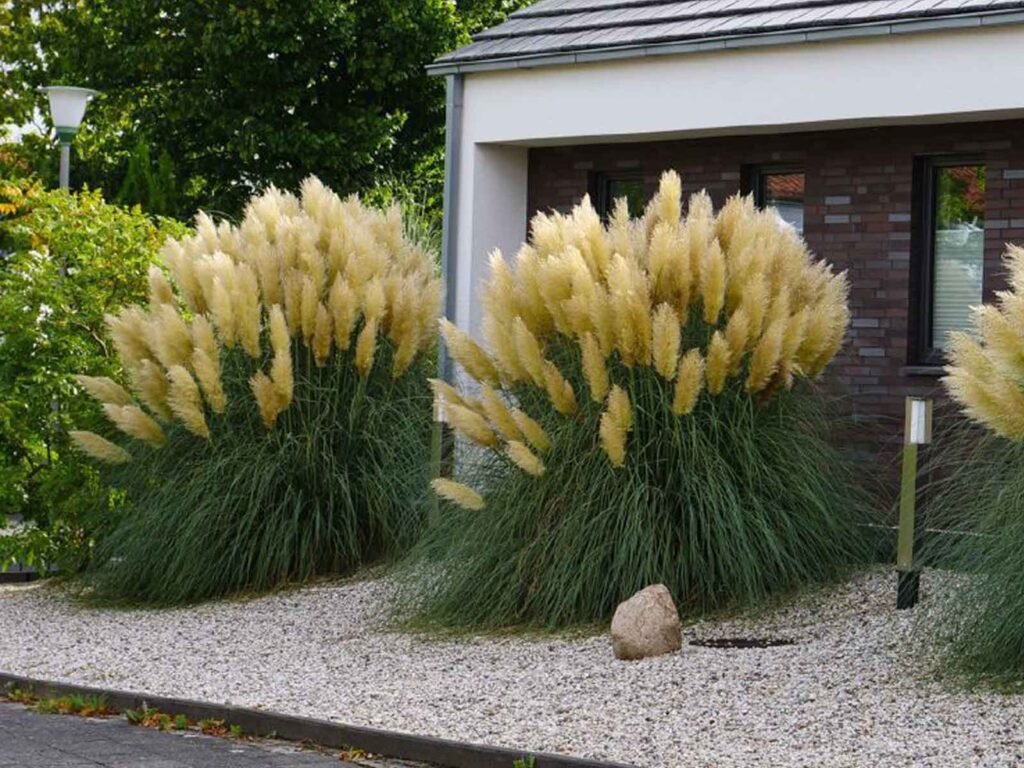
- Focal specimen
- Natural fence
- Noise or wind barrier
- Erosion control
2. Interior Décor
Dried pampas plumes dominate modern décor trends.
Plumes can last months to years when dried properly, often used in:
- Bouquets
- Table arrangements
- Wreaths
- Wedding décor
- Minimalist interiors
3. Crafting & Fiber
Historically, pampas grass was used for:
- Basket weaving
- Rope and cordage
- Padding and insulation fibers
The plant’s cellulose-rich leaves make it surprisingly durable.
Is Pampas Grass Edible? Food & Culinary Notes
While not a common culinary plant, certain parts of pampas grass have been used traditionally or experimentally:
Edible Possibilities Include:
✔ Young shoots: can be cooked similarly to bamboo shoots (mild flavor, slightly fibrous)
✔ Starchy base of new stems: has been chewed as an energy source in rural areas
Cautions:
- Leaves are extremely sharp; handling requires gloves.
- Not suitable for raw consumption due to silica content.
- Seeds and plumes are not considered edible.
Culinary use remains niche, but sustainable foraging enthusiasts and experimental chefs have revived interest in wild grasses.
Harvesting Pampas Grass: For Décor or Practical Use
When to Harvest
- Harvest plumes late summer to early fall
- Choose fully developed, dry days to avoid mold
How to Harvest
- Wear gloves and long sleeves (leaves can cut skin).
- Cut stalks near the base.
- Shake lightly to remove loose seeds.
- For drying: hang upside down in a dark, dry room for 2–3 weeks.
Optional Technique: Hair Spray Hack
Spritzing dried plumes with hairspray helps reduce shedding for indoor décor.
Maintenance, Control & Invasiveness Considerations
In some regions, pampas grass is labeled invasive due to prolific seeding and ability to displace native flora.
Ways to manage:
- Remove spent plumes before seeds spread.
- Opt for sterile or dwarf cultivars.
- Plant responsibly away from wild ecosystems.
Common Problems & Solutions
| Problem | Likely Cause | Fix |
|---|---|---|
| No plumes | Too much shade | Relocate to sunny area |
| Yellowing foliage | Overwatering | Improve soil drainage |
| Weak growth | Nutrient deficiency | Apply balanced fertilizer |
| Fungal issues | Humid microclimate | Increase airflow, prune dead leaves |
Final Thoughts
Pampas grass is more than a trendy ornamental—it’s a resilient, multifunctional plant with aesthetic, cultural, and even edible possibilities. Whether grown for décor, privacy, or hobby horticulture, Cortaderia selloana rewards gardeners with dramatic plumes and minimal maintenance.



&media=https://food-foresting.com/wp-content/uploads/2026/01/18871-1-NEW.jpg)