
 paulius.mikoliunas1
| Common Name | Monkey Puzzle Tree |
| Family | Araucariaceae |
| USDA hardiness | 7-11 |
| Known Hazards | None known |
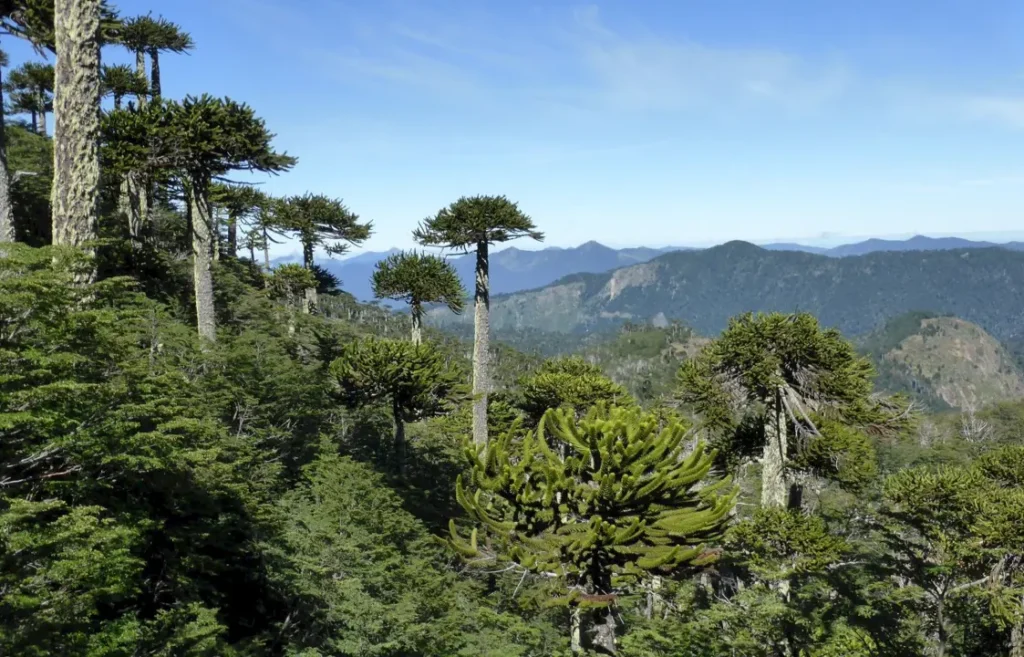
| Habitats | Mountain slopes in deep sandy soils in coniferous woodland, usually with Nothofagus spp. |
| Range | S. America – S. Chile |
| Edibility Rating |  (5 of 5) (5 of 5) |
| Other Uses |   (3 of 5) (3 of 5) |
| Weed Potential | No |
| Medicinal Rating |   (1 of 5) (1 of 5) |
| Care (info) |     |
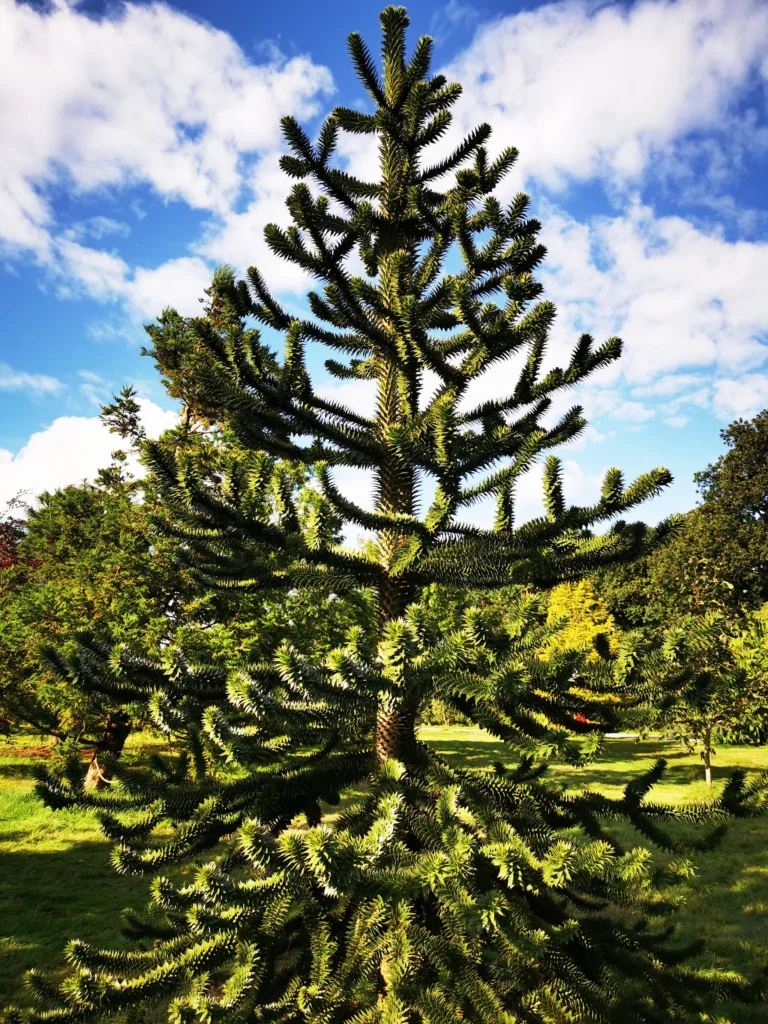

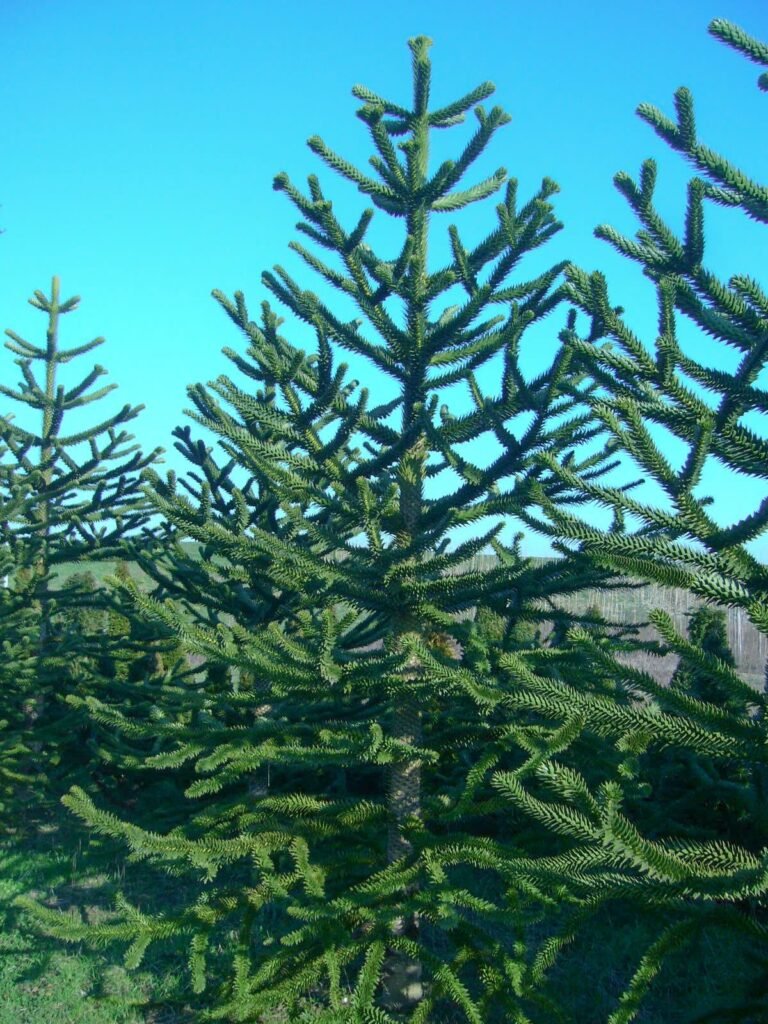
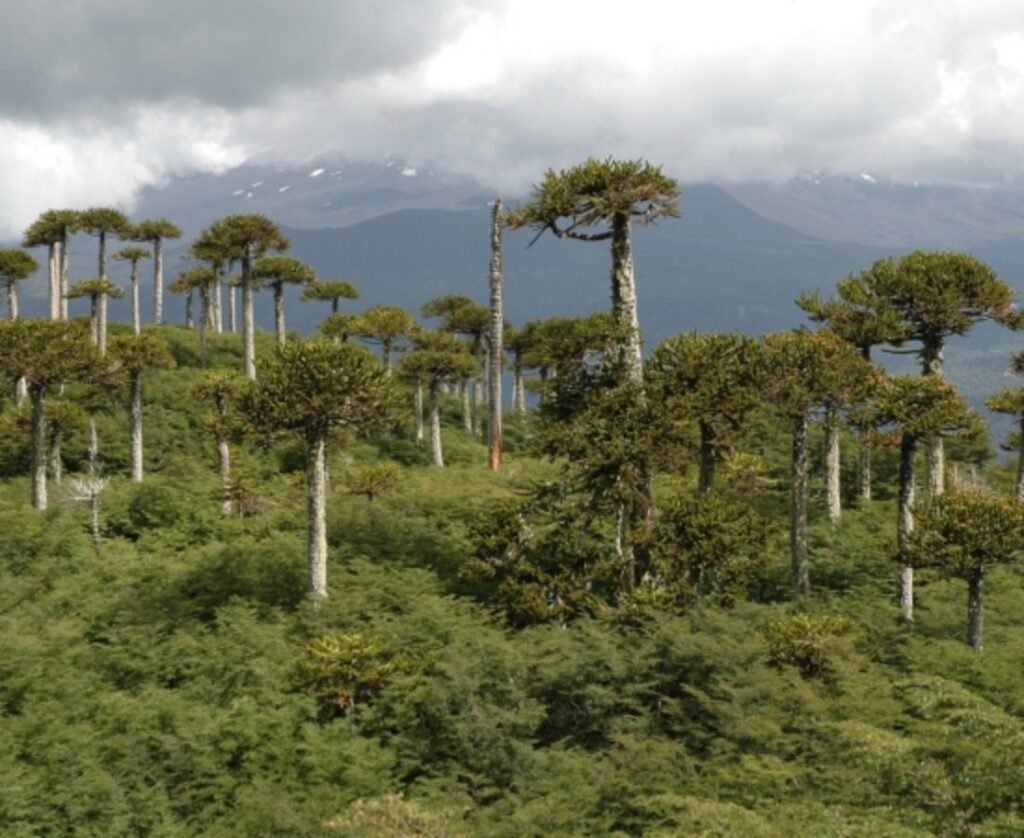
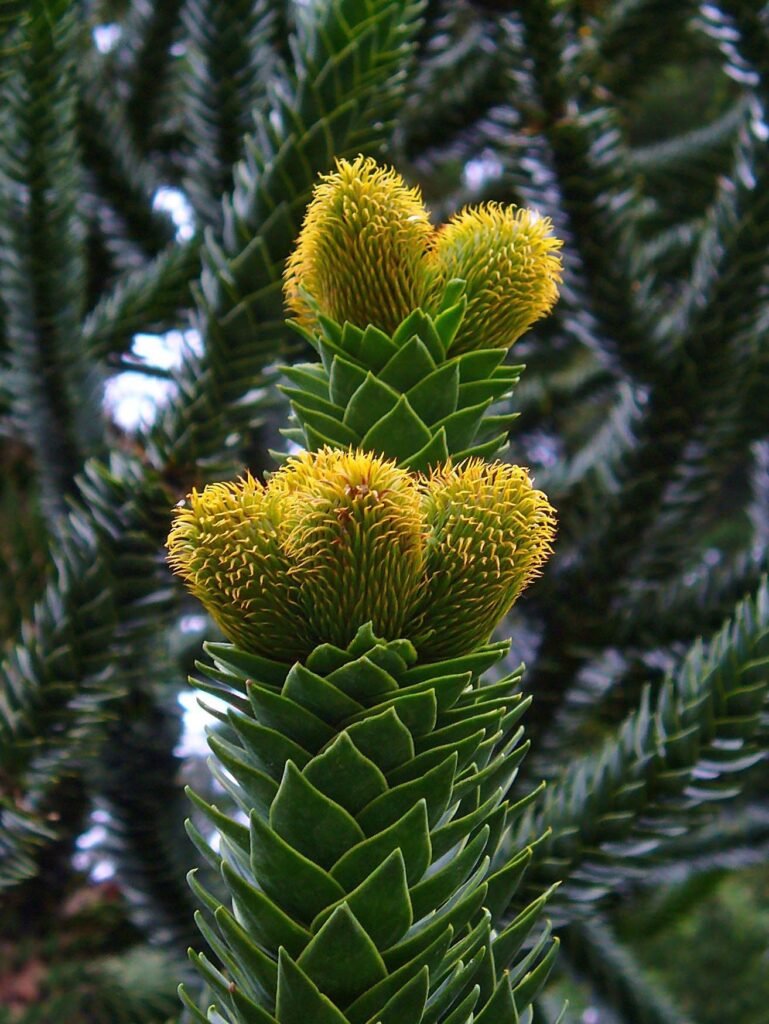
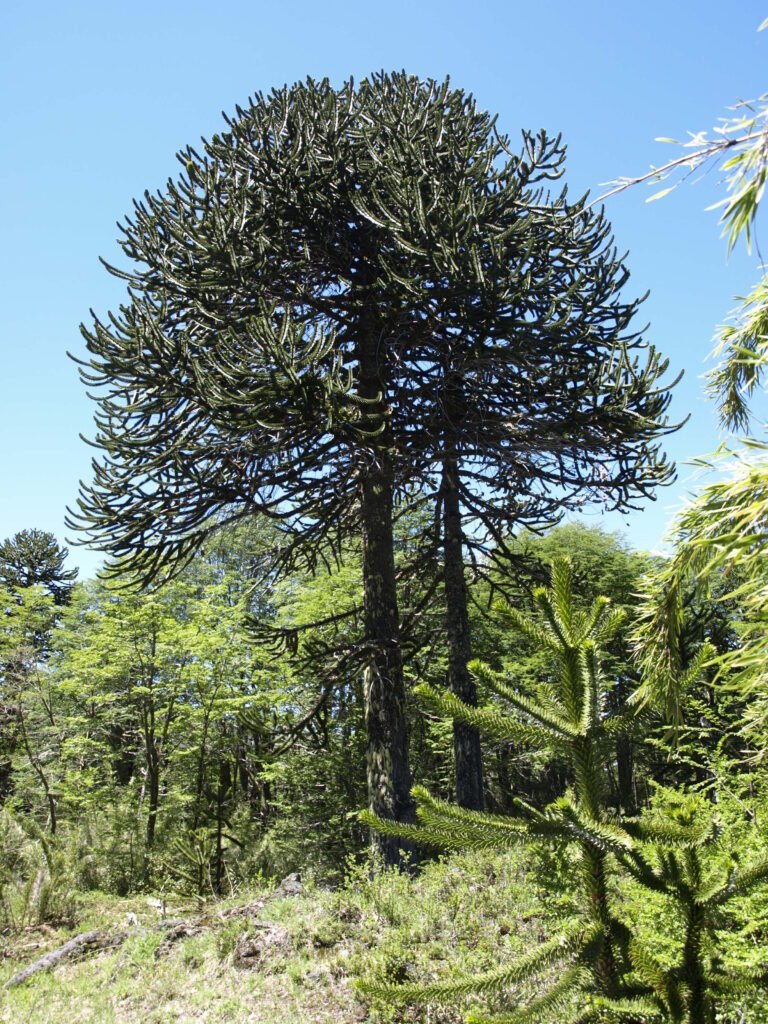
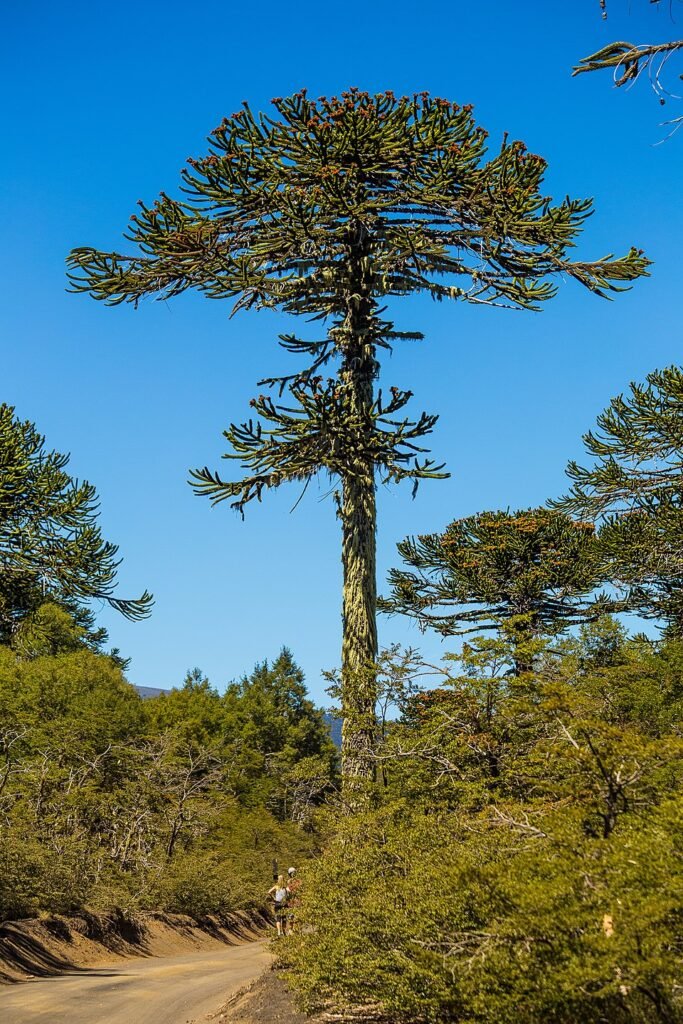






Monkey Puzzle Tree (Araucaria araucana): Complete Guide to Growing, Propagation, Varieties, Uses, Food & Harvest
The Monkey Puzzle Tree, scientifically known as Araucaria araucana, is one of the most striking and ancient-looking trees in the world. With its sharp, geometric foliage and prehistoric appearance, this evergreen conifer has fascinated gardeners, botanists, and landscapers for centuries. Native to South America, especially Chile and Argentina, the Monkey Puzzle Tree is both ornamental and practical, offering edible seeds, cultural significance, and long-term landscape value.
This in-depth guide explores how to grow Monkey Puzzle Trees successfully, methods of propagation, available varieties, uses, edible food options, and harvesting tips, making it a complete resource for gardeners and tree enthusiasts.
What Is a Monkey Puzzle Tree?
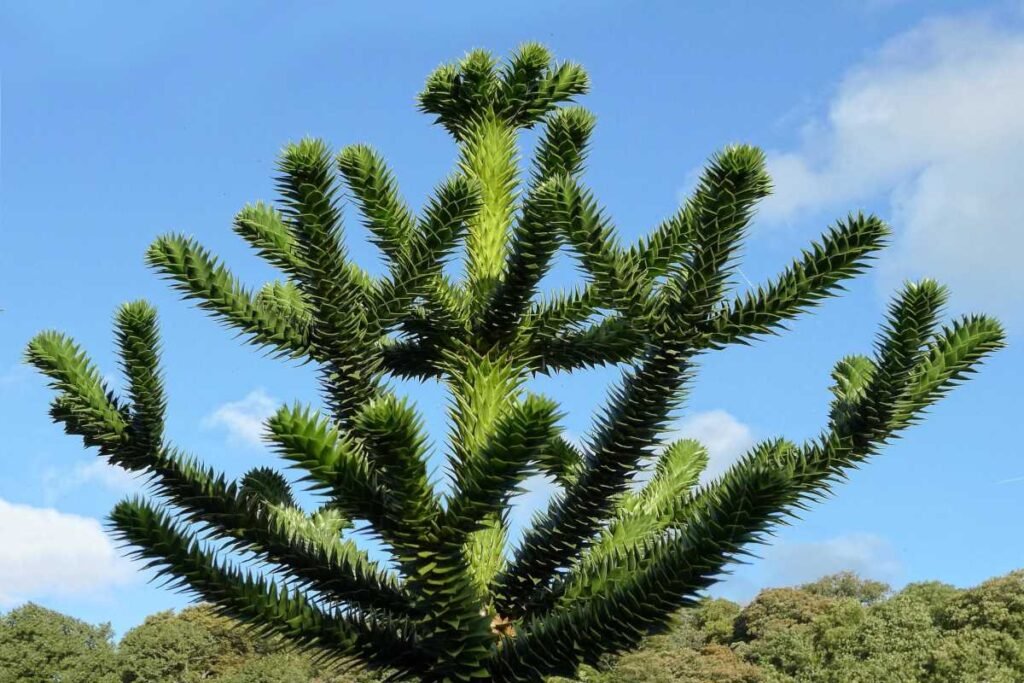
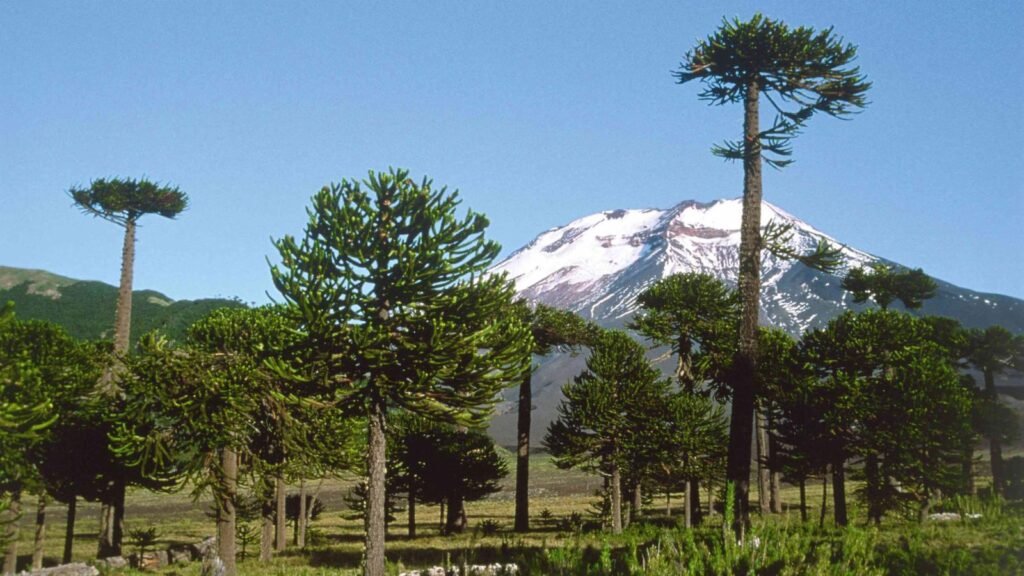
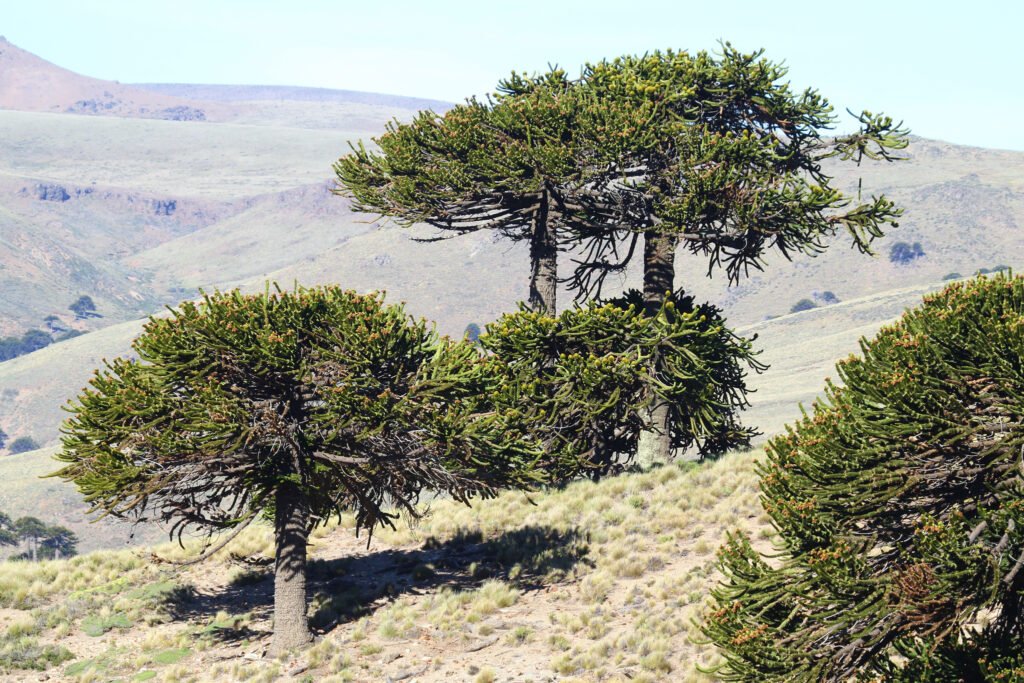
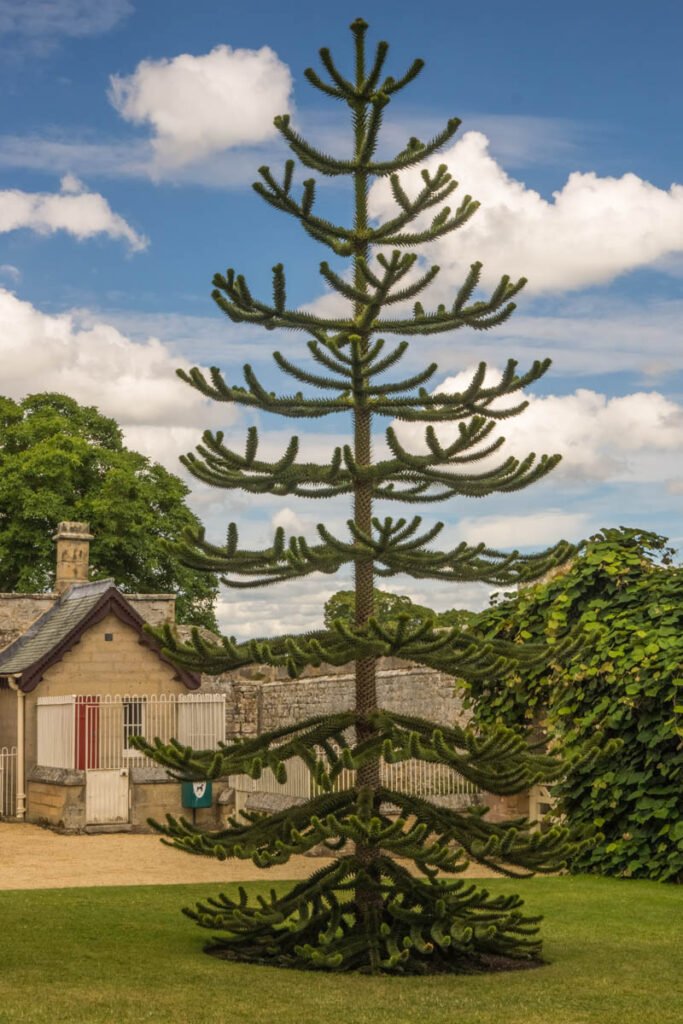
The Monkey Puzzle Tree belongs to the Araucariaceae family and is considered a living fossil, dating back to the age of dinosaurs. Its name comes from the unusual structure of its branches and leaves, which are so spiky and interlocked that even a monkey would struggle to climb it.
Key Characteristics:
- Evergreen conifer
- Slow-growing but extremely long-lived
- Can reach 60–100 feet tall in ideal conditions
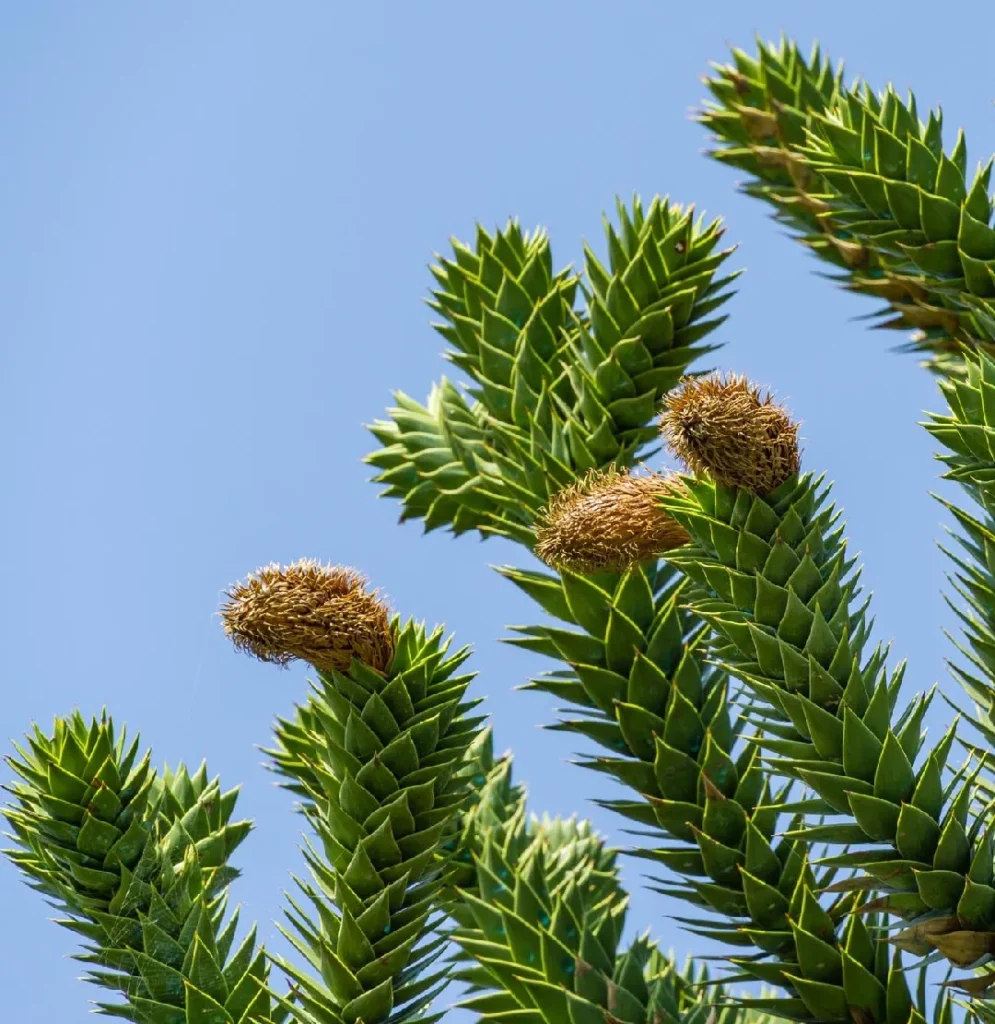
- Thick, leathery, triangular leaves with sharp tips
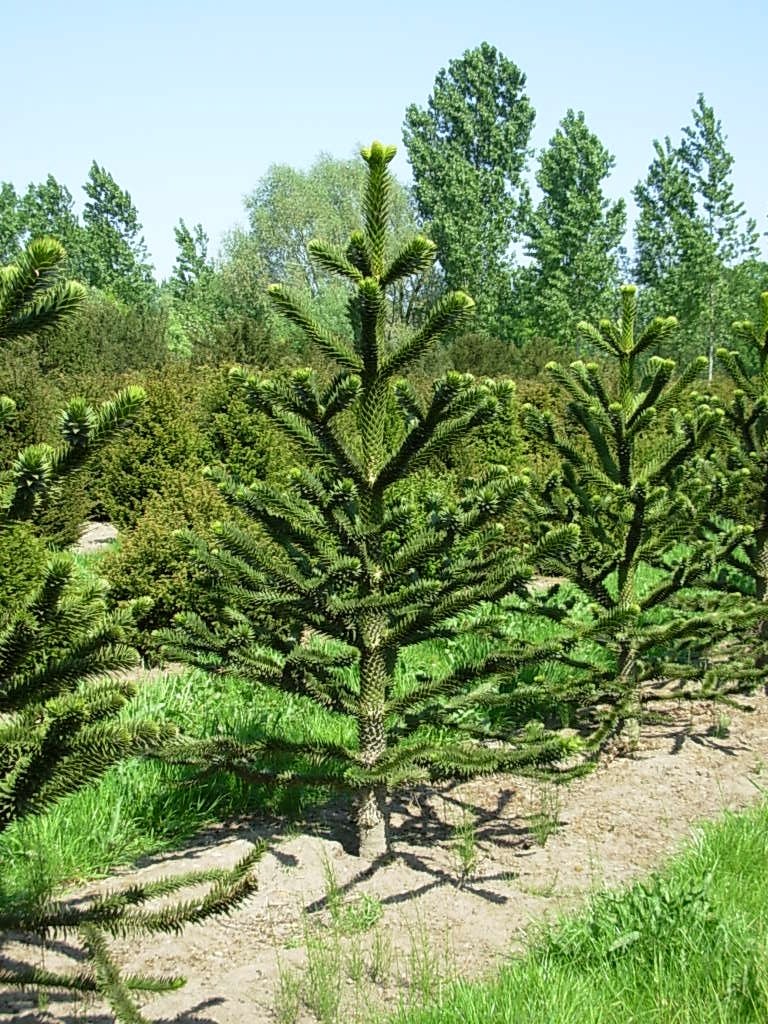
- Distinct symmetrical branching pattern
How to Grow a Monkey Puzzle Tree
Climate Requirements
Monkey Puzzle Trees thrive in cool to temperate climates. They tolerate cold well once established but dislike extreme heat.
- Ideal temperature range: mild summers and cool winters
- Hardy in USDA zones 7–10
- Mature trees tolerate frost and light snow
Soil Preferences
Proper soil is critical for healthy growth.
- Well-draining soil is essential
- Prefers slightly acidic to neutral soil
- Avoid heavy clay or waterlogged ground
- Sandy or loamy soil works best
Sunlight Needs
- Full sun to partial shade
- Young trees benefit from some protection from harsh afternoon sun
- Mature trees tolerate full sun easily
Watering Schedule
- Regular watering during the first few years
- Once established, moderately drought-tolerant
- Avoid overwatering, which can cause root rot
Spacing and Placement
Monkey Puzzle Trees grow large and wide.
- Plant at least 30–40 feet away from buildings
- Choose a permanent location
- Avoid areas with heavy foot traffic due to sharp leaves
How to Propagate Monkey Puzzle Trees
Propagation can be challenging but rewarding.
Propagation from Seeds
This is the most common and successful method.
- Collect fresh seeds (they lose viability quickly)
- Soak seeds in water for 24 hours
- Plant horizontally in well-draining soil
- Keep soil moist but not soggy
- Germination occurs within 1–3 months
⚠️ Seeds must be planted fresh; dried seeds rarely germinate.
Propagation from Cuttings
Cutting propagation is possible but less reliable.
- Use semi-hardwood cuttings
- Take from upright shoots (not lateral branches)
- Rooting hormone improves success
- Results vary significantly
Varieties of Monkey Puzzle Tree
Although Araucaria araucana is the most recognized species, there are subtle forms and related species used ornamentally.
Common Forms:
- Standard Araucaria araucana – Upright, symmetrical, classic form
- Compact forms – Slower growth, suitable for smaller landscapes
- Related Araucaria species – Such as Araucaria heterophylla (often confused but different in climate needs)
True Monkey Puzzle Trees are rare compared to their relatives, making them highly valued in gardens.
Uses of Monkey Puzzle Tree
Ornamental Landscaping
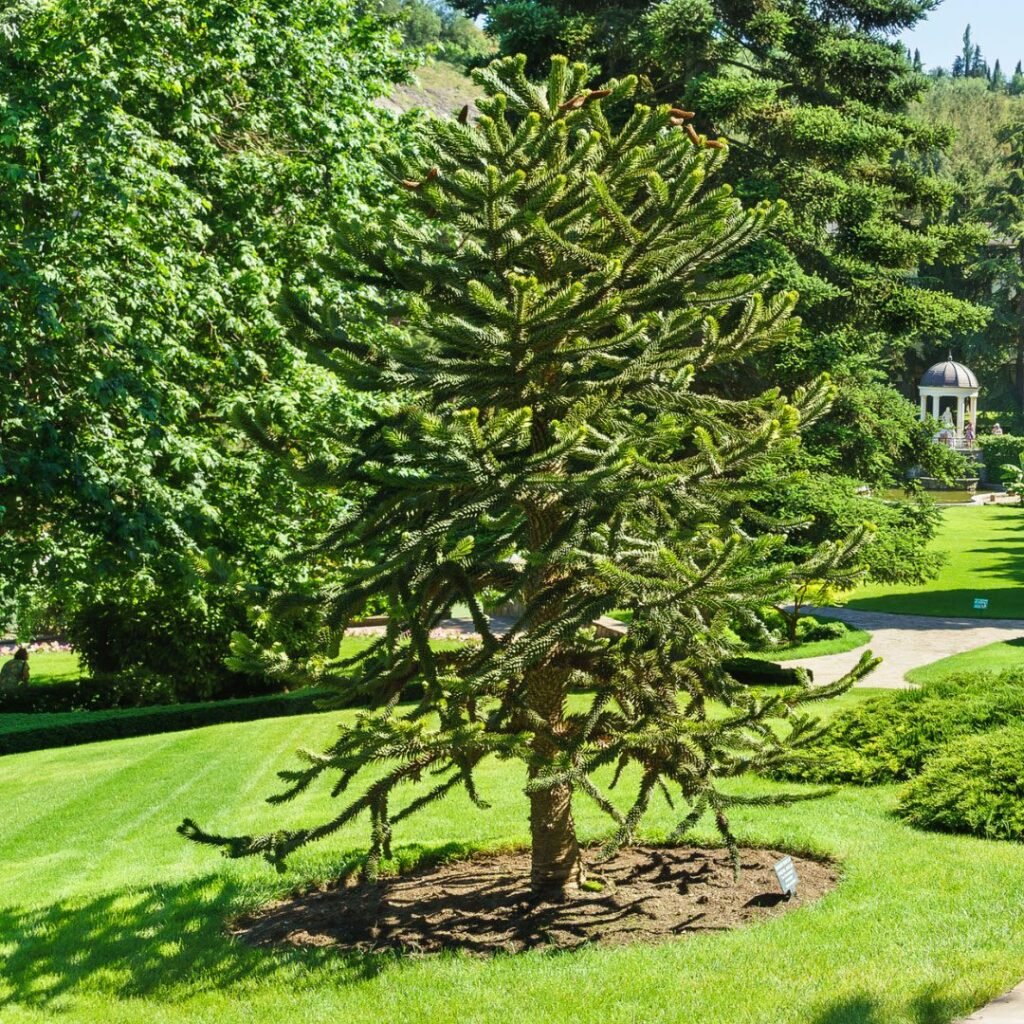
- Statement tree for large gardens
- Architectural focal point
- Excellent for botanical gardens and estates
Environmental Benefits
- Long lifespan (often 1,000+ years)
- Provides shelter for birds
- Helps preserve biodiversity
Cultural and Historical Uses
- Sacred tree in indigenous Chilean cultures
- Symbol of resilience and endurance
- National heritage species in its native region
Food Options: Are Monkey Puzzle Trees Edible?
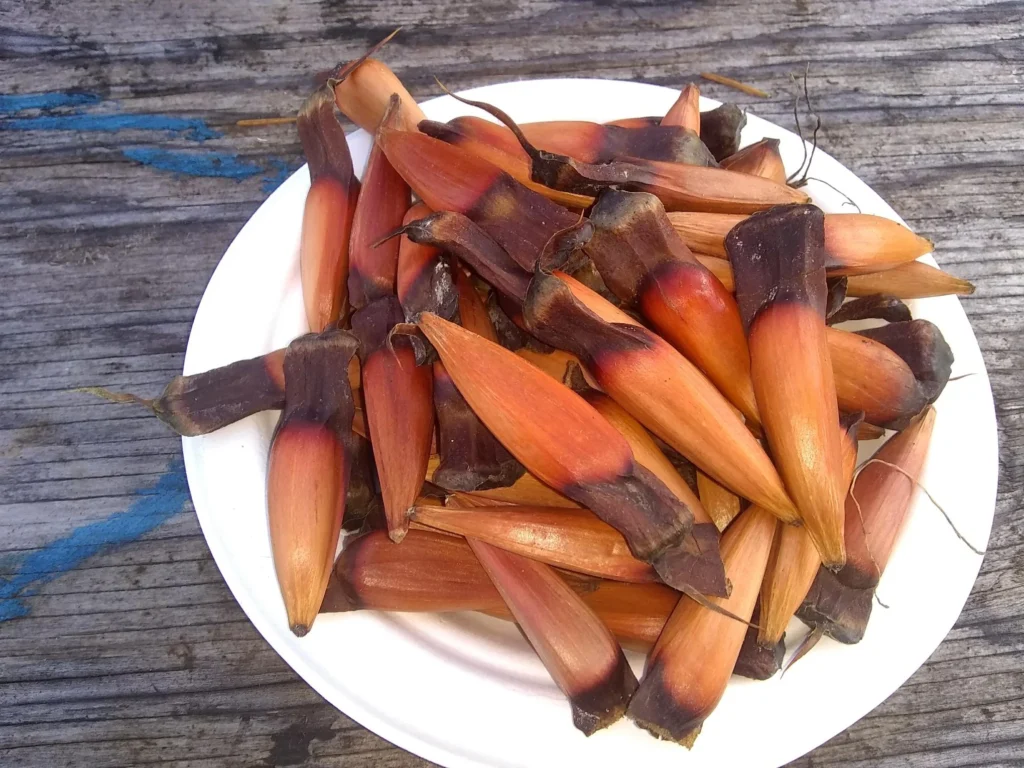
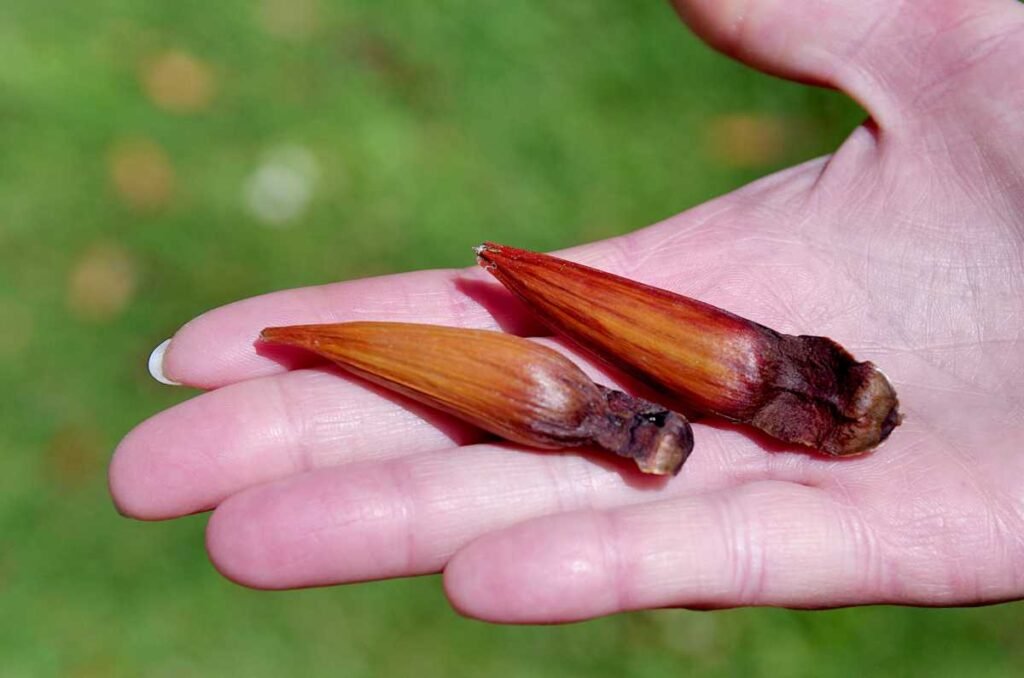
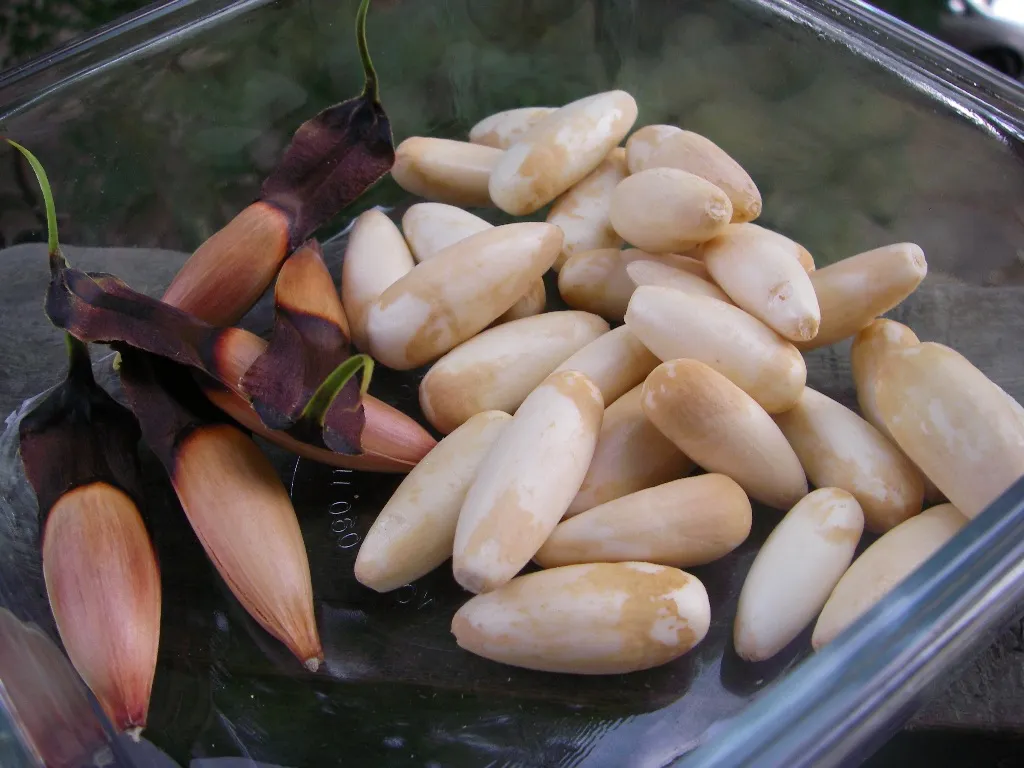
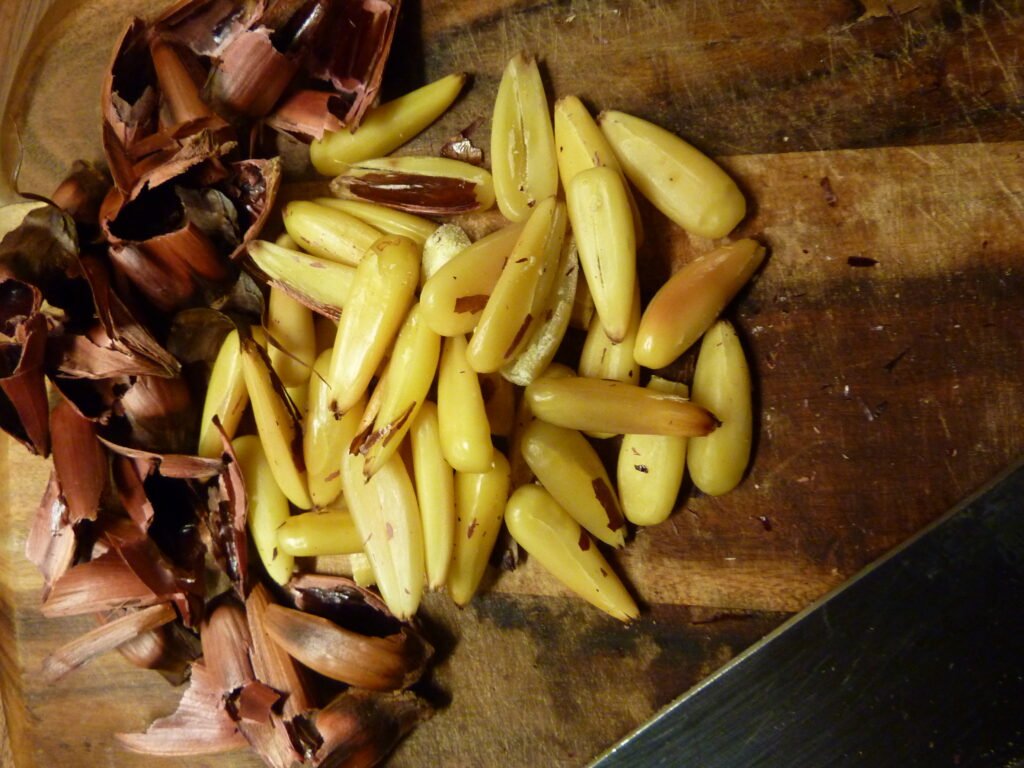
Yes! One of the most fascinating aspects of this tree is its edible seeds, commonly called piñones.
Edible Parts
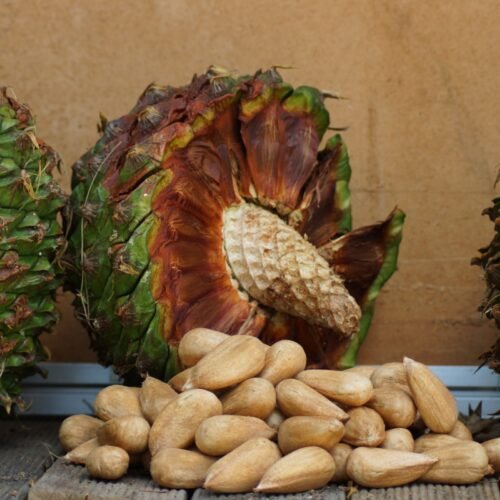
- Large seeds found inside female cones
- Seeds resemble oversized pine nuts
- Nutty, mildly sweet flavor
Nutritional Value
- High in carbohydrates
- Good source of protein
- Contains essential minerals
- Naturally gluten-free
How to Eat Monkey Puzzle Seeds
- Boiled like chestnuts
- Roasted for snacks
- Ground into flour
- Added to soups and stews
Seeds are a traditional food source in South America and still widely consumed today.
Harvesting Monkey Puzzle Tree Seeds
When to Harvest
- Cones mature in late summer to early autumn
- Female trees only produce seeds
- Trees take 20–30 years to produce cones
How to Harvest Safely
- Never climb the tree (extremely dangerous)
- Wait for cones to fall naturally
- Wear protective gloves
- Cones are large and heavy
Post-Harvest Handling
- Remove seeds from cones
- Use fresh or store briefly in cool conditions
- Seeds spoil quickly if left untreated
Male vs Female Monkey Puzzle Trees
Monkey Puzzle Trees are dioecious, meaning male and female cones grow on separate trees.
- Male trees produce pollen cones
- Female trees produce seed-bearing cones
- Both are needed for seed production
This is important if your goal is harvesting edible seeds.
Common Problems and Care Tips
Pests and Diseases
- Generally pest-resistant
- Root rot from poor drainage is the biggest threat
- Minimal pruning required
Maintenance Tips
- Do not prune heavily
- Remove dead branches only
- Mulch to retain moisture
- Avoid soil compaction around roots
Is the Monkey Puzzle Tree Right for You?
Choose this tree if you:
- Have ample space
- Want a long-term legacy tree
- Appreciate unique, dramatic plants
- Are interested in edible ornamental trees
Avoid it if:
- You need fast growth
- Space is limited
- You have frequent foot traffic nearby
Final Thoughts
The Monkey Puzzle Tree (Araucaria araucana) is more than just an ornamental curiosity. It is a living relic, an edible tree, and a long-term investment in landscape beauty and biodiversity. With proper care, it can thrive for generations, offering both visual impact and nutritional value.
Whether grown as a statement piece, a cultural symbol, or a food-producing tree, the Monkey Puzzle Tree remains one of the most remarkable plants you can cultivate.



&media=https://food-foresting.com/wp-content/uploads/2026/01/48383087_2456597321024037_1579418818025881600_n_1024x1024@2x.webp)