
 paulius.mikoliunas1
| Common Name | Oregon Grape, Hollyleaved barberry, Oregon Holly Grape, Oregon Holly |
| Family | Berberidaceae |
| USDA hardiness | 4-8 |
| Known Hazards |  Barberry, goldenseal, oregon grape and other plants containing Berberine should be avoided during pregnancy and breastfeeding. Avoid if over active thyroid gland. High doses cause vomiting, lowered blood pressure, reduced heart rate, lethargy, nose bleed, skin & eye irritation and kidney infection. Liquorice as Glycyrrhiza species nullify berberine effects. Barberry, goldenseal, oregon grape and other plants containing Berberine should be avoided during pregnancy and breastfeeding. Avoid if over active thyroid gland. High doses cause vomiting, lowered blood pressure, reduced heart rate, lethargy, nose bleed, skin & eye irritation and kidney infection. Liquorice as Glycyrrhiza species nullify berberine effects. |
| Habitats | Mixed coniferous woods to 2000 metres. It is found in woods and hedgerows in Britain. |
| Range | Western N. America. Naturalized in Britain. |
| Edibility Rating |   (3 of 5) (3 of 5) |
| Other Uses |   (3 of 5) (3 of 5) |
| Weed Potential | No |
| Medicinal Rating |   (3 of 5) (3 of 5) |
| Care (info) |       |

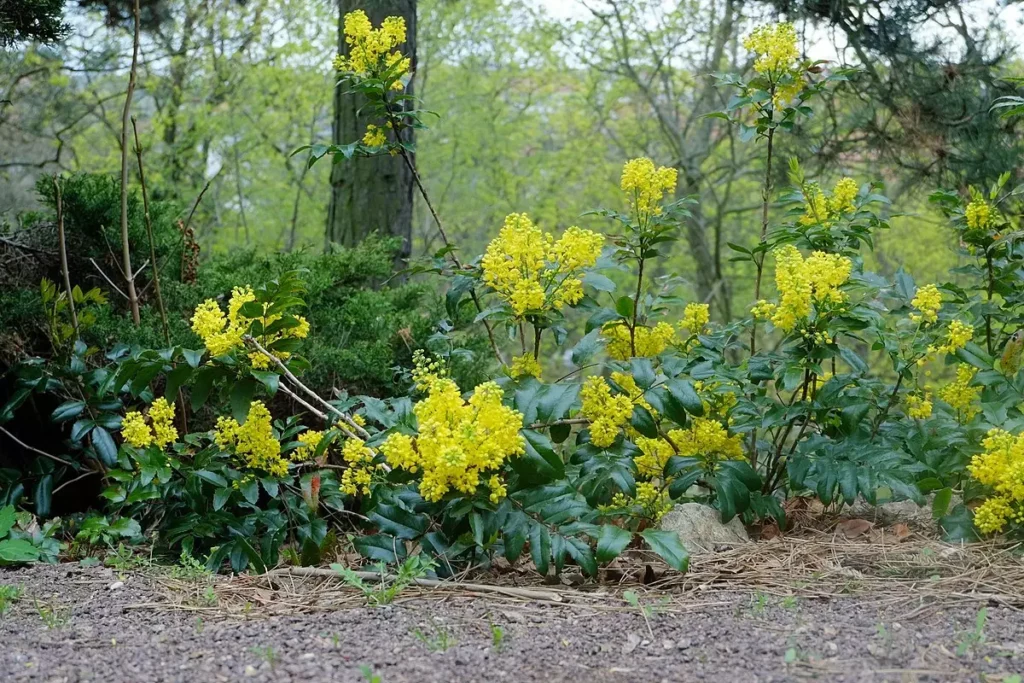


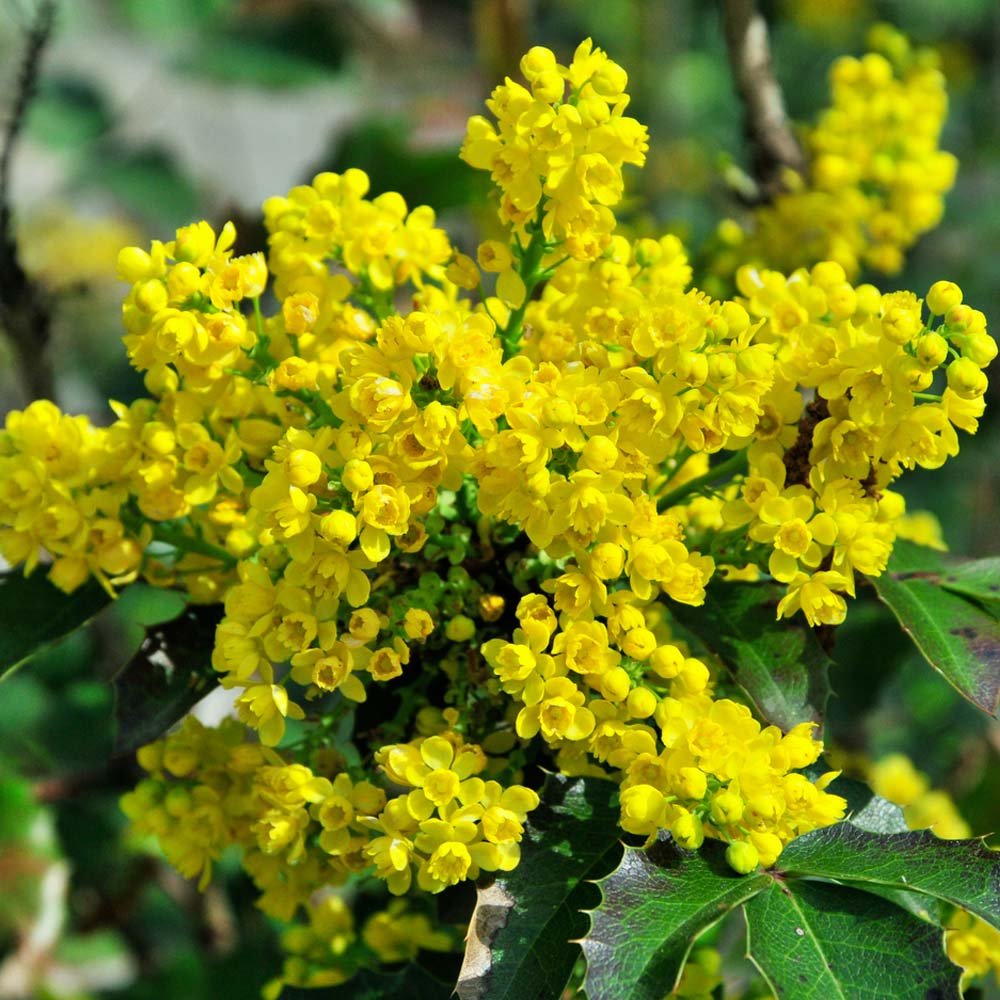
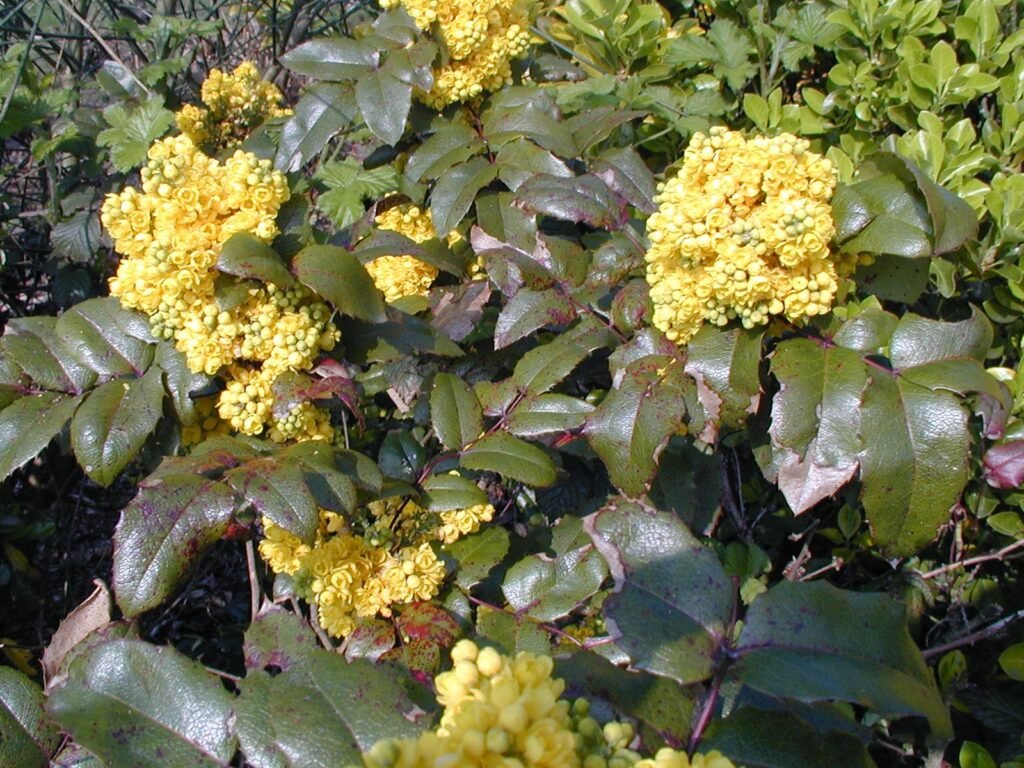
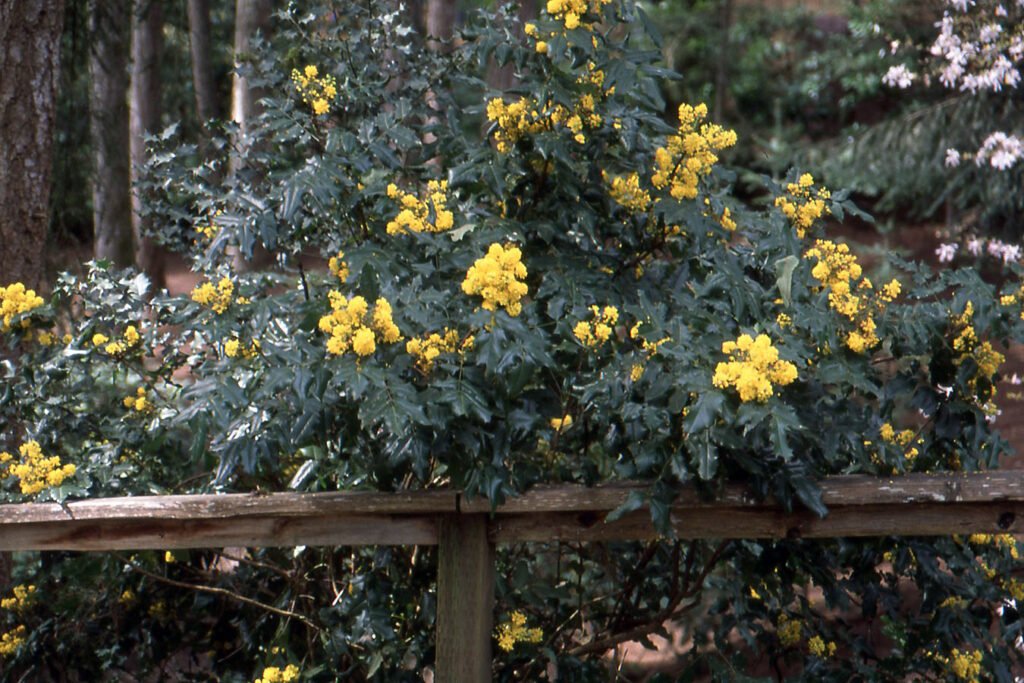






Oregon Grape (Mahonia aquifolium): Complete Guide to Growing, Propagating, Varieties, Uses, Food Options, and Harvesting
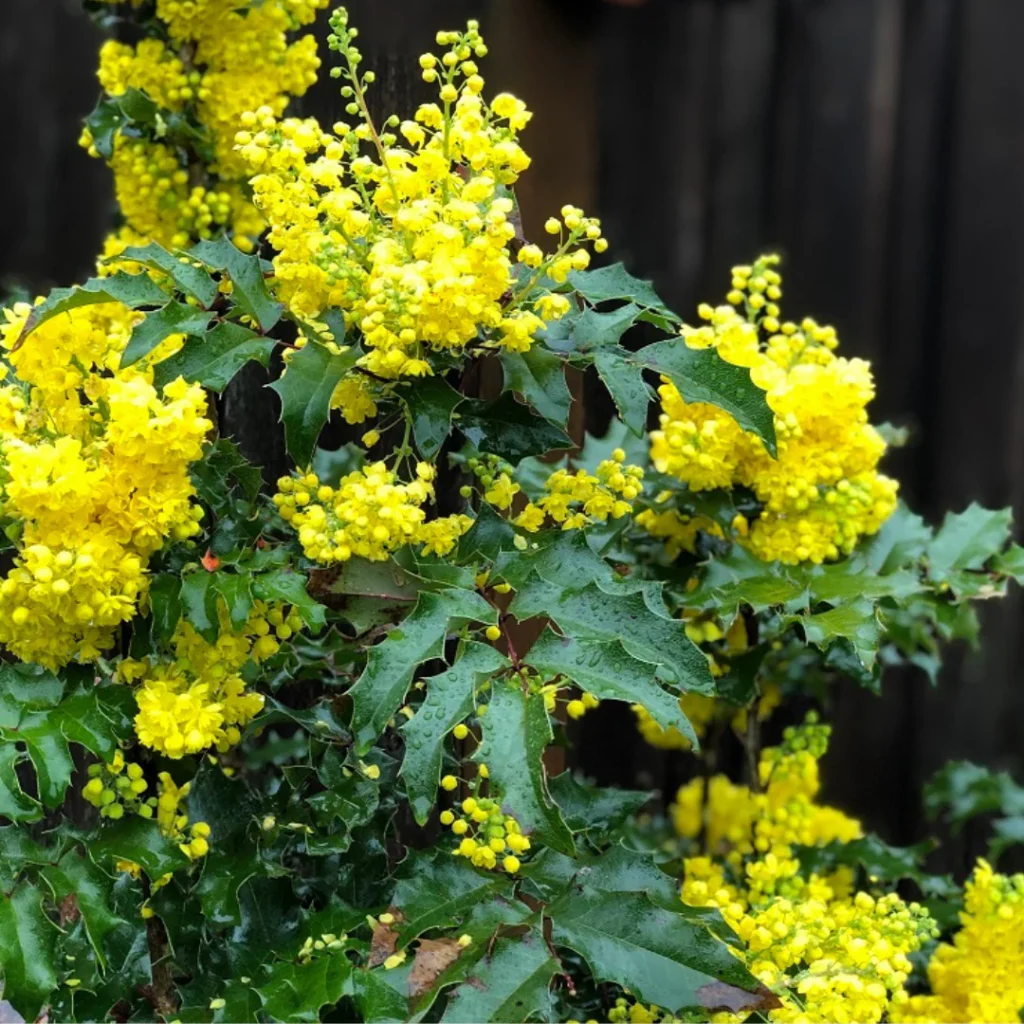
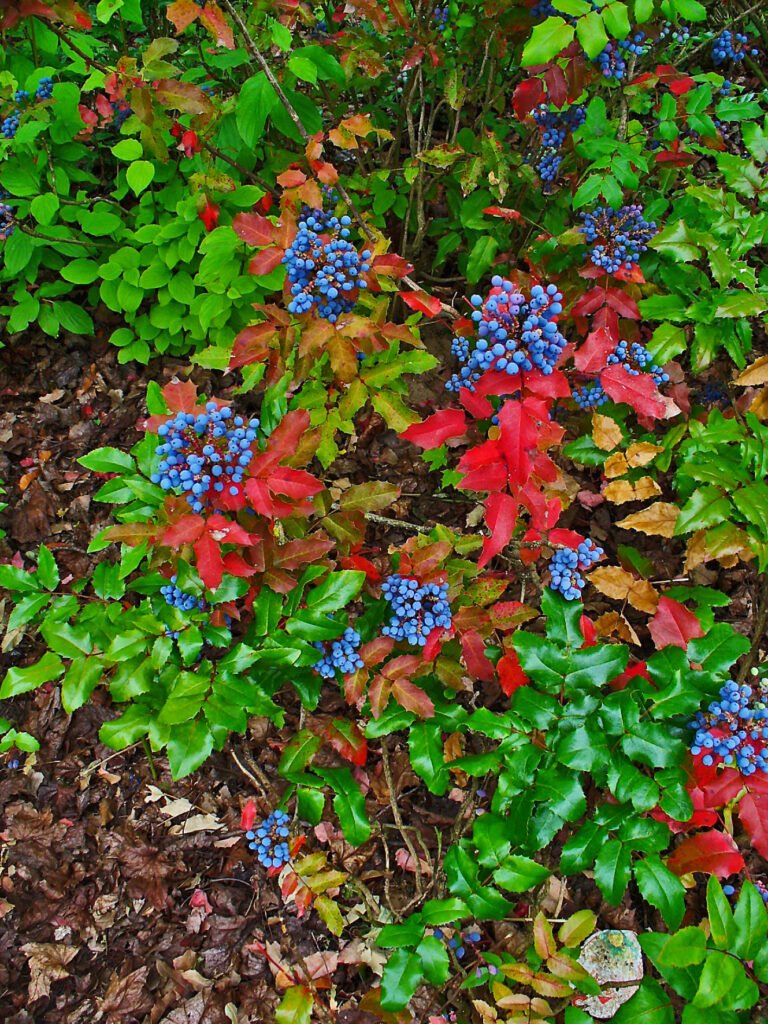
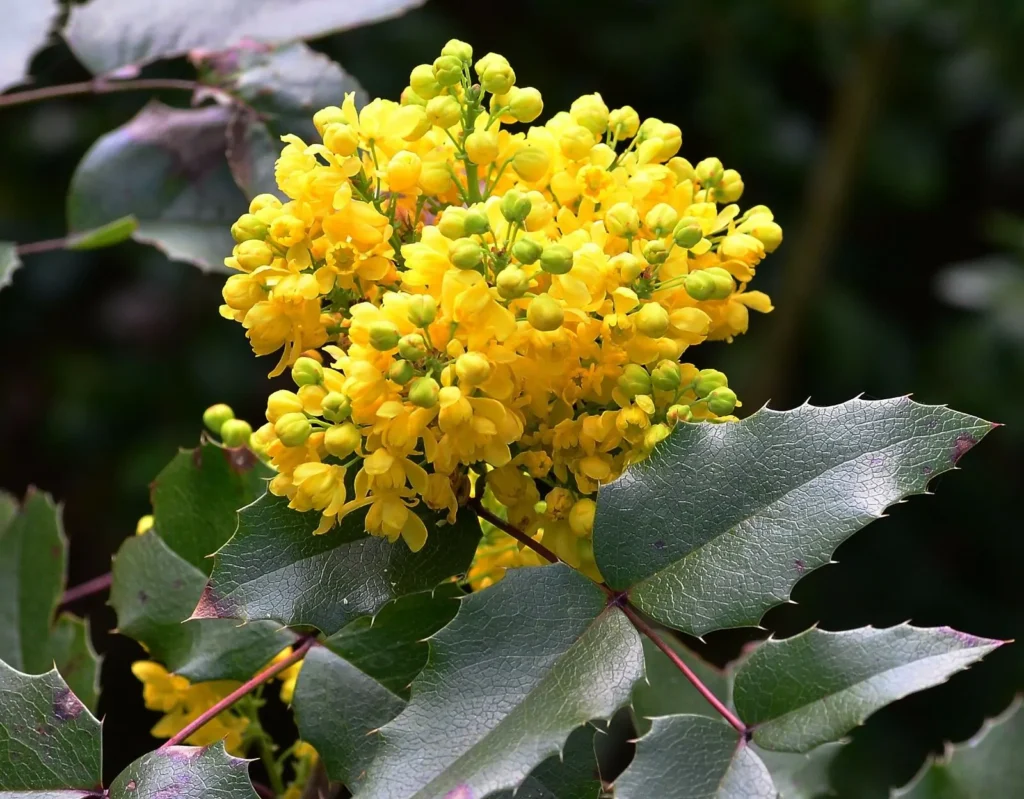
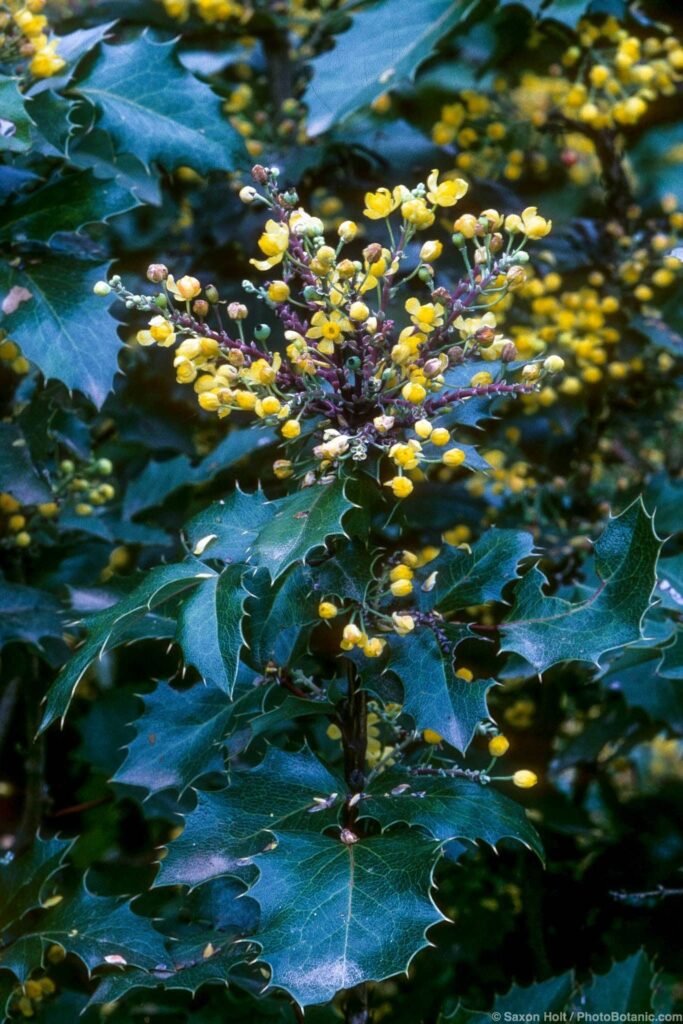
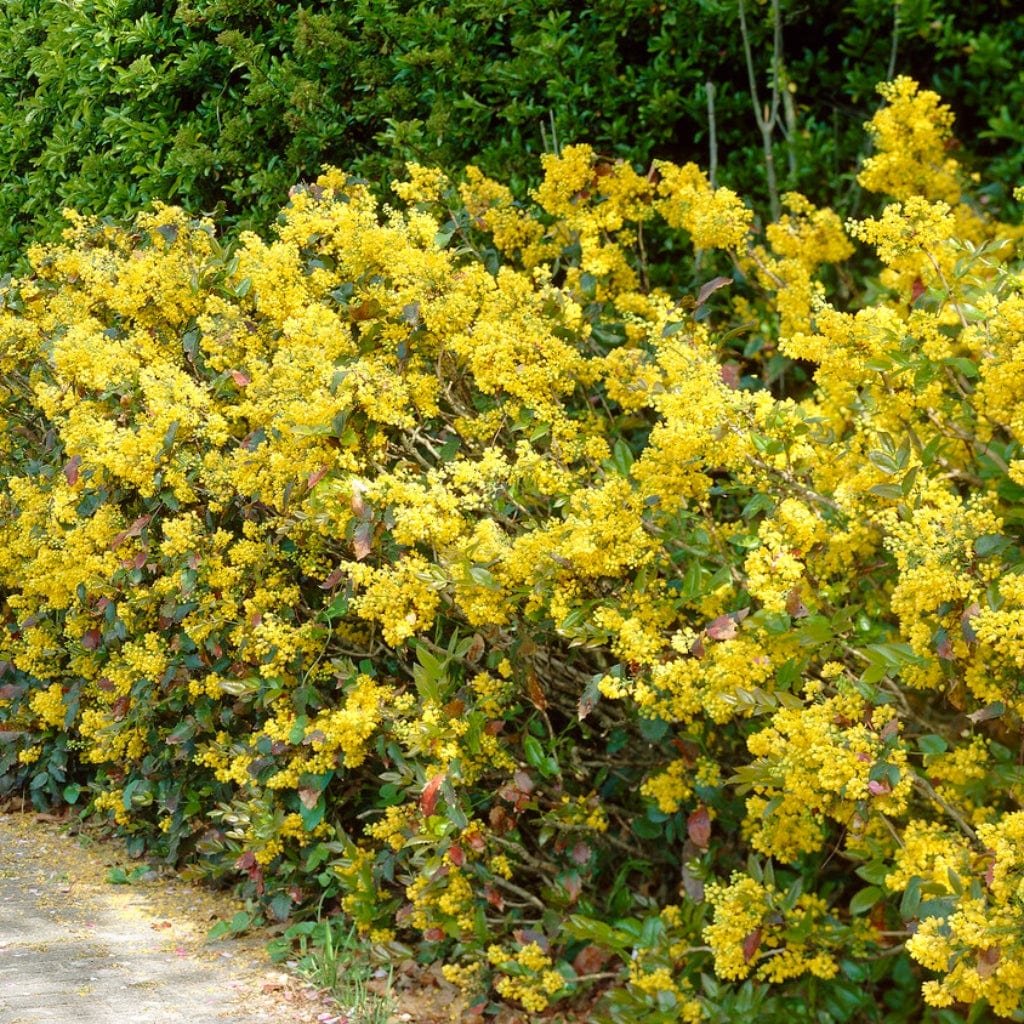
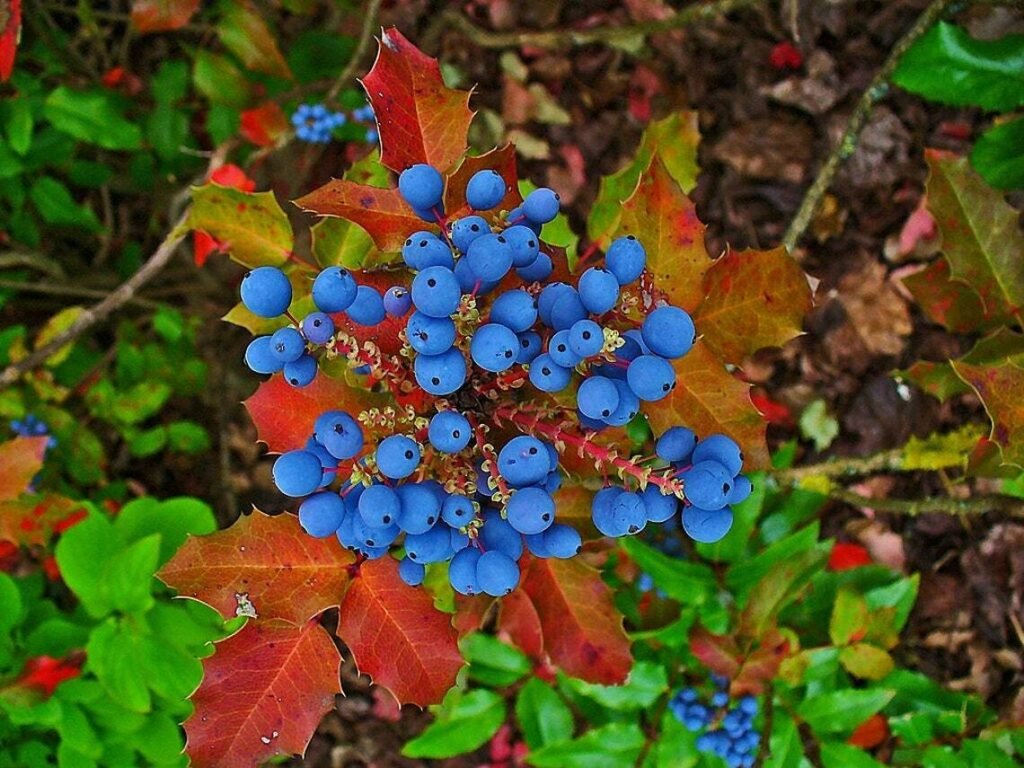
Oregon grape (Mahonia aquifolium) is a hardy, evergreen shrub known for its glossy holly-like leaves, vibrant yellow flowers, and deep blue edible berries. Native to western North America, this versatile plant is valued for ornamental landscaping, wildlife support, herbal uses, and food preparation. This comprehensive guide explains how to grow Oregon grape, propagate it successfully, explore its varieties, understand its uses, prepare food from its berries, and harvest it correctly.
What Is Oregon Grape?
Oregon grape is not a true grape but a member of the barberry family. It thrives in woodland environments and adapts well to gardens, urban landscapes, and native plant restorations. Its year-round interest and low maintenance needs make it a favorite among gardeners.
Key features include:
- Evergreen, spiny leaves
- Bright yellow spring flowers
- Blue-black berries with a waxy coating
- High tolerance to shade and cold
How to Grow Oregon Grape Successfully
Ideal Climate and Hardiness
Oregon grape grows best in temperate climates and is hardy in USDA zones 5–9. It tolerates cold winters and mild summers exceptionally well.
Soil Requirements
- Well-drained soil
- Slightly acidic to neutral pH
- Rich in organic matter
Although adaptable, Oregon grape performs best in loamy woodland soil.
Light Conditions
- Partial shade to full shade is ideal
- Can tolerate full sun in cooler climates if soil moisture is adequate
Watering Needs
- Moderate watering during establishment
- Drought-tolerant once mature
- Avoid waterlogged soil
Planting Tips
- Plant in spring or fall
- Space plants 3–6 feet apart
- Mulch to retain moisture and suppress weeds
Propagation Methods for Oregon Grape
Propagation from Seeds
- Collect ripe berries in late summer
- Clean seeds thoroughly
- Cold stratify for 2–3 months
- Sow in containers or outdoor seed beds
Seed propagation is slow but produces genetically diverse plants.
Propagation from Cuttings
- Take semi-hardwood cuttings in late summer
- Use rooting hormone for best results
- Maintain high humidity during rooting
Propagation by Division
- Divide mature plants in early spring
- Ensure each division has healthy roots
- Water well after transplanting
Division is the fastest and most reliable method.
Popular Varieties of Oregon Grape
Mahonia aquifolium
- Most common species
- Compact growth
- Excellent for ground cover and borders
Mahonia nervosa
- Lower-growing variety
- Ideal for shaded woodland gardens
Mahonia repens
- Creeping habit
- Excellent erosion control plant
Hybrid Mahonia Varieties
- Bred for improved flower color or growth habit
- Often used in ornamental landscaping
Uses of Oregon Grape
Landscaping and Gardening
- Evergreen hedge or screen
- Ground cover for shade
- Low-maintenance ornamental shrub
Wildlife Benefits
- Flowers attract pollinators
- Berries provide food for birds
- Dense foliage offers shelter
Medicinal and Herbal Use
The roots and bark contain compounds traditionally used for:
- Digestive support
- Skin preparations
- Immune system support
(Always consult professionals before medicinal use.)
Oregon Grape Food Options and Culinary Uses
Are Oregon Grape Berries Edible?
Yes, Oregon grape berries are edible but very tart. They are rarely eaten raw and are best processed.
Common Food Preparations
- Jams and jellies
- Syrups
- Sauces for meat dishes
- Fruit leather
- Wine and fermented beverages
Flavor Tips
- Combine berries with sweeter fruits like apples or pears
- Add honey or sugar to balance acidity
- Cooking mellows the sharp taste significantly
Nutritional Benefits
- Rich in antioxidants
- Contains vitamin C
- High in natural pigments
How to Harvest Oregon Grape
When to Harvest
- Late summer to early fall
- Berries should be deep blue with a powdery bloom
- Fully ripe berries detach easily
How to Harvest
- Wear gloves (leaves are spiny)
- Use scissors or hand-pick clusters
- Avoid stripping entire plants to protect wildlife
Harvesting Roots
- Best done in fall or early spring
- Only harvest from mature plants
- Take small portions to allow regeneration
Post-Harvest Storage and Handling
- Refrigerate fresh berries for up to one week
- Freeze berries for long-term storage
- Dry roots thoroughly before storage
- Label and store in cool, dark conditions
Common Problems and Maintenance Tips
Pests and Diseases
- Generally pest-resistant
- Occasionally affected by rust or leaf spots
- Good air circulation reduces disease risk
Pruning
- Prune after flowering
- Remove dead or damaged stems
- Light shaping maintains compact growth
Why Grow Oregon Grape?
Oregon grape is an excellent choice for gardeners seeking:
- Native, eco-friendly plants
- Year-round ornamental interest
- Edible and medicinal potential
- Low maintenance landscaping solutions
Its resilience, beauty, and versatility make it one of the most valuable shrubs for sustainable gardening.
Final Thoughts
Growing Oregon grape (Mahonia aquifolium) offers a unique blend of beauty, utility, and ecological value. Whether used for landscaping, food preparation, or herbal traditions, this evergreen shrub rewards gardeners with minimal effort and long-term benefits. With proper care, thoughtful harvesting, and creative culinary use, Oregon grape can become a standout feature in any garden or natural space.



&media=https://food-foresting.com/wp-content/uploads/2026/01/Mahonia-bigstock-Florescence-Of-Mahonia-Aquifol-350656967-1.jpg)